Fors Clavigera (Volume 5 of 8) Letters to the workmen and labourers of Great Britain
John Ruskin
THE CLASSIC COLLECTION · 1859
"The Two Paths" by John Ruskin is a series of lectures on art, its principles, and its impact on society, delivered in the mid-19th century. This work explores the relationship between art and its moral implications, focusing on how the practice of art can elevate or degrade nations and individuals. Ruskin discusses various schools of art and design while emphasizing the importance of observing and interpreting nature. At the start of the lectures, Ruskin reflects on the contrasting effects of art on the moral character of nations, particularly comparing the artistic expressions of India and Scotland. He notes that while Indian art is full of imaginative aesthetics, it often strays away from the natural world. In contrast, he highlights the nobility and virtue found in the Scottish people's connection to their natural landscape, seeing this as a crucial factor in shaping their moral disposition. Ruskin urges his audience to recognize the vital role of art in society and to choose paths that cultivate a genuine appreciation for natural beauty, as he believes this leads to both personal and societal growth.
Introduction adapted from the source catalogue; source summaries may be automatically generated.
Free to read · English · 55,382 words · No account needed
MAKE TIME FOR A GOOD BOOK
On by default. Untick to stop anonymous reading totals. Each page counts after 10 seconds in view. How this works.
Anonymous counting is on unless you have switched it off.
Remember therefore always, you have two characters in which all greatness of art consists:--First, the earnest and intense seizing of natural facts; then the ordering those facts by strength of human intellect, so as to make them, for all who look upon them, to the utmost serviceable, memorable, and beautiful. And thus great art is nothing else than the type of strong and noble life; for, as the ignoble person, in his dealings with all that occurs in the world about him, first sees nothing clearly,--looks nothing fairly in the face, and then allows himself to be swept away by the trampling torrent, and unescapable force, of the things that he would not foresee, and could not understand: so the noble person, looking the facts of the world full in the face, and fathoming them with deep faculty, then deals with them in unalarmed intelligence and unhurried strength, and becomes, with his human intellect and will, no unconscious nor insignificant agent, in consummating their good, and restraining their evil.
Thus in human life you have the two fields of rightful toil for ever distinguished, yet for ever associated; Truth first--plan or design, founded thereon; so in art, you have the same two fields for ever distinguished, for ever associated; Truth first--plan, or design, founded thereon.
Now hitherto there is not the least difficulty in the subject; none of you can look for a moment at any great sculptor or painter without seeing the full bearing of these principles. But a difficulty arises when you come to examine the art of a lower order, concerned with furniture and manufacture, for in that art the element of design enters without, apparently, the element of truth. You have often to obtain beauty and display invention without direct representation of nature. Yet, respecting all these things also, the principle is perfectly simple. If the designer of furniture, of cups and vases, of dress patterns, and the like, exercises himself continually in the imitation of natural form in some leading division of his work; then, holding by this stem of life, he may pass down into all kinds of merely geometrical or formal design with perfect safety, and with noble results.[Footnote: This principle, here cursorily stated, is one of the chief subjects of inquiry in the following Lectures.] Thus Giotto, being primarily a figure painter and sculptor, is, secondarily, the richest of all designers in mere mosaic of coloured bars and triangles; thus Benvenuto Cellini, being in all the higher branches of metal work a perfect imitator of nature, is in all its lower branches the best designer of curve for lips of cups and handles of vases; thus Holbein, exercised primarily in the noble art of truthful portraiture, becomes, secondarily, the most exquisite designer of embroideries of robe, and blazonries on wall; and thus Michael Angelo, exercised primarily in the drawing of body and limb, distributes in the mightiest masses the order of his pillars, and in the loftiest shadow the hollows of his dome. But once quit hold of this living stem, and set yourself to the designing of ornamentation, either in the ignorant play of your own heartless fancy, as the Indian does, or according to received application of heartless laws, as the modern European does, and there is but one word for you--Death:--death of every healthy faculty, and of every noble intelligence, incapacity of understanding one great work that man has ever done, or of doing anything that it shall be helpful for him to behold. You have cut yourselves off voluntarily, presumptuously, insolently, from the whole teaching of your Maker in His Universe; you have cut yourselves off from it, not because you were forced to mechanical labour for your bread--not because your fate had appointed you to wear away your life in walled chambers, or dig your life out of dusty furrows; but, when your whole profession, your whole occupation-- all the necessities and chances of your existence, led you straight to the feet of the great Teacher, and thrust you into the treasury of His works; where you have nothing to do but to live by gazing, and to grow by wondering;--wilfully you bind up your eyes from the splendour-- wilfully bind up your life-blood from its beating--wilfully turn your backs upon all the majesties of Omnipotence--wilfully snatch your hands from all the aids of love, and what can remain for you, but helplessness and blindness,--except the worse fate than the being blind yourselves--that of becoming Leaders of the blind?
Your reading position is saved on this browser. Take it to another device with a library code. Reading pages adapt to text, rather than matching a printed edition.
John Ruskin
John Ruskin
John Ruskin
John Ruskin
BEHIND THE BOOK
This eBook is for the use of anyone anywhere in the United States and most other parts of the world at no cost and with almost no restrictions whatsoever. You may copy it, give it away or re-use it under the terms of the Project Gutenberg License included with this eBook or online at www.gutenberg.org. If you are not located in the United States, you will have to check the laws of the country where you are located before using this eBook. Read the source licence.
The original source file, including credits and licence, is retained by this library. Request an original-format copy at no charge. Please include the book title and Project Gutenberg identifier #7291.
KEEP YOUR CURIOSITY GOING

David Patterson (Spirit) Hatch
Coulson Kernahan

Ralph Waldo Emerson
Frances Wright
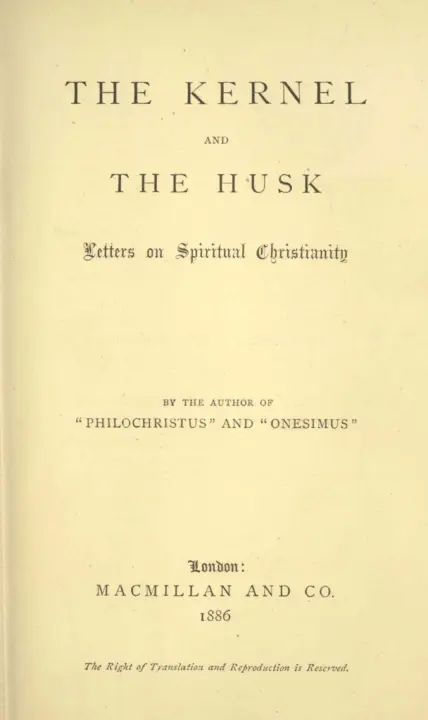
Edwin Abbott Abbott
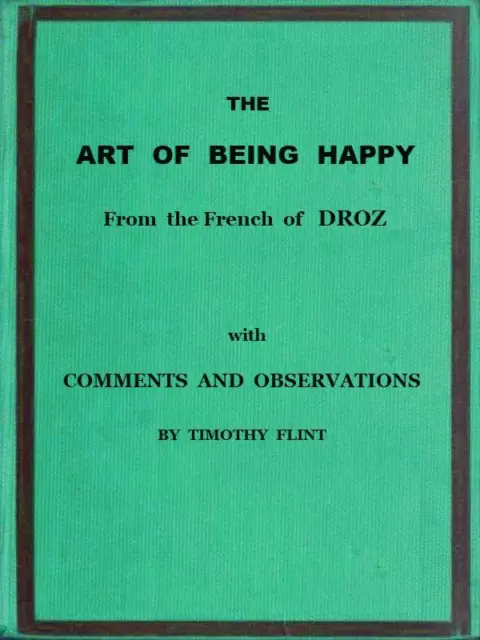
Joseph Droz