
Forty Years of It
Brand Whitlock
THE CLASSIC COLLECTION · 1907
"The Turn of the Balance" by Brand Whitlock is a novel written in the early 20th century. The story revolves around the lives of Elizabeth Ward and the Koerner family, exploring themes of social class, justice, and personal responsibility within the context of a snow-laden winter in a small town. As we delve into Elizabeth's world of privilege, we also encounter Gusta, a maid whose father's recent accident serves as a poignant contrast to Elizabeth's comfortable life. The opening of the novel introduces Elizabeth Ward, who delights in the beauty of the first snowfall while dealing with the mundanity of her daily responsibilities. As she navigates her privileged life, the narrative shifts to Gusta Koerner, who faces the harsh realities of her family's struggles following her father's injury in a railroad accident. The contrasting experiences between Elizabeth, with her light-hearted outlook, and Gusta, burdened by familial responsibilities and societal expectations, set the stage for poignant developments that explore broader themes of justice and morality in the face of personal turmoil.
Introduction adapted from the source catalogue; source summaries may be automatically generated.
Free to read · English · 160,226 words · No account needed
MAKE TIME FOR A GOOD BOOK
On by default. Untick to stop anonymous reading totals. Each page counts after 10 seconds in view. How this works.
Anonymous counting is on unless you have switched it off.
"Mr. Marriott, do you think he is guilty?" Gusta was asking.
"Guilty?" said Marriott, automatically repeating the word. "Guilty? What difference does that make?"
"Oh, Mr. Marriott!" the girl exclaimed, her blue eyes widening. "Surely, it makes all the difference in the world!"
"To you?"
"Why--yes--shouldn't it?"
"No, it shouldn't, Gusta, and what's more, it doesn't. And it doesn't to me, either. You don't want him sent to prison even if he is guilty, do you?"
"N--no," Gusta hesitated as she assented to the heresy.
"No, of course you don't. Because, Gusta, we know him--we know he's all right, don't we, no matter what he has done? Just as we know that we ourselves are all right when we do bad things--isn't that it?"
The girl was sitting with her yellow head bent; she was trying to think.
"But father would say--"
"Oh, yes," Marriott laughed, "father would say and grandfather would say, too--that's just the trouble. Father got his notions from the Old World, but we--Gusta, we know more than father or grandfather in this country."
Marriott enjoyed the discomfiture that Gusta plainly showed in her inability to understand in the least what he was saying. He felt a little mean about it, for he recognized that he was speaking for his own benefit rather than for hers; he had wished Elizabeth might be there to hear him.
"I don't know much about it, Mr. Marriott," Gusta said presently, "but when will you go to see him?"
"Oh, I'll try to get down this afternoon."
"All right. He told me to ask you please to bring him some cigarettes. Of course," she was going on in an apologetic tone, but Marriott cut her short:
"Oh, he wants cigarettes? Well, I'll take them to him."
Then they talked the futilities which were all such a case could inspire, and Marriott, looking at his watch, made Gusta feel that she should go. But the world wore a new aspect for her when she left Marriott's office. The spring sun was warm now, and she felt that she had the right to glory in it. The crowds in the streets seemed human and near, not far away and strange as they had been before; she felt that she had somehow been restored to her own rights in life. She had not understood Marriott's philosophy in the least, but she went away with the memory of his face and the memory of his smile; she could not realize her thoughts; it was a feeling more than anything else, but she knew that here was one man, at least, who believed in her brother, and it seemed that he was determined to believe in him no matter what the brother did; and he believed in her, too, and this was everything--this made the whole world glad, just as the sun made the whole world glad that morning.
Your reading position is saved on this browser. Take it to another device with a library code. Reading pages adapt to text, rather than matching a printed edition.
Brand Whitlock

Brand Whitlock

Brand Whitlock
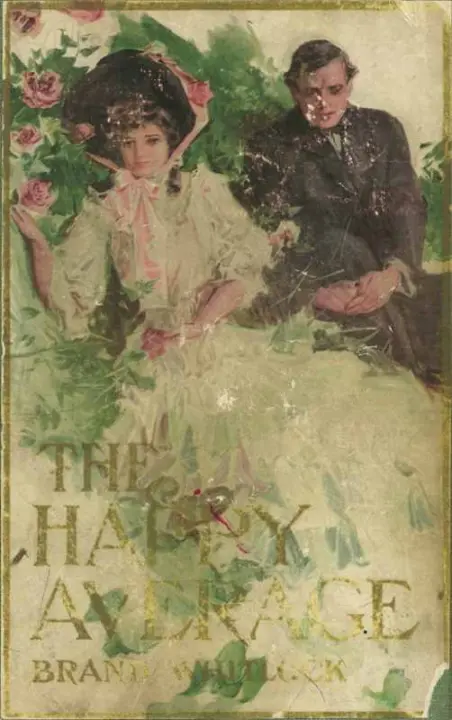
Brand Whitlock
BEHIND THE BOOK
This eBook is for the use of anyone anywhere in the United States and most other parts of the world at no cost and with almost no restrictions whatsoever. You may copy it, give it away or re-use it under the terms of the Project Gutenberg License included with this eBook or online at www.gutenberg.org. If you are not located in the United States, you will have to check the laws of the country where you are located before using this eBook. Read the source licence.
The original source file, including credits and licence, is retained by this library. Request an original-format copy at no charge. Please include the book title and Project Gutenberg identifier #40398.
KEEP YOUR CURIOSITY GOING
Coulson Kernahan

Maurice Baring
Frances Wright
Cécile Tormay

Frederic Jesup Stimson

W. H. P. (William Henry Pope) Jarvis