
Forty Years of It
Brand Whitlock
THE CLASSIC COLLECTION · 1907
"The Turn of the Balance" by Brand Whitlock is a novel written in the early 20th century. The story revolves around the lives of Elizabeth Ward and the Koerner family, exploring themes of social class, justice, and personal responsibility within the context of a snow-laden winter in a small town. As we delve into Elizabeth's world of privilege, we also encounter Gusta, a maid whose father's recent accident serves as a poignant contrast to Elizabeth's comfortable life. The opening of the novel introduces Elizabeth Ward, who delights in the beauty of the first snowfall while dealing with the mundanity of her daily responsibilities. As she navigates her privileged life, the narrative shifts to Gusta Koerner, who faces the harsh realities of her family's struggles following her father's injury in a railroad accident. The contrasting experiences between Elizabeth, with her light-hearted outlook, and Gusta, burdened by familial responsibilities and societal expectations, set the stage for poignant developments that explore broader themes of justice and morality in the face of personal turmoil.
Introduction adapted from the source catalogue; source summaries may be automatically generated.
Free to read · English · 160,226 words · No account needed
MAKE TIME FOR A GOOD BOOK
On by default. Untick to stop anonymous reading totals. Each page counts after 10 seconds in view. How this works.
Anonymous counting is on unless you have switched it off.
"Oh, Miss Elizabeth," she said, "I oughtn't to 'av' sent for you. I know I had no right; but you was always good to me, and I had no one. I've done nothing. I've done nothing, honest, honest, Miss Elizabeth, I've done nothing. I don't know what I'm here for at all; they won't tell me. And Archie, too, it must have something to do with him, but he's innocent, too. He hasn't done nothing either. Won't you believe me? Oh, say you will!"
She still clung to Elizabeth's hand, and now she pressed it in both her own, and raised it, and came closer, and looked into Elizabeth's face.
"Say you believe me!" she insisted, and Elizabeth, half in fear, as though to pacify a maniac, nodded.
"Of course, of course, Gusta."
"You mean it?"
"Surely I do."
"And you know I'm just as good as I ever was, don't you?"
"Why--of course, I do, Gusta." It is so hard to lie; the truth, in its divine persistence, springs so incautiously to the eyes before it can be checked at the lips.
The tears dried suddenly in Gusta's blue eyes. She spoke fiercely.
"You don't mean it! No, you don't mean it! I see you don't--you needn't say you do! Oh, you needn't say you do!"
She squeezed Elizabeth's hand almost maliciously and Elizabeth winced
with pain.
"You--you don't know!" Gusta went on. And then she hesitated, seemed to deliberate on the verge of a certain desperation, to pause for an instant before a temptation to which she longed to yield.
"I could tell you something," she said significantly.
A wonder gathered in Elizabeth's eyes. Her heart was beating rapidly, she could feel it throbbing.
"Do you know why I sent for you--what I had to tell you?"
She was looking directly in Elizabeth's eyes; the faces of both girls became pale. And Elizabeth groped in her startled mind for some clear recognition, some postulation of a fact, a horrible, blasting certitude that was beginning to formulate itself, a certitude that would have swept away in an instant all those formal barriers that had stood in the way of her coming to this haggard prison. She shuddered, and closed her mind, as she closed her eyes just then, to shut out the look in the eyes of this imprisoned girl.
But the moment was too tense to last. Some mercy was in the breast of the girl to whom life had shown so little mercy. Voluntarily, she released Elizabeth, and put up her hands to her face, and shook with sobs.
"Don't, don't, Gusta," Elizabeth pleaded, "don't cry, dear."
Your reading position is saved on this browser. Take it to another device with a library code. Reading pages adapt to text, rather than matching a printed edition.
Brand Whitlock

Brand Whitlock

Brand Whitlock
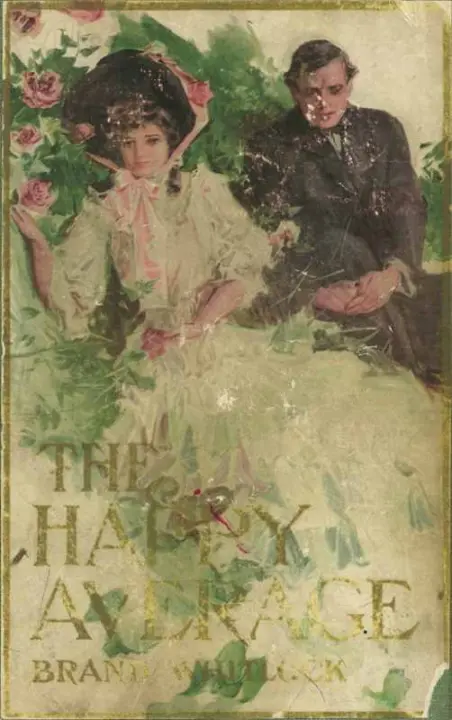
Brand Whitlock
BEHIND THE BOOK
This eBook is for the use of anyone anywhere in the United States and most other parts of the world at no cost and with almost no restrictions whatsoever. You may copy it, give it away or re-use it under the terms of the Project Gutenberg License included with this eBook or online at www.gutenberg.org. If you are not located in the United States, you will have to check the laws of the country where you are located before using this eBook. Read the source licence.
The original source file, including credits and licence, is retained by this library. Request an original-format copy at no charge. Please include the book title and Project Gutenberg identifier #40398.
KEEP YOUR CURIOSITY GOING
Coulson Kernahan

Maurice Baring
Frances Wright
Cécile Tormay

Frederic Jesup Stimson

W. H. P. (William Henry Pope) Jarvis