THE CLASSIC COLLECTION✦My diaries, being a personal narrative of events 1888-1914, Part 2 (1900-1914)CLASSIC FREE BOOKS
My diaries, being a personal narrative of events 1888-1914, Part 2 (1900-1914)
Wilfrid Scawen Blunt
THE CLASSIC COLLECTION · 1910
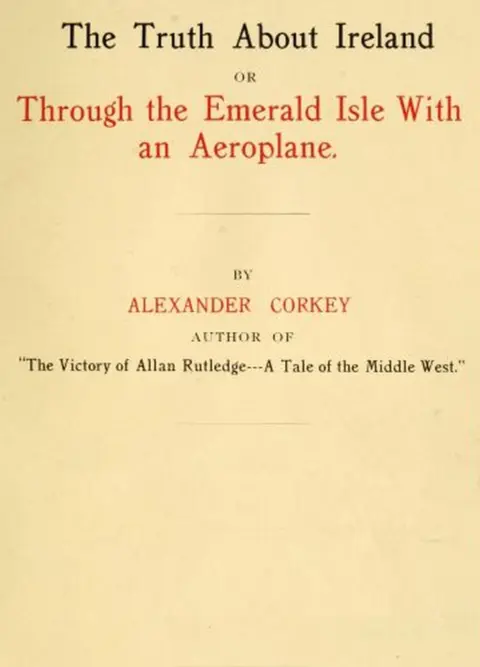
"The Truth About Ireland: or, Through the Emerald Isle With an Aeroplane" by Alexander Corkey is a travel narrative written in the early 20th century. The book captures the author's exciting adventures as he explores Ireland by aeroplane, taking the reader on a vivid aerial journey through the picturesque landscapes and significant cultural landmarks of the Emerald Isle. The opening of the work sets the stage for an innovative travel experience, beginning with the author's introduction to aeroplanes through the Wright Brothers and leading to a spontaneous decision to fly over Ireland. The narrative introduces characters such as the enthusiastic aviator Mike Connor, the author’s companion, while outlining their plans to take an unprecedented trip across the island. Corkey outlines his doubts and fears about flying while expressing sheer exhilaration at the beauty of Ireland, showcasing iconic locations like Blarney Castle and Killarney lakes, offering readers a glimpse of both the stunning vistas from the air and the rich cultural backdrop of the Irish landscape.
Introduction adapted from the source catalogue; source summaries may be automatically generated.
Free to read · English · 29,284 words · No account needed
MAKE TIME FOR A GOOD BOOK
On by default. Untick to stop anonymous reading totals. Each page counts after 10 seconds in view. How this works.
Anonymous counting is on unless you have switched it off.
Mr. O’Neill was a great admirer of Daniel O’Connell. He told me that a new era began for Ireland when Daniel O’Connell, with the assistance of English statesmen, took off some of Ireland’s heaviest burdens. “I believe,” said Mr. O’Neill, with great earnestness, “that since Gladstone’s time, England has been trying to do justice to Ireland.”
He assured me that the Irish had never acknowledged that England had conquered them. He told me about an English schoolboy who was asked to write an essay on the “Conquest of Ireland,” and he began: “The Conquest of Ireland began in 1170, and is still going on.”
I was much impressed with the way O’Neill recited to me the history of his country. Sometimes tears came into his eyes. He quoted, with much feeling, a few lines from an Irish poet:
“Of old the harp of Innisfail
Was turned to gladness,
But, Oh! how oft it’s told a tale
Of wide prevailing sadness.”
He expressed high hopes that Ireland’s darkest days are past. He believes all Irishmen in Ireland today, the Protestant in the North and the Catholic in the South, should blot out the unhappy memories of the past centuries, and forget the mistakes of former times, and face the future, united in honest efforts for Ireland’s welfare.
As we walked along, while he told me all this, we suddenly came upon Mike and Edith at the Giant’s Wishing Chair. This is a place where the columns of the Causeway are arranged something like a rude chair, and it is said if you sit in this “chair,” and wish, that your wish will come true. When we came on the scene Edith was sitting in the chair, wishing. Mike was standing by her side, evidently much amused.
“What’s your wish,” Mike asked, after we had joined them.
“I wished that I might fly tomorrow,” she answered with a blush. Then, walking up to her father she said:
“Oh, Papa, can I take a ride in the aeroplane with Mr. Connor tomorrow?”
I saw Mr. Neill glance quickly at her flushed face, and then turn away with a sigh. She was his only child.
“Why, why,” he answered, “what put such a notion as that in your head? Did you, sir?” and he looked accusingly at Mike.
“No, sir,” said Edith, before Mike could speak, “Mr. Connor never said a word to me about it.”
“We’ll see tomorrow,” said her father.
“I think my wish will come true,” I heard Miss O’Neill say to Mike, as they walked ahead of us up the rough road to the hotel.
Your reading position is saved on this browser. Take it to another device with a library code. Reading pages adapt to text, rather than matching a printed edition.
BEHIND THE BOOK
This eBook is for the use of anyone anywhere in the United States and most other parts of the world at no cost and with almost no restrictions whatsoever. You may copy it, give it away or re-use it under the terms of the Project Gutenberg License included with this eBook or online at www.gutenberg.org. If you are not located in the United States, you will have to check the laws of the country where you are located before using this eBook. Read the source licence.
The original source file, including credits and licence, is retained by this library. Request an original-format copy at no charge. Please include the book title and Project Gutenberg identifier #72418.
KEEP YOUR CURIOSITY GOING
Wilfrid Scawen Blunt
Wilfrid Scawen Blunt

E. W. (Edgar Watson) Howe
Francis Greenleaf Allinson & Anne C. E. (Anne Crosby Emery) Allinson
Cyrenus Cole

John Martineau