THE CLASSIC COLLECTION✦An outlaw’s diary: the CommuneCLASSIC FREE BOOKS
An outlaw’s diary: the Commune
Cécile Tormay
THE CLASSIC COLLECTION · 1906
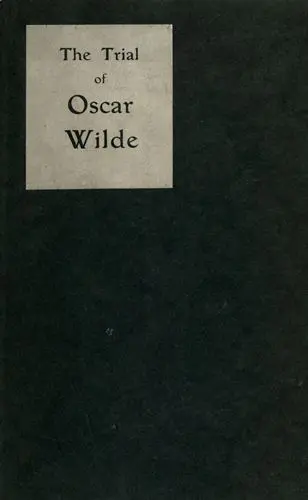
"The Trial of Oscar Wilde" from the Shorthand Reports by Charles Grolleau is a historical account written in the early 20th century. This work recounts the infamous trial of Oscar Wilde, a prominent playwright and poet in Victorian England, who faced prosecution for his homosexual relationships. The content delves into Wilde's life, the societal implications of his actions, and the ensuing scandal that culminated in his conviction and imprisonment. At the start of this account, readers are introduced to the background of Oscar Wilde and the societal landscape that culminated in his trial. The narrative outlines Wilde's eccentric character, highlighting his flamboyant lifestyle and controversial relationships, particularly with Lord Alfred Douglas, which drew the ire of the upper classes. Grolleau describes Wilde's descent from celebrity status to a convicted felon, detailing how his love for beauty and art clashed with the sullying societal norms of the time. The text sets a dramatic tone as it prepares the reader for a thorough exploration of the events leading to Wilde's trial and the profound repercussions of his actions on his life and legacy.
Introduction adapted from the source catalogue; source summaries may be automatically generated.
Free to read · English · 38,440 words · No account needed
MAKE TIME FOR A GOOD BOOK
On by default. Untick to stop anonymous reading totals. Each page counts after 10 seconds in view. How this works.
Anonymous counting is on unless you have switched it off.
In conclusion, his lordship submitted the case to the jury in the confident hope that they would do justice to themselves on the one hand, and to the two defendants on the other. The learned judge concluded by further directing the jury as to the issues, and asked them to form their opinions on the evidence, and to give the case their careful consideration.
The judge left the following questions to the jury:--
FIRST, whether Wilde committed certain offences with Shelley, Wood, with a person or persons unknown at the Savoy Hotel, or with Charles Parker?
SECONDLY, whether Taylor procured the commission of those acts or any of
them?
THIRDLY, did Wilde or Taylor, or either of them attempt to get Atkins to commit certain offences with Wilde, and FOURTHLY, did Taylor commit certain acts with either Charles Parker or Wood?
The Jury retired at 1.35, the summing-up of the judge having taken exactly
three hours.
At three o'clock a communication was brought from the jury, and conveyed by the Clerk of arraigns to the Judge, and shortly afterwards the jury had luncheon taken in to them.
At 4.15 the judge sent for the Clerk of arraigns, Mr. Avory, who proceeded to his lordship's private room.
Subsequently, Mr. Avory went to the jury, apparently with a communication from the judge and returned in a few minutes to the judge's private room.
Shortly before five o'clock the usher brought a telegram from one of the jurors, and after it had been shown to the clerk of arraigns it was allowed to be despatched.
Eventually the jury returned into court at a quarter past five o'clock.
THE JUDGE.--"I have received a communication from you to the effect that you are unable to arrive at an agreement. Now, is there anything you desire to ask me in reference to the case?"
THE FOREMAN.--"I have put that question to my fellow-jurymen, my lord, and I do not think there is any doubt that we cannot agree upon three of the questions."
THE JUDGE.--"I find from the entry which you have written against the various subdivisions of No. 1 that you cannot agree as to any of those subdivisions?"
THE FOREMAN.--"That is so, my lord."
THE JUDGE.--"Is there no prospect of an agreement if you retire to your
room?"
THE FOREMAN.--"I fear not."
THE JUDGE.--"You have not been inconvenienced; I ordered what you required, and there is no prospect that, with a little more deliberation, you may come to an agreement as to some of them?"
THE FOREMAN.--"My fellow-jurymen say there is no possibility."
Your reading position is saved on this browser. Take it to another device with a library code. Reading pages adapt to text, rather than matching a printed edition.
BEHIND THE BOOK
This eBook is for the use of anyone anywhere in the United States and most other parts of the world at no cost and with almost no restrictions whatsoever. You may copy it, give it away or re-use it under the terms of the Project Gutenberg License included with this eBook or online at www.gutenberg.org. If you are not located in the United States, you will have to check the laws of the country where you are located before using this eBook. Read the source licence.
The original source file, including credits and licence, is retained by this library. Request an original-format copy at no charge. Please include the book title and Project Gutenberg identifier #38916.
KEEP YOUR CURIOSITY GOING
Cécile Tormay

Moritz Busch
John L. Ransom
Frances Wright
Cécile Tormay

Mabel Potter Daggett