THE CLASSIC COLLECTION✦An outlaw’s diary: the CommuneCLASSIC FREE BOOKS
An outlaw’s diary: the Commune
Cécile Tormay
THE CLASSIC COLLECTION · 1906
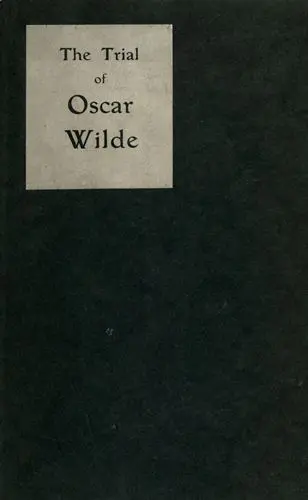
"The Trial of Oscar Wilde" from the Shorthand Reports by Charles Grolleau is a historical account written in the early 20th century. This work recounts the infamous trial of Oscar Wilde, a prominent playwright and poet in Victorian England, who faced prosecution for his homosexual relationships. The content delves into Wilde's life, the societal implications of his actions, and the ensuing scandal that culminated in his conviction and imprisonment. At the start of this account, readers are introduced to the background of Oscar Wilde and the societal landscape that culminated in his trial. The narrative outlines Wilde's eccentric character, highlighting his flamboyant lifestyle and controversial relationships, particularly with Lord Alfred Douglas, which drew the ire of the upper classes. Grolleau describes Wilde's descent from celebrity status to a convicted felon, detailing how his love for beauty and art clashed with the sullying societal norms of the time. The text sets a dramatic tone as it prepares the reader for a thorough exploration of the events leading to Wilde's trial and the profound repercussions of his actions on his life and legacy.
Introduction adapted from the source catalogue; source summaries may be automatically generated.
Free to read · English · 38,440 words · No account needed
MAKE TIME FOR A GOOD BOOK
On by default. Untick to stop anonymous reading totals. Each page counts after 10 seconds in view. How this works.
Anonymous counting is on unless you have switched it off.
WITNESS.--"Well, I have not done much."
Sir EDWARD.--"Have you done anything?"
WITNESS.--"I have had no regular employment."
Sir EDWARD.--"I thought not."
WITNESS.--"I could not get anything to do."
Sir EDWARD.--"As a matter of fact, you have had no respectable work for
over three years?"
WITNESS.--"Well, no."
Sir EDWARD.--"Did not you, in conjunction with Allen, succeed in getting
L300 from a gentleman?"
WITNESS.--"Yes; but he was guilty with Allen."
Sir EDWARD.--"How much did you receive?"
WITNESS.--"I advised Allen how to proceed. He gave me L130."
Sir EDWARD.--"Who else got any of this money?"
WITNESS.--"Parker. Charles Parker got some and also Wood."
Thos. Price was the next witness. This man was a waiter at a private hotel in St. James's and he testified to Wilde's visits there and to the number of young men, "of quite inferior station," who called to see him. Then came Frank Atkins, whose evidence is given in full.
Mr. AVORY.--"How old are you?"
WITNESS.--"I am 20 years old."
Mr. AVORY.--"What is your business?"
WITNESS.--"I have been a billiard-marker."
Mr. AVORY.--"You are doing nothing now?"
WITNESS.--"No."
Mr. AVORY.--"Who introduced you to Wilde?"
WITNESS.--"I was introduced to him by Schwabe in November, 1892."
Mr. AVORY.--"Have you met Lord Alfred Douglas?"
WITNESS.--"I have. I dined with him and Wilde on several occasions. They pressed me to go to Paris."
Mr. AVORY.--"You went with them?"
WITNESS.--"Yes."
Mr. AVORY.--"You told Wilde on one occasion while in Paris that you had spent the previous night with a woman?"
WITNESS.--"No. I had arranged to meet a girl at the Moulin Rouge, and Wilde told me not to go. However, I did go, but the woman was not there."
Mr. AVORY.--"You returned to London with Wilde?"
WITNESS.--"Yes."
Mr. AVORY.--"Did he give you money?"
WITNESS.--"He gave me a cigarette-case."
Mr. AVORY.--"You were then the best of friends?"
WITNESS.--"He called me Fred and I addressed him as Oscar. We liked each other, but there was no harm in it."
Mr. AVORY.--"Did you visit Wilde on your return?"
WITNESS.--"Yes, at Tite Street. Wilde also called upon me at Osnaburgh Street. On the latter occasion one of the Parkers was present."
Mr. AVORY.--"You know most of these youths. Do you know Sidney Mavor?"
WITNESS.--"Only by sight."
Sir EDWARD CLARKE.--"Were you ill at Osnaburgh Street?"
Your reading position is saved on this browser. Take it to another device with a library code. Reading pages adapt to text, rather than matching a printed edition.
BEHIND THE BOOK
This eBook is for the use of anyone anywhere in the United States and most other parts of the world at no cost and with almost no restrictions whatsoever. You may copy it, give it away or re-use it under the terms of the Project Gutenberg License included with this eBook or online at www.gutenberg.org. If you are not located in the United States, you will have to check the laws of the country where you are located before using this eBook. Read the source licence.
The original source file, including credits and licence, is retained by this library. Request an original-format copy at no charge. Please include the book title and Project Gutenberg identifier #38916.
KEEP YOUR CURIOSITY GOING
Cécile Tormay

Moritz Busch
John L. Ransom
Frances Wright
Cécile Tormay

Mabel Potter Daggett