The three strings
Natalie Sumner Lincoln
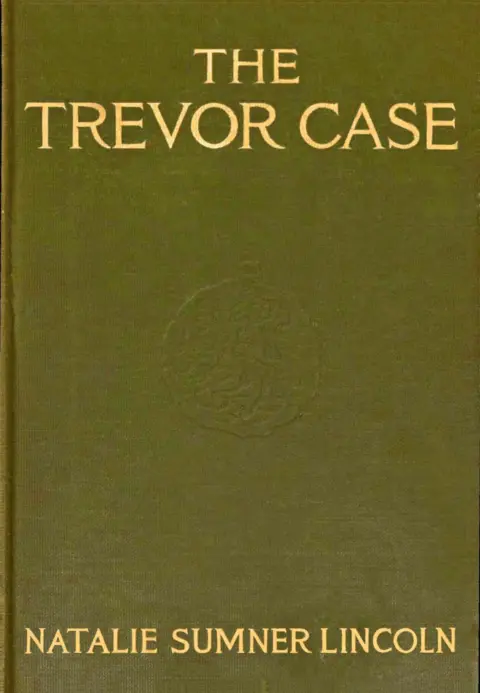
THE CLASSIC COLLECTION · 1912
"The Trevor Case" by Natalie Sumner Lincoln is a murder mystery novel written in the early 20th century. The story revolves around the mysterious death of Mrs. Hélène de Beaupré Trevor, the wife of the Attorney General, who is found dead in a safe, prompting an investigation filled with intrigue and dark secrets. The characters include the Attorney General, his daughter Beatrice, and various figures from their social circle, all of whom are drawn into the unfolding mystery. At the start of the novel, the reader is introduced to a burglar who stealthily breaks into the Trevor household, only to discover something horrifying—Mrs. Trevor's lifeless body crumpled inside the safe. The narrative quickly transitions to the chaos that ensues once the body is discovered, particularly focusing on the emotional turmoil of the Attorney General and his daughter. The atmosphere is thick with tension as detectives arrive, revealing early leads that suggest foul play rather than mere accident. The opening chapters establish a complex web of relationships and motives that set the stage for further investigation into the circumstances surrounding Mrs. Trevor’s tragic demise.
Introduction adapted from the source catalogue; source summaries may be automatically generated.
Free to read · English · 53,824 words · No account needed
MAKE TIME FOR A GOOD BOOK
On by default. Untick to stop anonymous reading totals. Each page counts after 10 seconds in view. How this works.
Anonymous counting is on unless you have switched it off.
“Was her head sunk forward on her breast?”
“No; on the contrary, it was thrown back and she was looking up, so that I, standing, looked directly down into her eyes.”
“Did you touch or move anything in the vault before summoning aid?”
There was a barely perceptible pause before the secretary answered.
“No, sir; nothing.”
“Did you see much of Mrs. Trevor?”
“No. She came but seldom to the office during the day.”
“Do you mean that it was her habit to go there often at night?”
“As to that, I cannot say, because I am not with the Attorney General at night unless some special work has to be done.”
At that moment a note was handed to the coroner. He read it twice; then addressed the secretary, saying:
“I think that is all just now.”
Clark bowed and retired. Coroner Wilson turned and addressed the jury.
“I have just received a note from the Chief of Police. He says that his prisoner, the burglar who was captured after leaving these premises, has asked to be allowed to make a statement before this jury. Therefore he has been sent here under guard. Up to the present time he has stubbornly refused to answer any questions, although every influence has been brought to hear to make him speak. I expected to call him later, anyway.”
The coroner’s remarks were interrupted by the entrance of the guard with their prisoner. He was of medium height, and insignificant enough in appearance save for his small, piercing blue eyes. His abundant red hair was plastered down on his round, bullet-shaped head, and his numerous freckles showed up plainly against the pallor of his face.
“Swear the prisoner,” ordered the coroner.
The clerk rose and stepped up to the man. “Place your hand on this book and say after me: ‘I, John Smith--’”
“Hold on; my name’s William Nelson. T’other one I just used to blind
the cops, see?”
“I, William Nelson, do solemnly swear--” The singsong voice of the clerk, and the heavier bass of the prisoner seemed interminable to Peggy, whose nerves were getting beyond her control. She wished he would get through his confession quickly. It was awful sitting in callous judgment on a human being, no matter how guilty he might be.
“Now, William Nelson, alias John Smith,” said the coroner, sternly, “I am told you have volunteered to confess--”
“Nix, no confession,” interrupted Nelson. “Just an account of how I came to get mixed up in this deal.”
“Well, remember you are on oath, and that every word will be used
against you.”
The prisoner nodded, cleared his throat, then spoke clearly and with
deliberation.
Your reading position is saved on this browser. Take it to another device with a library code. Reading pages adapt to text, rather than matching a printed edition.
Natalie Sumner Lincoln
Natalie Sumner Lincoln
Natalie Sumner Lincoln
Natalie Sumner Lincoln
BEHIND THE BOOK
This eBook is for the use of anyone anywhere in the United States and most other parts of the world at no cost and with almost no restrictions whatsoever. You may copy it, give it away or re-use it under the terms of the Project Gutenberg License included with this eBook or online at www.gutenberg.org. If you are not located in the United States, you will have to check the laws of the country where you are located before using this eBook. Read the source licence.
The original source file, including credits and licence, is retained by this library. Request an original-format copy at no charge. Please include the book title and Project Gutenberg identifier #69004.
KEEP YOUR CURIOSITY GOING
Coulson Kernahan

Maurice Baring
Frances Wright
Cécile Tormay

Frederic Jesup Stimson

W. H. P. (William Henry Pope) Jarvis