Emerson on Sound Money A Speech, 1896
Willis George Emerson
THE CLASSIC COLLECTION · 1915
"The Treasure of Hidden Valley" by Willis George Emerson is a novel written in the early 20th century. The book follows Roderick Warfield, a young man recently home from New York, who faces financial struggles and the weight of familial expectations. The story delves into themes of adventure, ambition, and the allure of a hidden treasure, sparked by revelations from Roderick’s deceased father about a mysterious gold mine in Wyoming. The opening of the novel sets the stage for Roderick's return to his Iowa hometown, where he receives a cool reception from his wealthy uncle, Allen Miller. The tension between them is thick, rooted in differing values regarding wealth and ambition, especially as Roderick seeks financial backing for a speculative mining deal. After a fiery confrontation, he leaves home, buoyed by a letter from his father that reveals the location of a lost mine. This begins Roderick's journey toward adventure, with destiny calling him to the rugged landscapes of Wyoming, where he hopes to unearth both treasure and the secrets of his family legacy.
Introduction adapted from the source catalogue; source summaries may be automatically generated.
Free to read · English · 107,144 words · No account needed
MAKE TIME FOR A GOOD BOOK
On by default. Untick to stop anonymous reading totals. Each page counts after 10 seconds in view. How this works.
Anonymous counting is on unless you have switched it off.
But Roderick Warfield had all the blind audacity of youth and did not give the old westerner Jim Rankin the credit he deserved. Jim Rankin was versed in the ways of these western transgressors, and knew the price he and Roderick would have to pay for “butting in” on a quarrel between the cattle and the sheep men that was no direct concern of outsiders. This price was death, swift and merciless.
When Roderick reached the highway he pulled his horse to the right toward the bridge that spanned Jack Creek. As he approached the bridge he heard someone say: “Here he comes now.” The voice was not Jim Rankin’s.
“Hello,” came a call in yet another voice, just as his horse reached
the bridge.
“Come on, Roderick,” cried Jim Rankin, “I’m here.”
“Who’s with you?” inquired Roderick.
“They’ll tell you,” replied Jim.
Roderick rode up and found three men with drawn revolvers, and one of them proved to be the sheriff of the county and the others his deputies.
“Gentlemen,” said the sheriff, “you are accused of killing a lot of sheep up here on Jack Creek and burning a couple of wagons, and I arrest you in the name of the law.”
“What does this mean?” inquired Roderick, hotly.
“It means,” said the sheriff, “you fellers will fork over your shootin’ irons quietly and submit to being handcuffed.”
“Look here, Mills,” said Rankin, resentfully, “you’re goin’ too dangnation far, by gunnies. I’ll be responsible for young Warfield, here. I’ll go his bail. Dangnation, don’t press me any furder or I’ll git peevish.”
“Well,” replied Sheriff Mills, hesitatingly, “who will be
responsible for you?”
“Why, Gosh’lmighty, Mills, we’ve know’d each other fur twenty-five years. You go my security yourself or by the great horn spoon you’ll not kerry Rawlins precinct next election.”
“Watch that young feller,” instructed the sheriff to his deputies. “Ride over this way, Jim, where we can speak privately.”
A few moments later Rankin called out: “Come on, Roderick, let’s be goin’. It’s gettin’ late. Everything’s all right.” And together they headed their horses for Encampment and rode on in the darkness.
Jim Rankin presently said: “Well, by gunnies, Tom Sun has leastways got to hand it to us fur tryin’.”
Roderick made no immediate reply and they continued their way in
silence.
At last Roderick spoke.
“You were mighty friendly with that white-livered, double-dealing cur, the sheriff—that’s what you called him a few hours ago.”
“Yes, but he wasn’t present with a gun in his hand,” replied Jim. “He sure ‘nuff had the drop on us.”
Your reading position is saved on this browser. Take it to another device with a library code. Reading pages adapt to text, rather than matching a printed edition.
Willis George Emerson
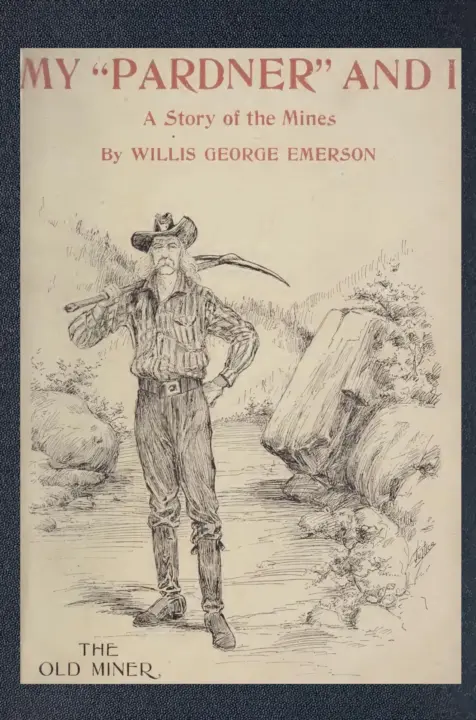
Willis George Emerson
Willis George Emerson
Willis George Emerson
BEHIND THE BOOK
This eBook is for the use of anyone anywhere in the United States and most other parts of the world at no cost and with almost no restrictions whatsoever. You may copy it, give it away or re-use it under the terms of the Project Gutenberg License included with this eBook or online at www.gutenberg.org. If you are not located in the United States, you will have to check the laws of the country where you are located before using this eBook. Read the source licence.
The original source file, including credits and licence, is retained by this library. Request an original-format copy at no charge. Please include the book title and Project Gutenberg identifier #52461.
KEEP YOUR CURIOSITY GOING
Coulson Kernahan

Maurice Baring
Frances Wright
Cécile Tormay

Frederic Jesup Stimson

W. H. P. (William Henry Pope) Jarvis