THE CLASSIC COLLECTION✦An outlaw’s diary: the CommuneCLASSIC FREE BOOKS
An outlaw’s diary: the Commune
Cécile Tormay
THE CLASSIC COLLECTION · 1887
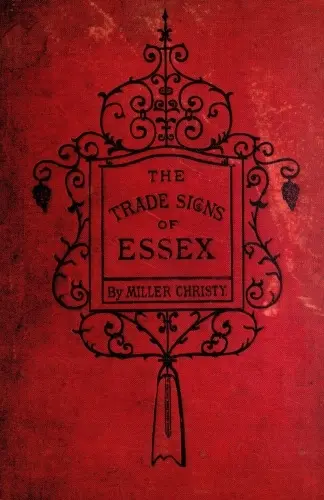
"The Trade Signs of Essex" by Miller Christy is a historical account written in the late 19th century. The work explores the origin and meanings of the public house and other signs once commonly found in Essex. Christy meticulously compiles a detailed examination of over 600 distinct signs, linking their significance to local history, trade, and heraldry, providing a unique glimpse into the cultural heritage of the region. At the start of the text, the author introduces the topic by discussing the historical context in which signs became essential for distinguishing businesses, particularly during times when literacy was low. He highlights the connection between the art of heraldry and trade signs, emphasizing their relevance in understanding past customs. Discussing the decline of pictorial signs today, Christy sets the stage for an exploration of the diverse types of signs in Essex, explaining their meanings and origins while expressing a desire for readers to appreciate the historical significance these signs hold in representing the county's legacy.
Introduction adapted from the source catalogue; source summaries may be automatically generated.
Free to read · English · 65,171 words · No account needed
MAKE TIME FOR A GOOD BOOK
On by default. Untick to stop anonymous reading totals. Each page counts after 10 seconds in view. How this works.
Anonymous counting is on unless you have switched it off.
Probably no better idea can now be obtained in Essex of an old-fashioned thoroughfare than in the broad High Street at Epping. From one point no less than ten sign-boards may be seen, all swinging over the pavement in the ancient style. Only one, however, the WHITE LION, is now pictorial. The number of inns in Grays, too, is very large. It has been stated in print that “for its size, it contains more than any other town in England.” In the narrow Tindal Street at Chelmsford the sign-boards still swing across the street in the old style, and are hung upon the old supports. The best example is that which supports the sign of the SPOTTED DOG. Witham has many inns, nearly all of which have their sign-boards hanging over the pavement, but neither they nor their supports are of much interest. Colchester has hardly such a thing as a projecting sign-board, let alone pictorial signs. Castle Hedingham, for its size, probably has more pictorial signs than any other Essex town, the BELL, the CROWN, the THREE CROWNS, and the RISING SUN being all thus represented. Except the sign-iron of the Six Bells (p. 168), Dunmow contains but little of sign-board interest. The only pictorial sign-board in Ongar is that of the COCK. Several signs and sign-irons in Bardfield are hereafter noticed (pp. 170 and 169). In the High Street at Romford are many very old inns, but their signs are all script. At Leigh there are many inns, the most ancient of which, in the opinion of Mr. H. W. King, are the CROWN and the HAMBORO’ MERCHANTS’ ARMS, though the GEORGE was originally the more important.
The following interesting list of inns in the Epping Division in
September, 1789, has been kindly contributed by Mr. G. Creed of
Epping:--
CHINGFORD: King’s Head, Bull. EPPING: White Lion, Bell, Cock, Swan, Black Lion, Epping Place, Cock and Magpie, Green Man, Globe, George, Rose and Crown, Thatched House, White Hart, Harp, White Horse, Sun, Chequers. NAZING: Chequer, Sun, Coach and Horses, Crown, King Harold’s Head. ROYDON: Fish and Eels, Black Swan, New Inn, White Hart, Green Man. WALTHAM ABBEY: Owl, Green Man, Harp, Greyhound, Ship, Cock, Chequer, Angel, Rose and Crown, Red Lion, Bull’s Head, Three Tons (sic), Sun, Cock, New Inn, Green Dragon, White Horse, Compasses, White Lion, King’s Arms. CHIGWELL: Three Jolly Wheelers, Roebuck, King’s Head, Maypole, Bald Hind, Fox and Hounds, Bald Stag. LOUGHTON: Reindeer, Crown, King’s Head, Plume of Feathers. MORETON: Nag’s Head, Green Man, White Hart. NORTH WEALD: Rainbow, King’s Head. STANFORD RIVERS: White Bear, Green Man. THEYDON BOIS: White Hart. THEYDON GARNON: Merry Fiddlers. GREAT HALLINGBURY: George. LATTON: Sun and Whalebone, Bush Fair House. FYFIELD: Black Bull, Queen’s Head. LAMBOURNE: White Hart, Blue Boar. HIGH LAVER: Chequer. LITTLE LAVER: Leather Bottle. MAGDALEN LAVER: Green Man. CHIPPING ONGAR: White Horse, King’s Head, Anchor, Crown, Red Lion, Bull, Cock. HIGH ONGAR: Red Lion, White Horse, Two Brewers. HARLOW: King’s Head, Black Bull, George, Green Man, White Horse, Horns and Horseshoes, Queen’s Head, Black Lion, Marquis of Granby. HATFIELD BROAD OAK: Plume of Feathers, White Horse, Cock, Duke’s Head, Bald-Faced Stag, Red Lion, Crown. SHEERING: Crown, Cock. NETTESWELL: White Horse, Chequer. GREAT PARNDON: Cock, Three Horse Shoes.
Your reading position is saved on this browser. Take it to another device with a library code. Reading pages adapt to text, rather than matching a printed edition.
BEHIND THE BOOK
This eBook is for the use of anyone anywhere in the United States and most other parts of the world at no cost and with almost no restrictions whatsoever. You may copy it, give it away or re-use it under the terms of the Project Gutenberg License included with this eBook or online at www.gutenberg.org. If you are not located in the United States, you will have to check the laws of the country where you are located before using this eBook. Read the source licence.
The original source file, including credits and licence, is retained by this library. Request an original-format copy at no charge. Please include the book title and Project Gutenberg identifier #51885.
KEEP YOUR CURIOSITY GOING
Cécile Tormay

Moritz Busch
John L. Ransom
Frances Wright
Cécile Tormay

Mabel Potter Daggett