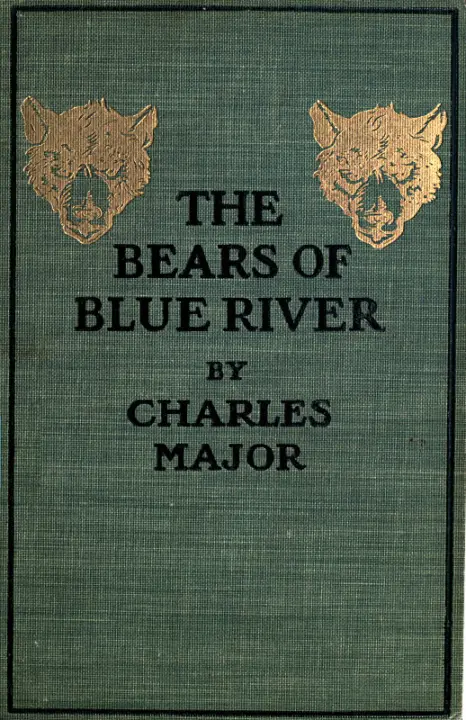
The Bears of Blue River
Charles Major
THE CLASSIC COLLECTION · 1912
"The Touchstone of Fortune" by Charles Major is a historical novel written during the early 20th century. The story is set against the backdrop of the Restoration period in England under King Charles II, focusing on the lives and loves of the socially prominent. The narrative centers around Baron Clyde and his cousin Frances Jennings, who faces the tumultuous social landscape of the court as she seeks a chance to elevate her family’s fortunes. At the start of the novel, we are introduced to the themes of luck, ambition, and moral complexity through the eyes of Baron Clyde, who reflects on the fortunes of his friend, George Hamilton, and the political machinations of the court. Clyde reveals his cousin Frances's beauty and potential and speaks of his plans to secure her a position as a maid of honor to the Duchess of York. The opening chapter establishes Frances’s precarious situation, growing tensions with her father’s fading fortunes, and her burgeoning, yet unsafe, attraction to George Hamilton, meant to illustrate the dangers that lurk within courtly life during a time of moral ambiguity and personal ambition.
Introduction adapted from the source catalogue; source summaries may be automatically generated.
Free to read · English · 92,319 words · No account needed
MAKE TIME FOR A GOOD BOOK
On by default. Untick to stop anonymous reading totals. Each page counts after 10 seconds in view. How this works.
Anonymous counting is on unless you have switched it off.
Sir Richard's good fortune brought a gleam of joy to Frances, but it also brought a pang of regret, because it had come too late. Her only purpose in going to Whitehall had been to marry a rich nobleman and thereby raise the fallen fortunes of her house. Now that reason existed no longer, and if George were here, she could throw herself away upon him with injury to no one but herself. But George was not here, and liberty to throw herself away had come too late to be of any value.
Every day during the fortnight that Frances remained at home, she asked if I had any news from court, meaning the French court, but using the form of inquiry to avoid acquainting her father and Sarah with the real cause of her solicitude.
But my answers were always, "Oh, nothing but Castlemain's new tantrum," or "The duke's defeat at pall-mall."
Frances was the last girl in the world, save, perhaps Sarah, who I should have supposed capable of languishing and dying of love, but the former she did before my eyes, and the latter I almost began to fear if news did not reach us soon from George.
Betty came up to see Frances nearly every day, and the kissing and embracing that ensued disgusted Sarah.
"Now, if Frances were a man, I could understand it," said Sarah. "The little barmaid must be tempting to a man, being pretty and--"
"Beautiful, Sarah!" I interrupted.
"Yes, beautiful, if you will."
"Her eyes--" I began, again interrupting Sarah.
"Oh, yes!" cried Sarah, impatiently. "Her eyes are fine enough, but their expression comes from their color, their size, and their preposterously long eyelashes. Black long lashes often give a radiance to the eyes which passes for expressiveness, and I doubt not--"
"Nonsense, Sarah!" I cried, half angrily. "Bettina's eyes are expressive in themselves. As you say, their soft dark brown is the perfection of color, and they certainly are large. But aside from all that, their expression is--"
"There is no intellect in them!" cried Sarah.
"There is tenderness, gentleness, love, and truth in them," I answered, with as careless an air as I could assume.
"Yes, there may be for a man, but I insist there is no real intellect."
"Well, Sarah," I answered, showing irritation despite an effort to appear indifferent, "it is my opinion that the possession of great intellectual power by a woman is the one virtue with which men, as a rule, find themselves most willing to dispense. It gives her too great an advantage."
Your reading position is saved on this browser. Take it to another device with a library code. Reading pages adapt to text, rather than matching a printed edition.
Charles Major
Charles Major
Charles Major
Charles Major
BEHIND THE BOOK
This eBook is for the use of anyone anywhere in the United States and most other parts of the world at no cost and with almost no restrictions whatsoever. You may copy it, give it away or re-use it under the terms of the Project Gutenberg License included with this eBook or online at www.gutenberg.org. If you are not located in the United States, you will have to check the laws of the country where you are located before using this eBook. Read the source licence.
The original source file, including credits and licence, is retained by this library. Request an original-format copy at no charge. Please include the book title and Project Gutenberg identifier #14242.
KEEP YOUR CURIOSITY GOING
Cécile Tormay

Moritz Busch
Coulson Kernahan
John L. Ransom

Maurice Baring
Frances Wright