THE CLASSIC COLLECTION✦Bulldog CarneyCLASSIC FREE BOOKS
Bulldog Carney
William Alexander Fraser
THE CLASSIC COLLECTION · 1918
"The Three Sapphires" by William Alexander Fraser is a novel written in the early 20th century. The story unfolds in India, centering around characters such as Lord Victor Gilfain and Prince Ananda, set against a backdrop filled with intrigue and local mythology surrounding three sacred sapphires. As the narrative begins, readers are introduced to a world rich with cultural references, personal dynamics, and hints of mystery that propel the plot. At the start of the novel, we find Lord Victor and Captain Swinton enjoying a moment on the balcony of Prince Ananda’s palace, overlooking the city of Darpore. The conversation flows between the characters, revealing glimpses into their backgrounds and hinting at deeper themes involving caste, imperialism, and the mystical allure of Indian culture. As they proceed to dinner, a sapphire linked to an African elephant’s bell becomes a focal point, raising questions about its significance and prompting discussions about the legends associated with the lost treasures of the buried city. The opening sets a tone of adventure and enigma, promising an engaging blend of action and cultural commentary as the story develops.
Introduction adapted from the source catalogue; source summaries may be automatically generated.
Free to read · English · 73,738 words · No account needed
MAKE TIME FOR A GOOD BOOK
On by default. Untick to stop anonymous reading totals. Each page counts after 10 seconds in view. How this works.
Anonymous counting is on unless you have switched it off.
"Really? Oh, I say, old top, you're spoofing. No end of a good draw, though." And Lord Victor chuckled.
"I'm in earnest," Finnerty declared crisply. "A rhododendron has a bark like rough sandpaper--it's a favourite whetstone for the cat tribe; and this was a big tiger, as you can judge by the height of the marks."
"There are no pugs on the path, sahib," Mahadua advised, after a search.
"We'll keep close together for a bit," Finnerty advised, starting on.
At Finnerty's elbow the shikari whispered: "Tell the sahibs to talk, so that we come not in a startling way upon the Pundit, that he may escape in peace."
The major conveyed this message to his companions.
For a hundred yards they walked through a jungle that was now silent save for their voices and the slip of their feet on the smooth earth. From a tangle of raspberry bushes ahead a king crow rose in excited flight.
"That's a bird that always gets in a rage when tiger is about," Finnerty explained; "so keep your eye open--the jungle's thick here."
The major had taken a knife from his pocket, and he now ran its sharp blade around two 10-bore shells, just between the wads which separated the powder from the shot, saying, as he slipped first the shot half and next the powder half into his gun: "That is now practically a ball cartridge, for the shot packet will carry like a bullet for a good many yards. I don't think we'll see him, though. Ah! Mistaken!"
A magnificent striped creature slipped without noise from some thick undergrowth twenty yards ahead, and now stood across the path, his huge head turned so that the questioning yellow eyes were full upon them.
"Pundit Bagh--see his spectacles, sahib!" Mahadua gasped.
The curious black oval markings added to the sinister malignity of the
unblinking eyes.
"Don't move, you chaps; he's only bluffing. If you weaken he'll charge,"
Finnerty cautioned.
"I will speak to Pundit Bagh," Mahadua said, stepping a pace forward. "Kudawand, Protector of the Village, go in peace. Did not the sahib this day give you back your life? Did not the sahib put down the rifle and take up the bird gun and shoot in the air over your head? Go in peace, Kudawand, lest the sahib now smite thee with the ball gun."
"Have you a box of matches, Swinton?" the major asked, a quick thought coming to him that probably the tiger, in his migrations to the hills, had learned to dread the fire line of the burning grass.
Something of this scheme registered in Swinton's brain, for he answered: "I've got a newspaper, too."
Your reading position is saved on this browser. Take it to another device with a library code. Reading pages adapt to text, rather than matching a printed edition.
William Alexander Fraser
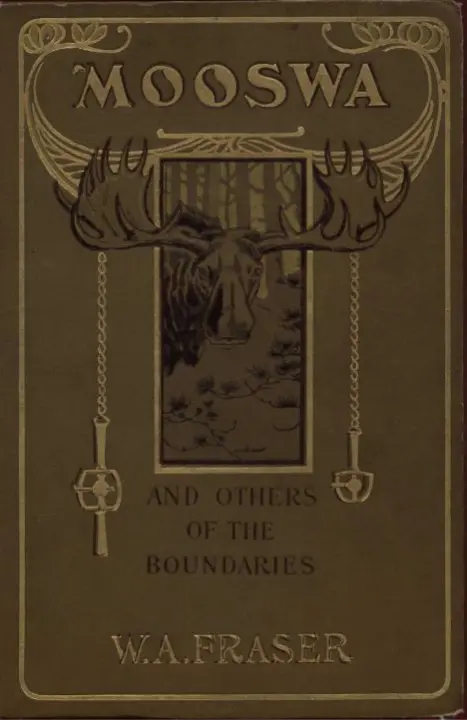
William Alexander Fraser
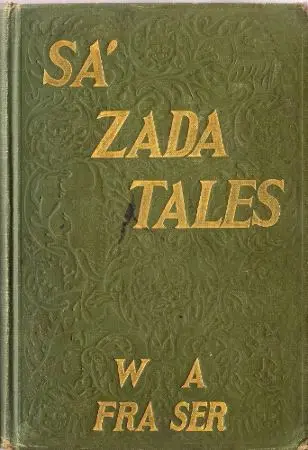
William Alexander Fraser
William Alexander Fraser
BEHIND THE BOOK
This eBook is for the use of anyone anywhere in the United States and most other parts of the world at no cost and with almost no restrictions whatsoever. You may copy it, give it away or re-use it under the terms of the Project Gutenberg License included with this eBook or online at www.gutenberg.org. If you are not located in the United States, you will have to check the laws of the country where you are located before using this eBook. Read the source licence.
The original source file, including credits and licence, is retained by this library. Request an original-format copy at no charge. Please include the book title and Project Gutenberg identifier #35179.
KEEP YOUR CURIOSITY GOING
Coulson Kernahan

Maurice Baring
Frances Wright
Cécile Tormay

Frederic Jesup Stimson

W. H. P. (William Henry Pope) Jarvis