THE CLASSIC COLLECTION✦Bulldog CarneyCLASSIC FREE BOOKS
Bulldog Carney
William Alexander Fraser
THE CLASSIC COLLECTION · 1918
"The Three Sapphires" by William Alexander Fraser is a novel written in the early 20th century. The story unfolds in India, centering around characters such as Lord Victor Gilfain and Prince Ananda, set against a backdrop filled with intrigue and local mythology surrounding three sacred sapphires. As the narrative begins, readers are introduced to a world rich with cultural references, personal dynamics, and hints of mystery that propel the plot. At the start of the novel, we find Lord Victor and Captain Swinton enjoying a moment on the balcony of Prince Ananda’s palace, overlooking the city of Darpore. The conversation flows between the characters, revealing glimpses into their backgrounds and hinting at deeper themes involving caste, imperialism, and the mystical allure of Indian culture. As they proceed to dinner, a sapphire linked to an African elephant’s bell becomes a focal point, raising questions about its significance and prompting discussions about the legends associated with the lost treasures of the buried city. The opening sets a tone of adventure and enigma, promising an engaging blend of action and cultural commentary as the story develops.
Introduction adapted from the source catalogue; source summaries may be automatically generated.
Free to read · English · 73,738 words · No account needed
MAKE TIME FOR A GOOD BOOK
On by default. Untick to stop anonymous reading totals. Each page counts after 10 seconds in view. How this works.
Anonymous counting is on unless you have switched it off.
"There's always a woman at the bottom of these things, sir," and Perreira twisted his eyes into an owllike look of wisdom.
"You see, sar," the baboo elucidated, "Prince Ananda has give this to the maharajah, and it is accursed agent of evil; because of it I am nearly eated of a tiger."
On the sapphire was the same inscription Swinton had seen on the stolen
stone.
"That is Persian characters, sahib," Baboo Dass declared ponderously. "It is used for 'mine,' but in learned way madun is proper name for mine, and Rikaz, this word, means buried treasure. I am learned in dead languages--Sanskrit, Pali. It is sacred stone. If you possessing patience, sahib, I will narrative obscure histories of Buddhism."
"Oh, my aunt!" The already bored Lord Victor yawned.
But Captain Swinton declared earnestly: "If you do, baboo, I will place your name in my book as an authority."
Mohun Dass' breast swelled with prospective glory.
"I say, old chappie, if we're to sit out the act I'm going to have a B. and S.," and Gilfain reached for the bottle.
"We'll all have one," declared the captain to the delight of Perreira.
"Kind sar," Baboo Dass pleaded, "do not speak these things to-morrow, for my caste frowning against bacchanalian feast."
"We promise, old top!" Lord Victor declared solemnly, and Swinton mentally added: "The Lord forbid!"
"Now, sar," began Baboo Dass, "in Buddhist book 'Paramamsa Maju,' is describe the Logha, the earth, telling it rests on three great sapphires, and beneath is big rock and plenty oceans. And according to that book is three sacred sapphires knocking around loose. If any man have them three together he is the true Buddha and rules all India. Prince Sakya Singha got those sapphires and became Buddha; that was up on the hill where is Maha Bodhi Temple. The sapphires got hole because one is to hang in the temple, one hangs on a sacred elephant that guard the temple, and one round the Buddha's neck."
Baboo Dass lifted his glass, his heavy ox eyes peering over its top at Swinton, who was thinking of Finnerty's elephant that had the sapphire.
Baboo Dass resumed: "And here, kind gentleman, is the hell of dilemma, for one sapphire is Brahm, the Creator; one Vishnu, the Preserver; and one Siva, the Destroyer. So, if a man got one he don't know if it is loadstone for good fortune or it brings him to damnation."
"But, baboo," Swinton objected, "those are Brahman gods, and Buddhists have practically no gods."
"Sar, Buddhism is kind of revolted Brahmanism, and in the north the two
is mixed."
Your reading position is saved on this browser. Take it to another device with a library code. Reading pages adapt to text, rather than matching a printed edition.
William Alexander Fraser
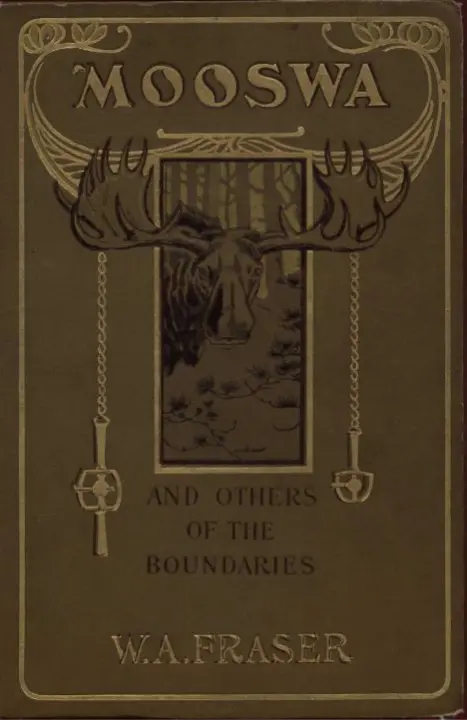
William Alexander Fraser
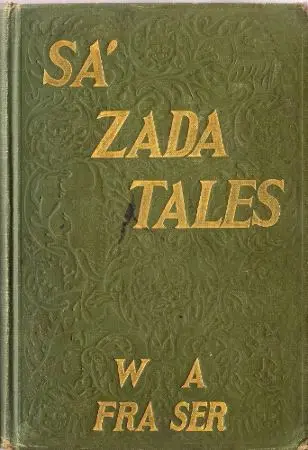
William Alexander Fraser
William Alexander Fraser
BEHIND THE BOOK
This eBook is for the use of anyone anywhere in the United States and most other parts of the world at no cost and with almost no restrictions whatsoever. You may copy it, give it away or re-use it under the terms of the Project Gutenberg License included with this eBook or online at www.gutenberg.org. If you are not located in the United States, you will have to check the laws of the country where you are located before using this eBook. Read the source licence.
The original source file, including credits and licence, is retained by this library. Request an original-format copy at no charge. Please include the book title and Project Gutenberg identifier #35179.
KEEP YOUR CURIOSITY GOING
Coulson Kernahan

Maurice Baring
Frances Wright
Cécile Tormay

Frederic Jesup Stimson

W. H. P. (William Henry Pope) Jarvis