THE CLASSIC COLLECTION✦Bulldog CarneyCLASSIC FREE BOOKS
Bulldog Carney
William Alexander Fraser
THE CLASSIC COLLECTION · 1918
"The Three Sapphires" by William Alexander Fraser is a novel written in the early 20th century. The story unfolds in India, centering around characters such as Lord Victor Gilfain and Prince Ananda, set against a backdrop filled with intrigue and local mythology surrounding three sacred sapphires. As the narrative begins, readers are introduced to a world rich with cultural references, personal dynamics, and hints of mystery that propel the plot. At the start of the novel, we find Lord Victor and Captain Swinton enjoying a moment on the balcony of Prince Ananda’s palace, overlooking the city of Darpore. The conversation flows between the characters, revealing glimpses into their backgrounds and hinting at deeper themes involving caste, imperialism, and the mystical allure of Indian culture. As they proceed to dinner, a sapphire linked to an African elephant’s bell becomes a focal point, raising questions about its significance and prompting discussions about the legends associated with the lost treasures of the buried city. The opening sets a tone of adventure and enigma, promising an engaging blend of action and cultural commentary as the story develops.
Introduction adapted from the source catalogue; source summaries may be automatically generated.
Free to read · English · 73,738 words · No account needed
MAKE TIME FOR A GOOD BOOK
On by default. Untick to stop anonymous reading totals. Each page counts after 10 seconds in view. How this works.
Anonymous counting is on unless you have switched it off.
The sentry, having seen Foley with Doctor Boelke, was unsuspicious, and, grounding his rifle tight against his hip, he clicked his heels together at attention.
"The two prisoners are wanted above for examination," Foley said. "You are to bind their arms behind their backs and accompany us."
"The one sahib is a giant," the other answered, when this order, percolating slowly through his heavy brain, had found no objection.
"Give me the gun; I will cover him while you bind his arms."
The sentry unlocked the door, took a rope in his hand, and, saying to Foley, "Keep close, mein Herr," entered the cell.
Finnerty and Swinton watched this performance, in the major's mind bitter anger at the thought that an Irishman could be such a damnable traitor.
"Will the Herr Kapitän give orders in English to these schweinehunds that if they do not obey they will be killed?"
Foley complied. What he said was: "Major, put your hands behind your back; then when this chap comes close throttle him so quick he can't squeak."
A hot wave of blood surged in a revulsion of feeling through Finnerty's heart, and he crossed his hands behind his back, half turning as if to invite the bondage. When the German stepped close a hand shot up, and, closing on his windpipe, pinned him flat against the wall, lifted to his toes, his tongue hanging out from between parted lips.
"Bind and gag him, Swinton," Foley suggested.
In a minute the sentry was trussed, a handkerchief wedged in his mouth, and he was deposited in a corner. Outside, Foley turned off the cell light, locked the door, and, handing the guard's gun to Swinton, led the way back to the dark passage.
On the landing above the stone steps, Darna Singh silently moved the carved Ganesha and peered through the hole. Then whispering, "The room is empty," unlocked and slid open the panel, locking it behind them as they entered Boelke's room.
The bungalow was silent. There was no sound of servants moving about; no doubt they were over at the palace, waiting for the thing that was in the air.
Out of the fullness of his heart, Foley spoke in low tones: "Gentlemen, the doctor will be here shortly with money for me, and your presence might irritate him."
"I'll never forget what you've done for us, Foley," Finnerty said.
"Neither will I if you do me out of two thousand quid by blathering
here," Foley drawled.
Your reading position is saved on this browser. Take it to another device with a library code. Reading pages adapt to text, rather than matching a printed edition.
William Alexander Fraser
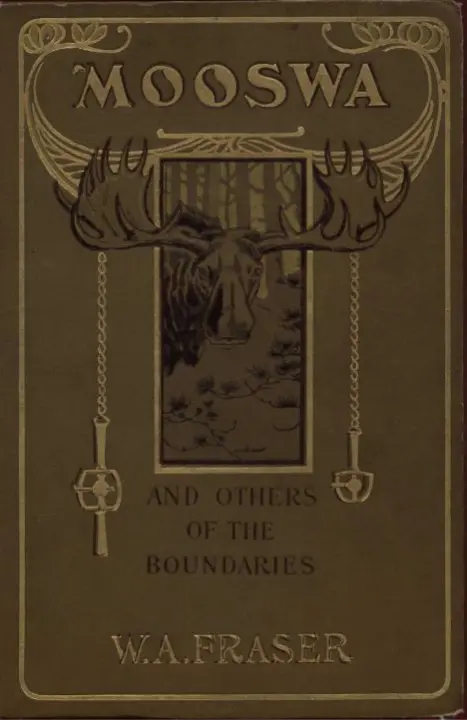
William Alexander Fraser
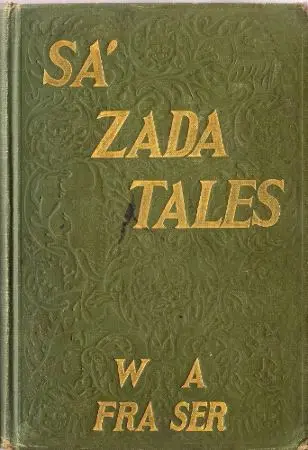
William Alexander Fraser
William Alexander Fraser
BEHIND THE BOOK
This eBook is for the use of anyone anywhere in the United States and most other parts of the world at no cost and with almost no restrictions whatsoever. You may copy it, give it away or re-use it under the terms of the Project Gutenberg License included with this eBook or online at www.gutenberg.org. If you are not located in the United States, you will have to check the laws of the country where you are located before using this eBook. Read the source licence.
The original source file, including credits and licence, is retained by this library. Request an original-format copy at no charge. Please include the book title and Project Gutenberg identifier #35179.
KEEP YOUR CURIOSITY GOING
Coulson Kernahan

Maurice Baring
Frances Wright
Cécile Tormay

Frederic Jesup Stimson

W. H. P. (William Henry Pope) Jarvis