
The fourth plague
Edgar Wallace
THE CLASSIC COLLECTION · 1929
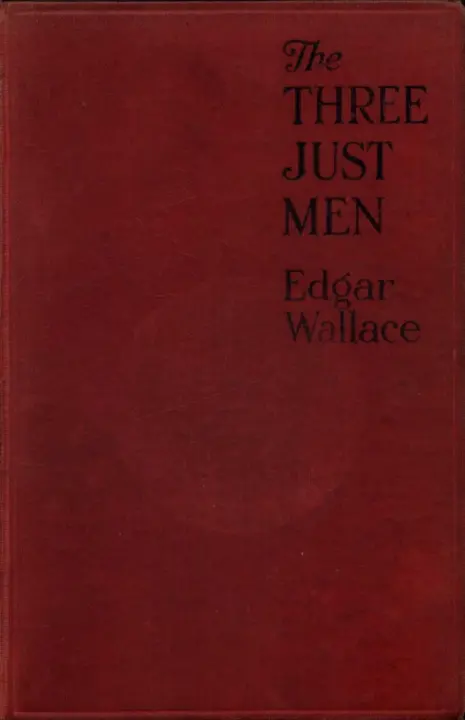
"The Three Just Men" by Edgar Wallace is a crime fiction novel written in the early 20th century. The story revolves around the exploits of a clandestine group of vigilantes known as the Three Just Men, who take it upon themselves to exact justice where the law fails. Central to the plot is Mirabelle Leicester, a young woman who becomes unknowingly entwined in their dangerous world after she seeks employment in London. At the start of the narrative, we are introduced to Mirabelle Leicester, who discovers a job advertisement that sets her on a path to the big city. Her aunt, Alma, expresses concern for Mirabelle’s safety as they discuss the notorious reputation of the Four Just Men, a group that presumably inspired fear across London. Meanwhile, a series of mysterious deaths attributed to a venomous escaped snake complicates the atmosphere of dread in the city. As Mirabelle secures the job with the enigmatic Dr. Oberzohn, it becomes evident that her life is about to collide dramatically with the unfolding events involving the Just Men and their controversial methods of dispensing justice. The opening engages readers with intrigue, suggesting a mix of suspense, danger, and moral ambiguity that sets the tone for Mirabelle's forthcoming adventure.
Introduction adapted from the source catalogue; source summaries may be automatically generated.
Free to read · English · 93,908 words · No account needed
MAKE TIME FOR A GOOD BOOK
On by default. Untick to stop anonymous reading totals. Each page counts after 10 seconds in view. How this works.
Anonymous counting is on unless you have switched it off.
Manfred and Digby were searching the ground cautiously. Then Manfred heard the quick intake of his breath, and he stooped again, picked up a strip of braided cloth.
“A man’s,” he said, and his relief betrayed his fear. “Somebody in evening dress, and quite recent.” He looked at his finger. “The blood is still wet.”
Digby showed him the ventilator grating through which he had smelt the incense, and when Leon stooped, the faint aroma still remained.
“We will try the factory first. If that draws blank, we’ll ask Dr. Oberzohn’s guidance, and if it is not willingly given I shall persuade him.” And in the reflected light of the lamp George Manfred saw the hard Leon he knew of old. “This time I shall not promise: my threat will be infinitely milder than my performance.”
They came to the dark entry of the factory, and Manfred splashed his
light inside.
“You’ll have to walk warily here,” he said.
Progress was slow, for they did not know that a definite path existed between the jagged ends of broken iron and debris. Once or twice Leon stopped to stamp on the floor; it gave back a hollow sound.
The search was long and painfully slow: a quarter of an hour passed before Leon’s lamp focussed the upturned flagstone and the yawning entrance of the vault. He was the first to descend, and, as he reached the floor, he saw, silhouetted in the light that flowed from the inner room, a man, as he thought, crouching in the doorway, and covered him.
“Put up your hands!” he said.
The figure made no response, and Manfred ran to the shape. The face was in the shadow, but he brought his own lamp down and recognized the set grin of the dead man.
Gurther!
So thus he had died, in a last effort to climb out for help.
“The Snake,” said Manfred briefly. “There are no marks on his face, so far as I can see.”
“Do you notice his wrist, George?”
Then, looking past the figure, Gonsalez saw the girl lying on the bed, and recognized Joan before he saw her face. Half-way across the room he slipped on something. Instinctively he knew it was a snake and leapt around, his pistol balanced.
“Merciful heaven! Look at this!”
He stared from the one reptile to the other.
“Dead!” he said. “That explains Gurther.”
Quickly he unstrapped Joan’s wrists and lifted up her head, listening, his ear pressed to the faintly fluttering heart. The basin and the sponge told its own story. Where was Mirabelle?
Your reading position is saved on this browser. Take it to another device with a library code. Reading pages adapt to text, rather than matching a printed edition.
Edgar Wallace
Edgar Wallace
Edgar Wallace
Edgar Wallace
BEHIND THE BOOK
This eBook is for the use of anyone anywhere in the United States and most other parts of the world at no cost and with almost no restrictions whatsoever. You may copy it, give it away or re-use it under the terms of the Project Gutenberg License included with this eBook or online at www.gutenberg.org. If you are not located in the United States, you will have to check the laws of the country where you are located before using this eBook. Read the source licence.
The original source file, including credits and licence, is retained by this library. Request an original-format copy at no charge. Please include the book title and Project Gutenberg identifier #69790.
KEEP YOUR CURIOSITY GOING
Coulson Kernahan

Maurice Baring
Frances Wright
Cécile Tormay

Frederic Jesup Stimson

W. H. P. (William Henry Pope) Jarvis