
The fourth plague
Edgar Wallace
THE CLASSIC COLLECTION · 1929
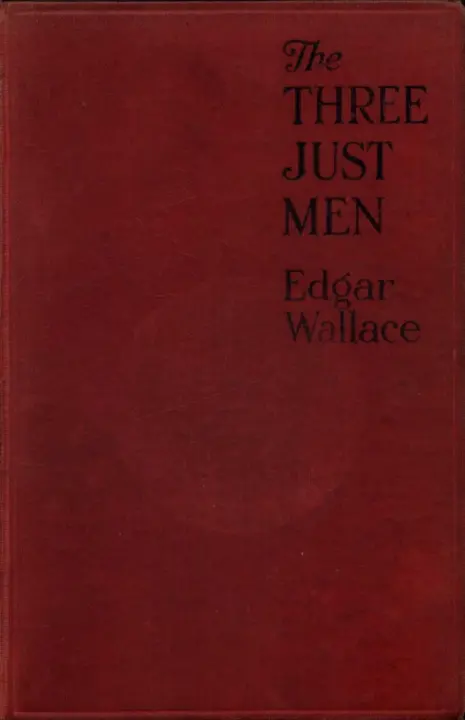
"The Three Just Men" by Edgar Wallace is a crime fiction novel written in the early 20th century. The story revolves around the exploits of a clandestine group of vigilantes known as the Three Just Men, who take it upon themselves to exact justice where the law fails. Central to the plot is Mirabelle Leicester, a young woman who becomes unknowingly entwined in their dangerous world after she seeks employment in London. At the start of the narrative, we are introduced to Mirabelle Leicester, who discovers a job advertisement that sets her on a path to the big city. Her aunt, Alma, expresses concern for Mirabelle’s safety as they discuss the notorious reputation of the Four Just Men, a group that presumably inspired fear across London. Meanwhile, a series of mysterious deaths attributed to a venomous escaped snake complicates the atmosphere of dread in the city. As Mirabelle secures the job with the enigmatic Dr. Oberzohn, it becomes evident that her life is about to collide dramatically with the unfolding events involving the Just Men and their controversial methods of dispensing justice. The opening engages readers with intrigue, suggesting a mix of suspense, danger, and moral ambiguity that sets the tone for Mirabelle's forthcoming adventure.
Introduction adapted from the source catalogue; source summaries may be automatically generated.
Free to read · English · 93,908 words · No account needed
MAKE TIME FOR A GOOD BOOK
On by default. Untick to stop anonymous reading totals. Each page counts after 10 seconds in view. How this works.
Anonymous counting is on unless you have switched it off.
“I also have a position to offer her, and I do not offer her any other
man’s.”
Oberzohn was looking at him wide-eyed, a comical figure; his elongated face seemed to stand out in the gloom like a pantomime mask.
“You?” Monty could hardly believe his ears.
“I, Baron Eruc Oberzohn.”
“A baron, are you?” The room shook with Monty’s laughter. “Why, you damned old fool, you don’t imagine she’d marry you, do you?”
Oberzohn nodded.
“She would do anythings what I tell her.” In his agitation his English was getting a little ragged. “A girl may not like a mans, but she might hate somethings worse—you understand? A woman says death is not’ing, but a woman is afeard of death, isn’t it?”
“You’re crazy,” said Monty scornfully.
“I am crazy, am I? And a damned old fool also—yes? Yet I shall marry
her.”
There was a dead silence, and then Oberzohn continued the conversation, but on a much calmer note.
“Perhaps I am what you call me, but it is not a thing worthy for two friends to quarrel. To-morrow you shall come here, and we will discuss this matter like a business proposition, hein?”
Monty examined him as though he were a strange insect that had wandered
into his ken.
“You’re not a Swede, you’re German,” he said. “That baron stuff gave you
away.”
“I am from the Baltic, but I have lived many years in Sweden,” said Oberzohn shortly. “I am not German: I do not like them.”
More than this he would not say. Possibly he shared Gurther’s repugnance towards his sometime neighbours.
“We shall not quarrel, anyway,” he continued. “I am a fool, you are a fool, we are all fools. You wish to see your woman?”
“I wish to see Joan,” said Monty gruffly. “I don’t like that ‘your woman’ line of yours.”
“I will go get her. You wait.”
Again the long boots came from under the table, were dragged on to the doctor’s awkward feet, and Monty watched him from the window as he crossed to the factory and disappeared.
He was gone five minutes before he came out again, alone. Monty frowned. What was the reason for this?
“My friend,” panted Oberzohn, to whom these exertions were becoming more and more irksome, “it is not wise.”
“I want to see her——” began Monty.
“Gently, gently; you shall see her. But on the canal bank Gurther has also seen a stranger, who has been walking up and down, pretending to fish. Who can fish in a canal, I ask you?”
“What is he to do with it?”
Your reading position is saved on this browser. Take it to another device with a library code. Reading pages adapt to text, rather than matching a printed edition.
Edgar Wallace
Edgar Wallace
Edgar Wallace
Edgar Wallace
BEHIND THE BOOK
This eBook is for the use of anyone anywhere in the United States and most other parts of the world at no cost and with almost no restrictions whatsoever. You may copy it, give it away or re-use it under the terms of the Project Gutenberg License included with this eBook or online at www.gutenberg.org. If you are not located in the United States, you will have to check the laws of the country where you are located before using this eBook. Read the source licence.
The original source file, including credits and licence, is retained by this library. Request an original-format copy at no charge. Please include the book title and Project Gutenberg identifier #69790.
KEEP YOUR CURIOSITY GOING
Coulson Kernahan

Maurice Baring
Frances Wright
Cécile Tormay

Frederic Jesup Stimson

W. H. P. (William Henry Pope) Jarvis