
The fourth plague
Edgar Wallace
THE CLASSIC COLLECTION · 1929
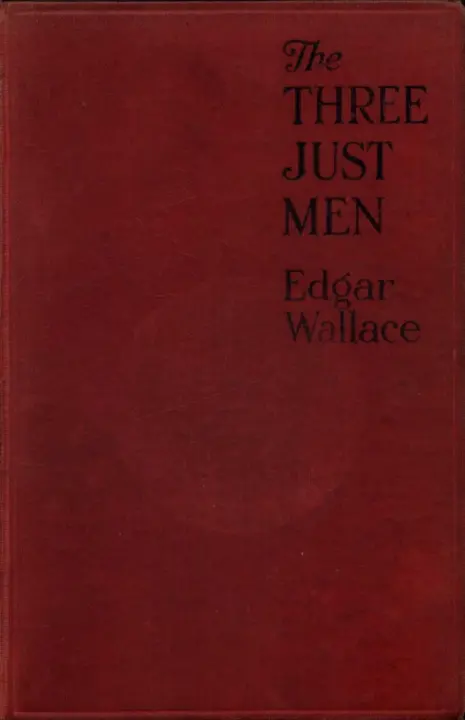
"The Three Just Men" by Edgar Wallace is a crime fiction novel written in the early 20th century. The story revolves around the exploits of a clandestine group of vigilantes known as the Three Just Men, who take it upon themselves to exact justice where the law fails. Central to the plot is Mirabelle Leicester, a young woman who becomes unknowingly entwined in their dangerous world after she seeks employment in London. At the start of the narrative, we are introduced to Mirabelle Leicester, who discovers a job advertisement that sets her on a path to the big city. Her aunt, Alma, expresses concern for Mirabelle’s safety as they discuss the notorious reputation of the Four Just Men, a group that presumably inspired fear across London. Meanwhile, a series of mysterious deaths attributed to a venomous escaped snake complicates the atmosphere of dread in the city. As Mirabelle secures the job with the enigmatic Dr. Oberzohn, it becomes evident that her life is about to collide dramatically with the unfolding events involving the Just Men and their controversial methods of dispensing justice. The opening engages readers with intrigue, suggesting a mix of suspense, danger, and moral ambiguity that sets the tone for Mirabelle's forthcoming adventure.
Introduction adapted from the source catalogue; source summaries may be automatically generated.
Free to read · English · 93,908 words · No account needed
MAKE TIME FOR A GOOD BOOK
On by default. Untick to stop anonymous reading totals. Each page counts after 10 seconds in view. How this works.
Anonymous counting is on unless you have switched it off.
“Well, how do you like your new home?” she asked, with an attempt at joviality, which she was far from feeling, in spite of Monty’s assurances.
“I’ve seen better,” said Mirabelle coolly.
“I’ll bet you have!” Joan stretched and yawned; then, opening one of the cupboards, took a shovelful of coal and threw it into the furnace, clanging the iron door. “That’s my job,” she said humorously, “to keep you warm.”
“How long am I going to be kept here?”
“Five days,” was the surprising answer.
“Why five?” asked Mirabelle curiously.
“I don’t know. Maybe they’ll tell you,” said Joan.
She fixed a plug in the wall and turned on the small electric fire. Disappearing, she came back with a kettle which she placed on top of the ring.
“The view’s not grand, but the food’s good,” she said, with a gaiety that Mirabelle was now sure was forced.
“You’re with these people, of course—Dr. Oberzohn and Newton?”
“Mister Newton,” corrected Joan. “Yes, I’m his fiancée. We’re going to be married when things get a little better,” she said vaguely, “and there’s no use in your getting sore with me because I helped to bring you here. Monty’s told me all about it. They’re going to do you no harm at all.”
“Then why——” began Mirabelle.
“He’ll tell you,” interrupted Joan, “sooner or later. The old man, or—or—well, Monty isn’t in this: he’s only obliging Oberzohn.”
With one thing Mirabelle agreed: it was a waste of time to indulge in recriminations or to reproach the girl for her supreme treachery. After all, Joan owed nothing to her, and had been from the first a tool employed for her detention. It would have been as logical for a convict to reproach the prison guard.
“How do you come to be doing this sort of thing?” she asked, watching
the girl making tea.
“Where do you get ‘this sort of thing’ from?” demanded Joan. “If you suppose that I spend my life chaperoning females, you’ve got another guess coming. Scared, aren’t you?”
She looked across at Mirabelle and the girl shook her head.
“Not really.”
“I should be,” confessed Joan. “Do you mind condensed milk? There’s no other. Yes, I should be writhing under the table, knowing something about Oberzohn.”
“If I were Oberzohn,” said Mirabelle with spirit, “I should be hiding in a deep hole where the Four Just Men would not find me.”
“Four Just Men!” sneered the girl, and then her face changed. “Were they the people who whipped Gurther?”
Your reading position is saved on this browser. Take it to another device with a library code. Reading pages adapt to text, rather than matching a printed edition.
Edgar Wallace
Edgar Wallace
Edgar Wallace
Edgar Wallace
BEHIND THE BOOK
This eBook is for the use of anyone anywhere in the United States and most other parts of the world at no cost and with almost no restrictions whatsoever. You may copy it, give it away or re-use it under the terms of the Project Gutenberg License included with this eBook or online at www.gutenberg.org. If you are not located in the United States, you will have to check the laws of the country where you are located before using this eBook. Read the source licence.
The original source file, including credits and licence, is retained by this library. Request an original-format copy at no charge. Please include the book title and Project Gutenberg identifier #69790.
KEEP YOUR CURIOSITY GOING
Coulson Kernahan

Maurice Baring
Frances Wright
Cécile Tormay

Frederic Jesup Stimson

W. H. P. (William Henry Pope) Jarvis