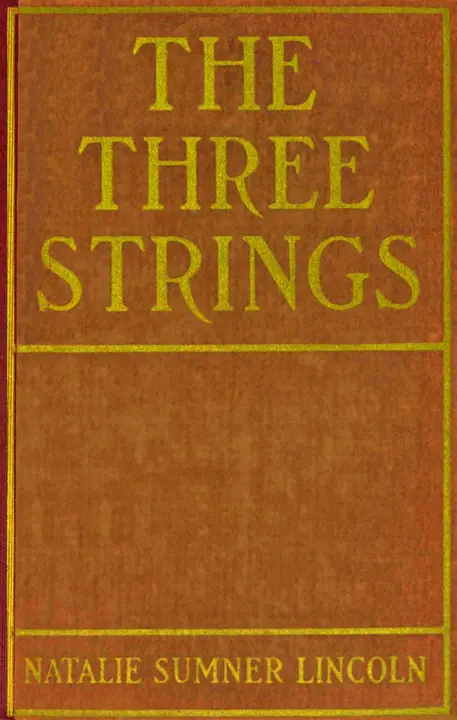
The three strings
Natalie Sumner Lincoln
THE CLASSIC COLLECTION · 1924
"The Thirteenth Letter" by Natalie Sumner Lincoln is a murder mystery novel written in the early 20th century. The narrative opens with an ominous atmosphere surrounding Paul Abbott, a sick man who has just returned home to his family's country lodge near Washington, D.C. The story unfolds as the focus shifts to his nurse, Miriam Ward, whose fateful night shift becomes intertwined with the shocking events that follow Abbott's apparent murder. At the start of the story, Paul Abbott is gravely ill, and his new nurse, Miriam Ward, is tasked with his care amid a raging snowstorm. As events transpire, a mysterious girl named Betty Carter arrives with a clergyman, ultimately revealing a complex web of relationships. Tension builds when Abbott is discovered dead, leading to chaos and intrigue. As the characters grapple with confusion and suspicions, Miriam's night takes a dark turn when she finds herself chloroformed, complicating her role in the unfolding mystery. This opening effectively sets the stage for a gripping tale of deception, love, and the quest for justice.
Introduction adapted from the source catalogue; source summaries may be automatically generated.
Free to read · English · 61,752 words · No account needed
MAKE TIME FOR A GOOD BOOK
On by default. Untick to stop anonymous reading totals. Each page counts after 10 seconds in view. How this works.
Anonymous counting is on unless you have switched it off.
Roberts went down the path immersed in thought. In a telephone talk that morning, Representative Carter had expressed great anxiety about his daughter's condition and begged the doctor to see her again and curb her imprudent tendencies to neglect her health. Thereupon Roberts had turned over his patients in Washington to his assistant and motored out to Abbott's Lodge. A cause for wonderment, which persisted even after his talk with Mrs. Nash, was why her father had shown such anxiety about her and not her husband.
Roberts was still pondering deeply when he reached the garage and
Pierre's respectful, "Bonjour, Monsieur," brought him back to his
errand.
"Morning, Pierre," he replied. "Mrs. Nash wishes you to run into Washington with this note for her husband."
Pierre wiped his fingers on some waste and taking the white envelope gingerly, tucked it in the pocket of his jumper.
"Yes, Monsieur, and when shall I start?"
"Now, I suppose. Have you lunched?"
"Mrs. Corbin gave me some sandwiches and tea." Pierre picked up his chamois and can of metal polish. "That car of yours, Monsieur, it is good, but it has a slapping piston."
"Impossible!" Roberts went over to his roadster and lifted the hood. The car was a new investment and his pride. "It was the pump you heard, Pierre, and not a piston."
"Perhaps, Monsieur," Pierre's shrug was characteristic. "Allow me," and with a quick turn of his supple wrists, he fastened the hood back in place. "But when you next start your engine, listen well."
"Thanks, I will," Roberts started to enter his car when the chauffeur addressed him again, somewhat diffidently.
"Please, Monsieur, is Madame very ill?" he asked.
"She fears she has the flu," replied Roberts. "But there is nothing alarming about her condition, Pierre."
"Is she better than last night?"
"Yes." At the servant's persistency Roberts closed the door of his car without entering it and regarded the little chauffeur keenly. A thought struck him. There was a perceptible pause before he again spoke. "When did Doctor Nash return to Washington?"
"Monday night we got in, Monsieur." Pierre paused to calculate on his fingers. "That is, Tuesday morning."
"Ah, then you came down on a night train from New York?"
"But, no, Monsieur. Doctor Nash and Miss Carter leave me on the train at Baltimore on Monday afternoon, and the doctor he reach home on Tuesday morning."
Roberts' glance at Pierre became a stare. "And Miss Carter?" he
questioned quickly.
Your reading position is saved on this browser. Take it to another device with a library code. Reading pages adapt to text, rather than matching a printed edition.
Natalie Sumner Lincoln
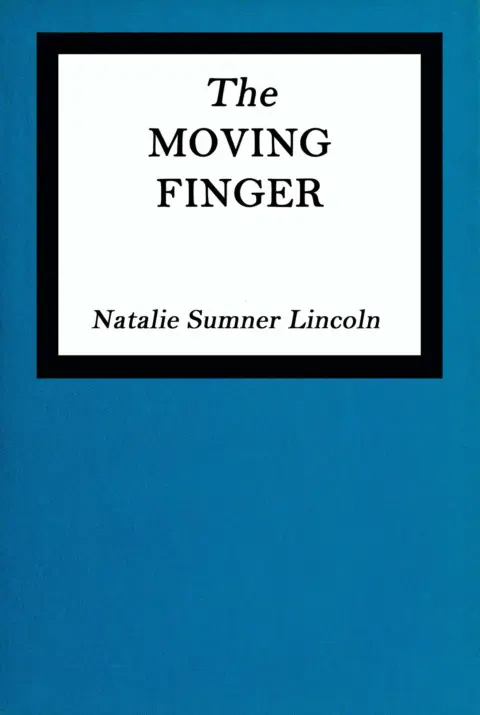
Natalie Sumner Lincoln
Natalie Sumner Lincoln
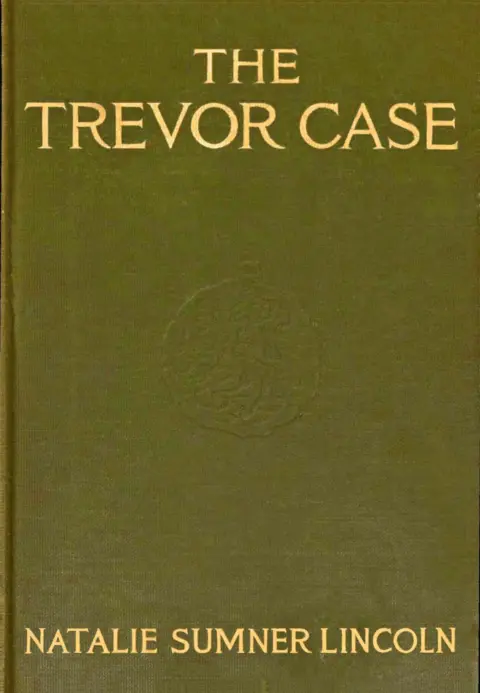
Natalie Sumner Lincoln
BEHIND THE BOOK
This eBook is for the use of anyone anywhere in the United States and most other parts of the world at no cost and with almost no restrictions whatsoever. You may copy it, give it away or re-use it under the terms of the Project Gutenberg License included with this eBook or online at www.gutenberg.org. If you are not located in the United States, you will have to check the laws of the country where you are located before using this eBook. Read the source licence.
The original source file, including credits and licence, is retained by this library. Request an original-format copy at no charge. Please include the book title and Project Gutenberg identifier #67890.
KEEP YOUR CURIOSITY GOING
Coulson Kernahan

Maurice Baring
Frances Wright
Cécile Tormay

Frederic Jesup Stimson

W. H. P. (William Henry Pope) Jarvis