The man-killers
Dane Coolidge
THE CLASSIC COLLECTION · 1911
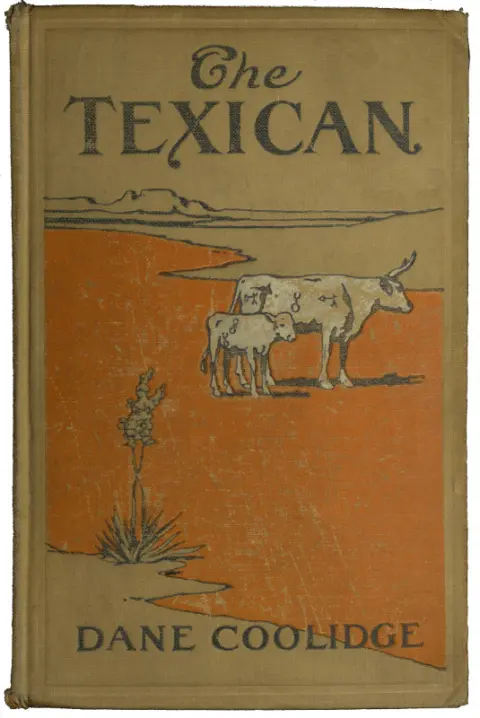
"The Texican" by Dane Coolidge is a novel written in the early 20th century. The story is set against the backdrop of the cattle-ranching culture of the American Southwest and follows the life of Pecos Dalhart, a young cowboy with a complex background who becomes embroiled in a world of cattle rustling, personal conflict, and romantic entanglements. The novel seems to explore themes of morality, identity, and the quest for belonging in a harsh landscape. At the start of the novel, we are introduced to a quiet road-house at Verde Crossing, where the atmosphere is charged with unspoken tensions and the echoes of past rivalries. Pecos Dalhart arrives on the scene, described as a promising but enigmatic figure with a rebellious spirit. He quickly becomes involved with the locals, including Angevine "Babe" Thorne and Marcelina Garcia, and reveals his underlying motivations - both to escape from an unsavory past and to carve out a new identity in a lawless environment. The opening sets the stage for potential conflicts with cattle barons and an exploration of Pecos's character as he navigates the perils of his new life. As the tension between the characters builds, the reader can sense that Pecos’s choices will have significant implications for himself and those around him.
Introduction adapted from the source catalogue; source summaries may be automatically generated.
Free to read · English · 61,870 words · No account needed
MAKE TIME FOR A GOOD BOOK
On by default. Untick to stop anonymous reading totals. Each page counts after 10 seconds in view. How this works.
Anonymous counting is on unless you have switched it off.
The second night saw them camped on the edge of the river just across from the pasture, and in the morning they crossed on a riffle, every man with his orders for the raid. By noon the cattle began to come down the valley, tail up and running before the drive; not a word was spoken, for each man knew his business, but when the thirsty herd of Monkey-wrench cows finally waded out into the river to drink, a sudden rush of horsemen from behind crowded the point animals into swimming water, and before the leaders knew what had happened they were half way across the river and looking for a landing.
"Ho—ho—ho—ho—ho!" shouted the sheriff, riding in to turn them upstream, and behind him a chorus of cowboy yells urged the last bewildered stragglers into the current. They crossed, cows and calves alike, and while the jubilant posse came splashing after them or rode howling up to the ford Boone Morgan poured the water out of his boots and smiled pleasantly.
"Jest hold 'em in the willows a while, boys," he said, "until they git quieted down and drink, and then we'll hit the trail. There's over a hundred head of cattle there, but I'm going to sell every dam' one of 'em—sheriff's sale. Then when that crazy Texican gets back on the reservation I'll give him back his money—what's left—along with some good advice."
He motioned to the boys to string the cattle out and soon in a long line the much-stolen Monkey-wrench cows were shambling over the rough trail, lowing and bellowing for the peaceful valley that lay empty of its herd. From the high cliffs above Lost Dog Cañon, Bill Todhunter saw the slow procession wending its way toward town and he made haste to follow its example. The old silence settled down upon the valley of Perro Perdito, a silence unbroken even by the lowing of cattle, and as Pecos lay by his fire that night he felt the subtle change. His mind, so long set against his enemies, opened up, and he began to wonder. Boone Morgan had certainly said he would collect those taxes within a week, and the week was up. Moreover, hiding in a wind-hole from daylight till dark was getting decidedly monotonous. From the beginning Pecos had realized that he was one man against many but he had hoped, by remaining hid, to catch them at a disadvantage. If they sneaked up and looked over into the lonely cañon they might easily think he had fled and come in boldly—but somehow nothing came out as he had expected. He slept on the matter, and woke again to that peculiar hushed silence. What was it that he missed? His horses were safe in their pole corral; Old Funny-face and her speckled calf were still hanging around the camp; the cattle were along the creek as usual—ah, yes! It was the lowing of cows against the drift-fence bars! With a vigorous kick he hurled his blanket aside, stamped on his boots and ran, only stopping to buckle on his six-shooter. At the bars he paused long enough to see that there were no fresh tracks and then dashed down the pent-in gorge that led to the pasture rim. The shadow of the high cliffs lay across the sunken valley like a pall, but there were no humped-up cattle sleeping beneath the trees. It was time for them to be out and feeding in the sun, but the meadows and hillsides were bare. He was astounded and could not believe his eyes—the pasture was empty as the desert. Cursing and panting Pecos plunged madly down the steep trail until he came to the first water, and there he threw down his gun and swore. Fresh and clean on the margin of the water-hole was the track of a shod horse, pointing toward the river! It was enough—Pecos knew that he was cleaned! Indians and mountain renegades do not ride shod horses, and if Boone Morgan had his cows across the river already he could never get them back. Another thought came to Pecos, and he scrambled wildly up the trail to defend his remaining herd, but there was no one there to fight him—his upper cattle were safe. Yet how long would it take to get them, in order to finish him up? All Boone Morgan and Upton had to do was to wait until he went down to the store for provisions and then they could rake his upper range the same way. And would they do it? Well, say! Pecos pondered on the matter for a day or two, keeping mostly behind the shelter of some rock, and the sinister import of Morgan's remarks on what a government can do for a certain class of people bore in upon him heavily. Undoubtedly he was included in that class of undesirables and if he was any reader of character Boone Morgan was just the kind of a man to make him a lot of trouble. Upton was against him because he had stolen his U cows, and Crit was against him worse because he had given him the cross—every cowman on the range would be against him because he was a rustler. Pecos watched the rim-rock vindictively after that, hoping to get a chance to pot some meddlesome cowman, but no inquisitive head was poked over. At last he stole up the ravine one morning and took to the high ground at dawn. There, sure enough, were the boot-marks among the rocks and he noticed with a vague uneasiness that some one had been watching him for days—watching his wind-hole, too,—probably could have shot him a hundred times, but now the tracks were old. A hot and unreasonable resentment rose up in Pecos at the implication. Nobody cared for him now, even to the extent of watching him! He could crawl into his hole and die now, and everybody would just laugh. Well, he would show Mr. Everybody what kind of a sport he was. After which circumlocuted reasoning Pecos Dalhart, the bad man from Perro Perdito Cañon, being really lonely as a dog, threw the saddle on his horse and hit the trail for the Verde.
Your reading position is saved on this browser. Take it to another device with a library code. Reading pages adapt to text, rather than matching a printed edition.
Dane Coolidge
Dane Coolidge
Dane Coolidge
Dane Coolidge
BEHIND THE BOOK
This eBook is for the use of anyone anywhere in the United States and most other parts of the world at no cost and with almost no restrictions whatsoever. You may copy it, give it away or re-use it under the terms of the Project Gutenberg License included with this eBook or online at www.gutenberg.org. If you are not located in the United States, you will have to check the laws of the country where you are located before using this eBook. Read the source licence.
The original source file, including credits and licence, is retained by this library. Request an original-format copy at no charge. Please include the book title and Project Gutenberg identifier #50387.
KEEP YOUR CURIOSITY GOING
Coulson Kernahan

Maurice Baring
Frances Wright
Cécile Tormay

Frederic Jesup Stimson

W. H. P. (William Henry Pope) Jarvis