
Last letters from the living dead man
David Patterson (Spirit) Hatch
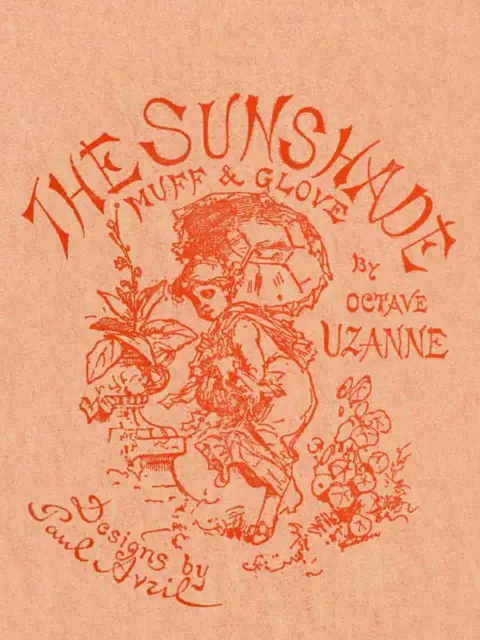
THE CLASSIC COLLECTION · 1883
"The Sunshade, the Glove, the Muff" by Octave Uzanne is a collection of essays on the history and cultural significance of these feminine ornamental accessories, written in the late 19th century. The text serves as an exploration of the evolution and functionality of these items, demonstrating Uzanne's interest in the blend of art, fashion, and social commentary present in women’s adornments. The narrative indicates that the book will delve deeply into various historical contexts, highlighting their uses across different cultures and time periods, and possibly reflects on the role of women in society concerning fashion. The opening of the work features a preface by Uzanne, who explains the motivation behind this exploration following the success of his previous volume on "The Fan." He begins by discussing the historical roots of the sunshade, tracing its use back to ancient civilizations and its symbolic representation across cultures. Uzanne references various literary and historical sources to illustrate how these items were more than mere accessories but significant cultural artifacts representing beauty, femininity, and social class. He humorously hints at the challenges of undertaking such a comprehensive topic, reflecting a blend of seriousness and levity as he prepares to embark on an enriching literary journey regarding these fashionable items.
Introduction adapted from the source catalogue; source summaries may be automatically generated.
Free to read · English · 30,801 words · No account needed
MAKE TIME FOR A GOOD BOOK
On by default. Untick to stop anonymous reading totals. Each page counts after 10 seconds in view. How this works.
Anonymous counting is on unless you have switched it off.
The more she hides, muffles up, deadens, so to speak, her beauty, the more woman--a creature of Hades who makes us dream of paradise--is bewitching in the diabolicity of her graces. When Love, who is represented blind, sets a mask on Venus-coquette, one might think the trickster boy was for burning the universe, for behind those yawning apertures of the black velvet mask, behind those murderous loopholes, two woman's eyes are lying in ambush, pitiless, turn by turn laughing, burning, blazing, drowned in pleasure, charged, in a word, as with grape-shot, with all the shafts of the Cupidonian quiver.
Thus, out of the midst of furs, woman, that mignonette plant, that /mimosa pudica/, throws off beauty more mysterious, more warm, more full of promise, more enveloped and more enveloping, as if from the electricity of that peltry, there was spread in the ambient air of the provoking daughter of Eve an attractive sensuality, like a subtle caress, which rustles against our senses in its passage.
The ancients had perhaps great reason to attach, as they did, certain excellences and prerogatives to fur: a master furrier, Charrier, wrote on this subject, in 1634, remarks and moral considerations as naïve as curious: "Our kings, whether they are consecrated, crowned, or married, divest themselves of the splendour of embroideries and of diamonds, to take their royal mantle hedged about with lilies and lined with ermine.
"The mantles of the chevaliers, dukes, and peers of France are lined with lynx, marten, and ermine; the chancellors, keepers of the seals, who are the guardians of our laws, wear the most exquisite furs.
"Bachelors and doctors, emperors and physicians clothe themselves with furs which represent the mysteries of theology, the maxims of politics, the secrets of medicine. Furs cure people of headaches and disordered stomachs; attacks of gout which triumph over the most potent remedies, are vanquished by the skins of cats, lambs, and hares."
In fine, the good Charrier proves with pride that of all the ornaments which luxury has invented there is none so glorious, so august, so precious, as furs, and that the privileges of peltry merchants rightly surpass those of all others.
The masters and wardens of the peltry merchandise had for their arms a paschal lamb on an azure field. Two ermines supported the shield crested with the ducal crown, with this device in exergue--very like that of Brittany--/Malo mori quam fœdari/.
The use of furs dates back to the origin of the world. Plutarch, in his /Table Talk/, relates that people dressed themselves in skins before they became acquainted with stuffs. Tacitus assures us it was the same with the Teutons, Propertius with the Romans.
Your reading position is saved on this browser. Take it to another device with a library code. Reading pages adapt to text, rather than matching a printed edition.
BEHIND THE BOOK
This eBook is for the use of anyone anywhere in the United States and most other parts of the world at no cost and with almost no restrictions whatsoever. You may copy it, give it away or re-use it under the terms of the Project Gutenberg License included with this eBook or online at www.gutenberg.org. If you are not located in the United States, you will have to check the laws of the country where you are located before using this eBook. Read the source licence.
The original source file, including credits and licence, is retained by this library. Request an original-format copy at no charge. Please include the book title and Project Gutenberg identifier #44570.
KEEP YOUR CURIOSITY GOING
David Patterson (Spirit) Hatch

David Patterson (Spirit) Hatch

David Patterson (Spirit) Hatch
Cécile Tormay

Moritz Busch
John L. Ransom