THE CLASSIC COLLECTION✦A dead man’s diaryCLASSIC FREE BOOKS
A dead man’s diary
Coulson Kernahan
THE CLASSIC COLLECTION · 1911
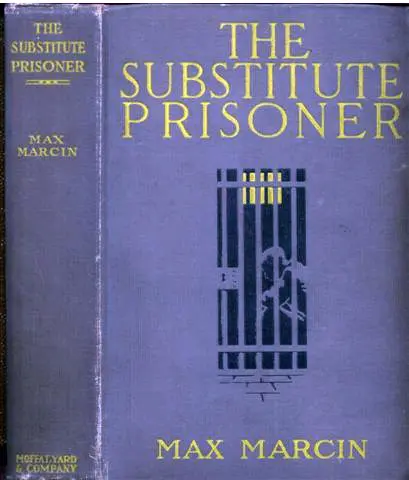
"The Substitute Prisoner" by Max Marcin is a novel written in the early 20th century. The story centers around Herbert Whitmore, a wealthy businessman entangled in a web of deceit, jealousy, and potential murder, as he navigates complex relationships with a woman named Julia Strong and the estranged husband George Collins. The narrative unfolds with suspense as various character motivations and tangled connections are revealed, suggesting themes of betrayal and retribution. At the start of the novel, the reader is introduced to Herbert Whitmore, who is surprised by an unexpected visit from Julia Strong at his home late at night. Julia warns Whitmore about the volatile situation with her lover, George Collins, who is furious about Whitmore’s interest in his wife. As the plot thickens, it becomes apparent that Collins may be a threat to Whitmore, creating a tense atmosphere filled with uncertainty. The narrative quickly establishes the stakes as Whitmore is drawn into a dangerous game of manipulation and confrontation, setting the foundation for a gripping tale of love, vengeance, and ultimately, murder.
Introduction adapted from the source catalogue; source summaries may be automatically generated.
Free to read · English · 54,944 words · No account needed
MAKE TIME FOR A GOOD BOOK
On by default. Untick to stop anonymous reading totals. Each page counts after 10 seconds in view. How this works.
Anonymous counting is on unless you have switched it off.
Britz's more penetrating mind, however, did not find the solution so easily. It discovered a multitude of contradictions which eluded the narrower vision of his subordinate. Nevertheless he was compelled to concede that the aspect of the entire case had changed, that Mrs. Collins now loomed as a figure not to be disregarded.
"I understand that policemen were sent to clear the corridor outside of Ward's office?" inquired Britz.
"Yes," responded Manning.
"Well, send a man down there to call off the police. Let him encourage
the crowd to remain."
The lines in Manning's forehead gathered in perplexity between his
eyebrows.
"What are you going to do?" he asked.
"I'm going to put Mrs. Collins to the test."
The chief and Greig watched Britz in a sort of dumb bewilderment while he lifted the telephone receiver off the hook and called up the Collins house. After five minutes of anxious waiting, a voice at the other end of the wire responded.
"Is Mrs. Collins at home?" asked Britz.
"Who wishes to speak with her?"
"This is Mr. Luckstone's office," said the detective. "Mr. Luckstone--the attorney for Mr. Whitmore."
Evidently a maid had answered the call, for a long silence ensued while the servant carried Britz's message to her mistress. Finally a voice at the other end of the wire said:
"This is Mrs. Collins!"
Britz pressed the receiver tightly to his ear, as if afraid that some word of hers might escape his hearing.
"Mr. Luckstone wishes me to say that Mr. Whitmore's will has been
found," said the detective.
If the woman realized the significance of the information, her voice did
not betray it.
"Well?" she exclaimed, as if the subject held but a mild interest for
her.
"Mr. Whitmore has named you as the chief beneficiary," Britz continued in even tones. "You have inherited practically his entire estate."
The news provoked no cry of elation, no exclamation of surprise, no revealing remark of any kind. Simply a non-committal "Yes!" It might have been the indifferent acceptance of information which she knew must eventually come to her; it might have been the meaningless affirmation of stunned surprise.
Britz decided he had accomplished his purpose, so he hung up the receiver without engaging in further parley.
"Setting one of your famous traps--eh?" beamed Manning.
"Yes--for the guilty one," admitted Britz.
"You have no doubt that she did the trick?" interjected Greig.
"I have no opinion in the matter," Britz informed him curtly. "I may have a most decided one, however, in an hour or so."
Your reading position is saved on this browser. Take it to another device with a library code. Reading pages adapt to text, rather than matching a printed edition.
BEHIND THE BOOK
This eBook is for the use of anyone anywhere in the United States and most other parts of the world at no cost and with almost no restrictions whatsoever. You may copy it, give it away or re-use it under the terms of the Project Gutenberg License included with this eBook or online at www.gutenberg.org. If you are not located in the United States, you will have to check the laws of the country where you are located before using this eBook. Read the source licence.
The original source file, including credits and licence, is retained by this library. Request an original-format copy at no charge. Please include the book title and Project Gutenberg identifier #18965.
KEEP YOUR CURIOSITY GOING
Coulson Kernahan

Maurice Baring
Frances Wright
Cécile Tormay

Frederic Jesup Stimson

W. H. P. (William Henry Pope) Jarvis