THE CLASSIC COLLECTION✦A dead man’s diaryCLASSIC FREE BOOKS
A dead man’s diary
Coulson Kernahan
THE CLASSIC COLLECTION · 1911
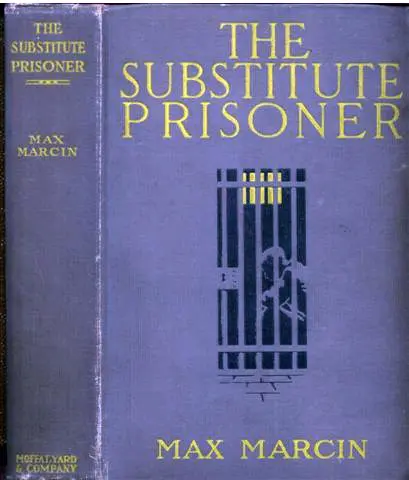
"The Substitute Prisoner" by Max Marcin is a novel written in the early 20th century. The story centers around Herbert Whitmore, a wealthy businessman entangled in a web of deceit, jealousy, and potential murder, as he navigates complex relationships with a woman named Julia Strong and the estranged husband George Collins. The narrative unfolds with suspense as various character motivations and tangled connections are revealed, suggesting themes of betrayal and retribution. At the start of the novel, the reader is introduced to Herbert Whitmore, who is surprised by an unexpected visit from Julia Strong at his home late at night. Julia warns Whitmore about the volatile situation with her lover, George Collins, who is furious about Whitmore’s interest in his wife. As the plot thickens, it becomes apparent that Collins may be a threat to Whitmore, creating a tense atmosphere filled with uncertainty. The narrative quickly establishes the stakes as Whitmore is drawn into a dangerous game of manipulation and confrontation, setting the foundation for a gripping tale of love, vengeance, and ultimately, murder.
Introduction adapted from the source catalogue; source summaries may be automatically generated.
Free to read · English · 54,944 words · No account needed
MAKE TIME FOR A GOOD BOOK
On by default. Untick to stop anonymous reading totals. Each page counts after 10 seconds in view. How this works.
Anonymous counting is on unless you have switched it off.
"Look down this room," he said. "The murderer, presuming it was a man, must have passed down this long aisle into the office. Then, it was necessary to repeat the journey in order to escape. Had there been a conspiracy, then those thirty clerks must have remained quietly at their desks while the assassin walked out of the room. Do you believe these men would have permitted him to escape?"
"Suppose he carried the pistol in his hand, don't you believe he could have intimidated them?" ventured Greig.
"Sure!" joined the coroner. "And the men may now be ashamed of their
cowardice."
"That wouldn't have prevented them giving the alarm after the murderer left," declared Britz. "No, coroner, no one saw the slayer enter or leave. In fact, he did not enter through the door."
"Then how did he get in?" demanded the coroner. "Through the wall? Or did he fire through the ceiling or floor?"
"As I said before, there is no secret panel in this room," was Britz's
rejoinder.
"Then you believe Mr. Whitmore committed suicide?" suddenly fired the
coroner.
"No."
"He might have committed suicide, and the clerks, out of regard for their employer, substituted pistols in order to make it appear like murder," joined Greig.
"Perhaps," replied Britz. "Relatives and friends frequently endeavor to give a case of suicide the aspect of murder."
"But you don't really believe it of this case?" asked the coroner.
"I do not," confessed Britz.
"Then your theory must be that some invisible person fired a silent shot"--the coroner paused a moment, then as if struck by a sudden thought--"of course, a Maxim muffler might have deadened the sound of the pistol."
"The office boy would have heard the click of the hammer," interposed
Britz.
The coroner repressed with difficulty the smile that struggled to his
lips.
"Lieutenant," he said disparagingly, "you don't attribute this crime to the work of spirits, do you?"
"No," laughed Britz. "Spirits don't murder people outside of story books. No ghostly significance attaches to the murder of Mr. Whitmore."
"Well, what is your theory?" demanded the coroner.
"I haven't any--as yet. I shall wait until I'm in possession of more facts before formulating one. Of this I am certain, however. Mr. Whitmore came down here to-day expecting to meet death. In fact, he had prepared himself for it by destroying or secreting all his personal papers. More than that I am not prepared to say at present."
"Is there anything further that I can do?"
"Nothing, coroner, beyond ordering an immediate autopsy."
Your reading position is saved on this browser. Take it to another device with a library code. Reading pages adapt to text, rather than matching a printed edition.
BEHIND THE BOOK
This eBook is for the use of anyone anywhere in the United States and most other parts of the world at no cost and with almost no restrictions whatsoever. You may copy it, give it away or re-use it under the terms of the Project Gutenberg License included with this eBook or online at www.gutenberg.org. If you are not located in the United States, you will have to check the laws of the country where you are located before using this eBook. Read the source licence.
The original source file, including credits and licence, is retained by this library. Request an original-format copy at no charge. Please include the book title and Project Gutenberg identifier #18965.
KEEP YOUR CURIOSITY GOING
Coulson Kernahan

Maurice Baring
Frances Wright
Cécile Tormay

Frederic Jesup Stimson

W. H. P. (William Henry Pope) Jarvis