THE CLASSIC COLLECTION✦A dead man’s diaryCLASSIC FREE BOOKS
A dead man’s diary
Coulson Kernahan
THE CLASSIC COLLECTION · 1924
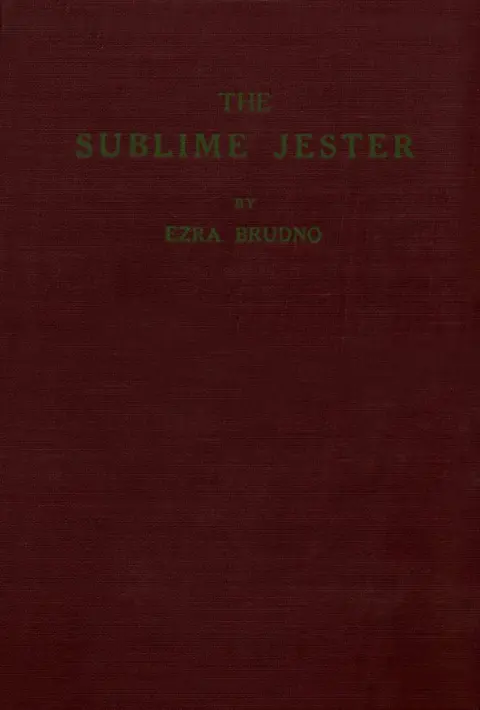
"The Sublime Jester" by Ezra S. Brudno is a novel written in the early 20th century. This work follows the life of Albert Zorn, a young boy navigating the challenges of his identity and societal prejudices in a small town. The themes of heritage, dreams of inheritance, and the struggles against mockery and misunderstanding are central to the story. The opening of the story introduces Albert as he reflects on a trivial but impactful incident from his childhood while dreaming of a newfound fortune. Set against the backdrop of his quaint hometown, his daydreams of wealth are abruptly interrupted by the cruel taunts from classmates regarding his Jewish heritage. As Albert grapples with these insults, he is supported by his friend Christian, indicating the importance of companionship in his life. Through a series of dramatic exchanges in the classroom, the tension between the boy's aspirations and the harsh realities of prejudice begins to unfold, setting the stage for Albert's emotional journey and his eventual quest for meaning and purpose beyond the confines of societal expectations.
Introduction adapted from the source catalogue; source summaries may be automatically generated.
Free to read · English · 91,804 words · No account needed
MAKE TIME FOR A GOOD BOOK
On by default. Untick to stop anonymous reading totals. Each page counts after 10 seconds in view. How this works.
Anonymous counting is on unless you have switched it off.
A short, heavy-set man, with a mustache the color of dry sand and the stiffness of bristle, appeared at the opening; between the swinging gates. He held a lantern in his hand, the yellow glare of the tallow candle inside fell grotesquely over his patched jerkin and saffron-colored hose.
Schultz put the silver coin into the hand of the man with the lantern.
The man put the money into his pocket and mumbled, “Don’t you know any better than to come so long after the gates closed!”
He was stretching his arms and yawning. His jaws opened and closed
sleepily as he spoke.
“We are coming a long way,” the driver explained. “Couldn’t figure on
the exact hour.”
“How many Jews have you?”
“Just one.”
The guard walked up to the wagon, raised his lantern, and strained his
eyes.
“Huh! What do you call this, a suckling?” pointing at Albert, who stared around him in bewilderment.
“He is the gentleman’s son,” explained the coachman.
“You didn’t bring his cradle along—Huh! When a Jew reaches the age of twelve he is just as much of one for poll tax as he will be at seventy-five. We call it two Jews—huh! One Jew, he says! You can’t fool me!”
“How much is it?” Zorn opened his purse, the guard holding the lantern to help him see the contents.
“One Jew one Thaler, two Jews two Thalers—simple arithmetic,”
snickered the guard.
Zorn paid the price in silence.
“How about a few Pfennige for Trinkgeld—what do you say? I could have kept you waiting here all night. And tomorrow is Easter.”
Zorn handed him a few more coins and cleared his throat as if something
was choking him.
Schultz led the horses by the bridles a few steps. There was another guardhouse inside the gates.
“Dovidle, stick your nose out—a couple of Jews for Easter,” the guard called in a piping, mimicking, sneering voice, and pounded on the casement.
A door opened and out came a little man.
The little man greeted Zorn kindly, extending his hand. “You must have come a great distance or you would have known better than to come so late.”
“Since when have they re-established the Ghetto?” asked Zorn
tremblingly.
“As soon as they chased the French out,” replied Dovidle in a saddened, low voice. “Yes, they have hemmed us in again;” the little man sighed. “They are at their old tricks again, fleecing and torturing our poor people. Oh, God, will there ever be an end?”
Your reading position is saved on this browser. Take it to another device with a library code. Reading pages adapt to text, rather than matching a printed edition.
BEHIND THE BOOK
This eBook is for the use of anyone anywhere in the United States and most other parts of the world at no cost and with almost no restrictions whatsoever. You may copy it, give it away or re-use it under the terms of the Project Gutenberg License included with this eBook or online at www.gutenberg.org. If you are not located in the United States, you will have to check the laws of the country where you are located before using this eBook. Read the source licence.
The original source file, including credits and licence, is retained by this library. Request an original-format copy at no charge. Please include the book title and Project Gutenberg identifier #65313.
KEEP YOUR CURIOSITY GOING
Coulson Kernahan

Maurice Baring
Frances Wright
Cécile Tormay

Frederic Jesup Stimson

W. H. P. (William Henry Pope) Jarvis