THE CLASSIC COLLECTION✦A dead man’s diaryCLASSIC FREE BOOKS
A dead man’s diary
Coulson Kernahan
THE CLASSIC COLLECTION · 1924
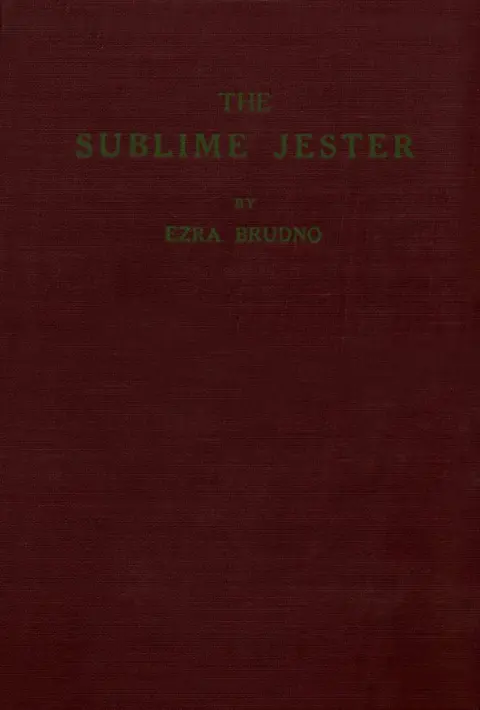
"The Sublime Jester" by Ezra S. Brudno is a novel written in the early 20th century. This work follows the life of Albert Zorn, a young boy navigating the challenges of his identity and societal prejudices in a small town. The themes of heritage, dreams of inheritance, and the struggles against mockery and misunderstanding are central to the story. The opening of the story introduces Albert as he reflects on a trivial but impactful incident from his childhood while dreaming of a newfound fortune. Set against the backdrop of his quaint hometown, his daydreams of wealth are abruptly interrupted by the cruel taunts from classmates regarding his Jewish heritage. As Albert grapples with these insults, he is supported by his friend Christian, indicating the importance of companionship in his life. Through a series of dramatic exchanges in the classroom, the tension between the boy's aspirations and the harsh realities of prejudice begins to unfold, setting the stage for Albert's emotional journey and his eventual quest for meaning and purpose beyond the confines of societal expectations.
Introduction adapted from the source catalogue; source summaries may be automatically generated.
Free to read · English · 91,804 words · No account needed
MAKE TIME FOR A GOOD BOOK
On by default. Untick to stop anonymous reading totals. Each page counts after 10 seconds in view. How this works.
Anonymous counting is on unless you have switched it off.
A knock on his door and his landlord, a fisherman, handed him a packet of newspapers and a letter from Berlin. The letter contained nothing of importance beyond literary gossip. He then tore the wrappers from the newspapers and began scanning the narrow columns in a careless, casual manner when he suddenly jumped from his seat, drew his breath, and stared at the sheet before him as if convulsed. At first pallor appeared in his cheeks, then they turned red, and his whole body quivered.
“A revolution!—a revolution!—a revolution, Herr Nikkels!”
Herr Nikkels, the fisherman, stared at the speaker with unconcealed bewilderment. He had thought his lodger a little queer—always walking up and down the seashore when not bathing, or pacing up and down the floor of his room—but he had never seen him so agitated.
Albert raced up and down the room, the newspaper clutched in his hand, a strange glow on his face.
“O, it’s wonderful! glorious!—at last it has come!” he cried.
“What has happened?” the fisherman, still staring, asked.
“Ah, my dear Nikkels, the greatest thing in the world has happened! They are marching in Paris, with the tri-colored flag, singing the Marseillaise. Oh, isn’t it wonderful!” Then stretching his arms upward, “Oh, for a glimpse of Paris today.”
The fisherman drew at his pipe, shrugged his shoulders, and walked out. “This fellow Zorn is quite crazy,” he confided to his wife a few moments later.
Zorn was quite crazy that day. He did not take his prescribed sea-bath, could not read, could not write, dodged every acquaintance on the beach, rushed up and down the shore as if possessed.
Lafayette, the tri-colored flag, the Marseillaise! He could think of nothing else. He was intoxicated, delirious. All his resolutions had gone to the winds—all his resolutions for rest and quiet and peace; his hunger for calm reveries and piping melodies was gone. He was aching for strife, for the very vortex of strife. Ah, if he could whip his countrymen into action and arouse them from their sluggish contentment, perhaps they, too, would hoist the tri-colored flag and sing the Marseillaise!
Aux armes, citoyens!
No piping melodies for him, no fantasies, no love ditties!
Aux armes, citoyens! Aux armes!
He would take the lyre into his hands and sing a battle song. He was no Wolfgang von Goethe, playing with metrical verses while the enemy’s cannons were roaring at the city gates! How differently the ocean waves were galloping to the shore today! They were chanting the Marseillaise, they were calling tumultuously:
“Aux armes, citoyens, aux armes!”
Your reading position is saved on this browser. Take it to another device with a library code. Reading pages adapt to text, rather than matching a printed edition.
BEHIND THE BOOK
This eBook is for the use of anyone anywhere in the United States and most other parts of the world at no cost and with almost no restrictions whatsoever. You may copy it, give it away or re-use it under the terms of the Project Gutenberg License included with this eBook or online at www.gutenberg.org. If you are not located in the United States, you will have to check the laws of the country where you are located before using this eBook. Read the source licence.
The original source file, including credits and licence, is retained by this library. Request an original-format copy at no charge. Please include the book title and Project Gutenberg identifier #65313.
KEEP YOUR CURIOSITY GOING
Coulson Kernahan

Maurice Baring
Frances Wright
Cécile Tormay

Frederic Jesup Stimson

W. H. P. (William Henry Pope) Jarvis