THE CLASSIC COLLECTION✦A dead man’s diaryCLASSIC FREE BOOKS
A dead man’s diary
Coulson Kernahan
THE CLASSIC COLLECTION · 1924
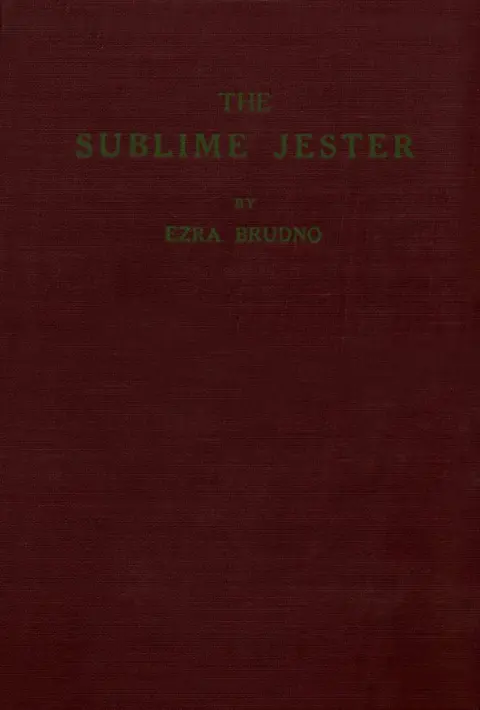
"The Sublime Jester" by Ezra S. Brudno is a novel written in the early 20th century. This work follows the life of Albert Zorn, a young boy navigating the challenges of his identity and societal prejudices in a small town. The themes of heritage, dreams of inheritance, and the struggles against mockery and misunderstanding are central to the story. The opening of the story introduces Albert as he reflects on a trivial but impactful incident from his childhood while dreaming of a newfound fortune. Set against the backdrop of his quaint hometown, his daydreams of wealth are abruptly interrupted by the cruel taunts from classmates regarding his Jewish heritage. As Albert grapples with these insults, he is supported by his friend Christian, indicating the importance of companionship in his life. Through a series of dramatic exchanges in the classroom, the tension between the boy's aspirations and the harsh realities of prejudice begins to unfold, setting the stage for Albert's emotional journey and his eventual quest for meaning and purpose beyond the confines of societal expectations.
Introduction adapted from the source catalogue; source summaries may be automatically generated.
Free to read · English · 91,804 words · No account needed
MAKE TIME FOR A GOOD BOOK
On by default. Untick to stop anonymous reading totals. Each page counts after 10 seconds in view. How this works.
Anonymous counting is on unless you have switched it off.
Albert’s voice was jubilant, ringing with surprise, as if the meeting
was wholly accidental.
With a quick movement of her left hand she jerked off the handkerchief, facing him with dilated eyes in which was a strange light.
She did not extend her hand to him.
“Frau Rodbertus had told me you were on a farm,” he broke the silence, intimating that it was not chance that had brought him here.
A softer light stole over her face, her protruding lip curled upward, disclosing her longish white teeth.
“I haven’t seen Frau Rodbertus in months,” Eugenie said, standing before him with her arms hanging on either side of her, the kerchief in her left hand.
Albert studied her a moment. The freedom of bygone days was gone. He felt constraint and sensed her constraint.
The dog had reached the gate of the farmhouse and stopped, barking, his head turned in the direction of Eugenie.
“You see, he is scolding me for lagging behind,” she said, indulging in
a spontaneous smile.
“He is scolding you for your failure to offer hospitality to the weary wayfarer,” Albert answered in kind.
They both laughed.
“All wayfarers, weary or otherwise, are welcome at our house,” she said, turning into the passage that led to the farmhouse.
When they reached the house, Eugenie’s father, with rake in hand, was cleaning up the rubbish in front of the house. He was a little man, with a round face, a small tuft of hair under his lower lip, and a soft look in his round eyes such as only Frenchmen possess. He halted and glanced up suspiciously at the young man who followed his daughter into the yard. M. Chauraux was suspicious of all Germans, in spite of his sojourn there for many years.
Eugenic introduced Albert to her father, who acknowledged the introduction grudgingly. He showed only such cordiality as his native manners and politeness compelled, mumbling a few words in broken German.
“The gentleman speaks French, papa,” Eugenie struck in cheerfully, “and he loves the Emperor as much as you do.”
The Frenchman’s eyes turned with a bright flicker and, forgetting that he had just shaken hands with the stranger, clasped his hand once more. Then a mist appeared in the little man’s eyes and he sighed, muttering under his breath, “The Emperor!”
“No one loves the Emperor more than I do,” returned Albert.
“Have you ever seen him?” There was ecstasy on the Frenchman’s face.
Your reading position is saved on this browser. Take it to another device with a library code. Reading pages adapt to text, rather than matching a printed edition.
BEHIND THE BOOK
This eBook is for the use of anyone anywhere in the United States and most other parts of the world at no cost and with almost no restrictions whatsoever. You may copy it, give it away or re-use it under the terms of the Project Gutenberg License included with this eBook or online at www.gutenberg.org. If you are not located in the United States, you will have to check the laws of the country where you are located before using this eBook. Read the source licence.
The original source file, including credits and licence, is retained by this library. Request an original-format copy at no charge. Please include the book title and Project Gutenberg identifier #65313.
KEEP YOUR CURIOSITY GOING
Coulson Kernahan

Maurice Baring
Frances Wright
Cécile Tormay

Frederic Jesup Stimson

W. H. P. (William Henry Pope) Jarvis