THE CLASSIC COLLECTION✦The Hampstead mystery: a novel. Volume 3 (of 3)CLASSIC FREE BOOKS
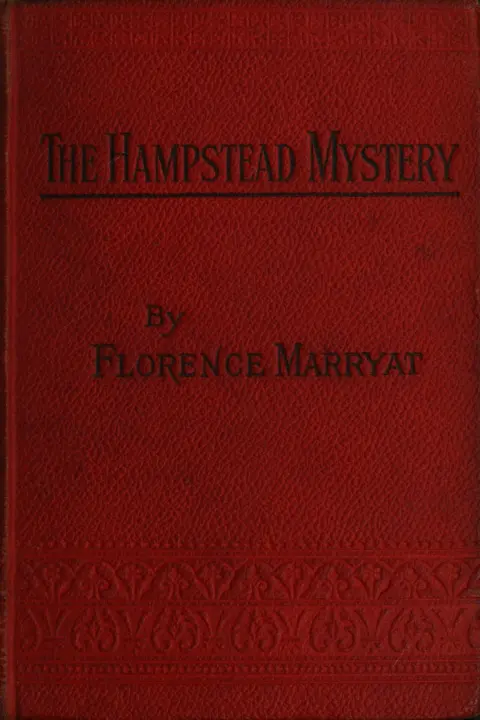
The Hampstead mystery: a novel. Volume 3 (of 3)
Florence Marryat
THE CLASSIC COLLECTION · 1896
"The strange transfiguration of Hannah Stubbs" by Florence Marryat is a novel written in the late 19th century. It blends domestic realism with occult intrigue, following an exiled Italian aristocrat in London, a pragmatic young doctor, and a country maid whose uncanny mediumship draws them into séances and supernatural tests. Expect a tale of jealousy, guilt, and the thirst for answers beyond the veil, with the title character’s latent powers promising unsettling transformations. The opening of the novel introduces Signor Ricardo, a reserved Italian language teacher in a Soho lodging-house, secretly using a black-draped room for occult experiments. Visited by Dr. Karl Steinberg, he confesses he is Paolo, Marchese di Sorrento, who killed his wife Leonora in a jealous rage and now longs to learn if she was guilty or innocent by summoning her spirit. After an unnerving séance that spooks Steinberg, the men discover their landlady’s new maid, Hannah Stubbs, an ingenuous village girl whose presence triggers poltergeist-like activity. They strike a deal to “treat” her, hold sittings, and hear a controlling voice called James speak through her, promising guidance and hinting that Leonora is near; soon Hannah herself reports seeing a veiled, black-eyed lady on the stairs and by her bed, setting the stage for deeper—and riskier—experiments.
Introduction adapted from the source catalogue; source summaries may be automatically generated.
Free to read · English · 80,052 words · No account needed
MAKE TIME FOR A GOOD BOOK
On by default. Untick to stop anonymous reading totals. Each page counts after 10 seconds in view. How this works.
Anonymous counting is on unless you have switched it off.
She sidled into a seat next the Professor, and having drunk a large cup of tea, found her tongue and her presence of mind, simultaneously.
“Well! Sir, it’s this way,” she commenced, “I’ve been in the ’abit, as I told you and this gennelman, of seeing shadders, and ’earing woices and sich-like ever since I was a kiddy, but I don’t dare say nothing about them at ’ome, cos they do go on so dreadful about it, I’m quite afeared on ’em. But I haven’t often seen ’em so distinct-like as since I’ve been ’ere, and they scare me mortal. The other evening I seen that lady I spoke of, on the landing, and blest if she ain’t been to my bed each night since, and looking at me terrible with ’er big, black eyes through ’er voil.”
“Big, black eyes,” reiterated the Professor. “O! Hannah! do try to remember what she was like!”
“I ain’t no cause to remember, Sir,” replied the girl, “she’s scared me too much for that! I only wishes as I could forget ’er. She is a tall lady, and foreign looking, summat like an Injun with a white skin. She’s got big, black eyes as look you through and through, and a thin nose, pointed-like, and little white ’ands, O! so small, and long black ’air ’anging down ’er back, and plaited in a tail. There was a white voil over her face and ’ead, but I could see ’er quite plain under it.”
“And what age--how old should you say she was, Hannah?” asked the
Professor, breathlessly.
“Well, Sir, I ain’t good at ages, but somwheres between twenty-five and thirty, I should say she was. She ain’t old anyways, nor yet so very young, neither!”
“My God!” cried Ricardo, as he bent his face over his hands. “It is she--it is my Leonora!”
“I wish she’d come to you, Sir, then, instead of me!” said Hannah, stolidly, with her mouth full of buttered crumpet.
“Ricardo!” exclaimed Steinberg, laying his hand on the shoulder of his friend. “Calm yourself! Do not be too sanguine! This may be a wrong description, or if correct, that of another person. Remember, that any unusual anxiety to see any particular person, is more apt to mar than to promote your desire.”
“Yes! yes! I know, but to think she may be so near me!”
“She has probably, if your own theories are correct, been always near you, though you have been unable to discern it. We must expect this girl to see a great deal more than we can ever hope to do.”
Your reading position is saved on this browser. Take it to another device with a library code. Reading pages adapt to text, rather than matching a printed edition.
Florence Marryat
Florence Marryat
Florence Marryat
Florence Marryat
BEHIND THE BOOK
This eBook is for the use of anyone anywhere in the United States and most other parts of the world at no cost and with almost no restrictions whatsoever. You may copy it, give it away or re-use it under the terms of the Project Gutenberg License included with this eBook or online at www.gutenberg.org. If you are not located in the United States, you will have to check the laws of the country where you are located before using this eBook. Read the source licence.
The original source file, including credits and licence, is retained by this library. Request an original-format copy at no charge. Please include the book title and Project Gutenberg identifier #76579.
KEEP YOUR CURIOSITY GOING
Coulson Kernahan

Maurice Baring
Frances Wright
Cécile Tormay
Francis Greenleaf Allinson & Anne C. E. (Anne Crosby Emery) Allinson

Frederic Jesup Stimson