THE CLASSIC COLLECTION✦Rocky ForkCLASSIC FREE BOOKS
Rocky Fork
Mary Hartwell Catherwood
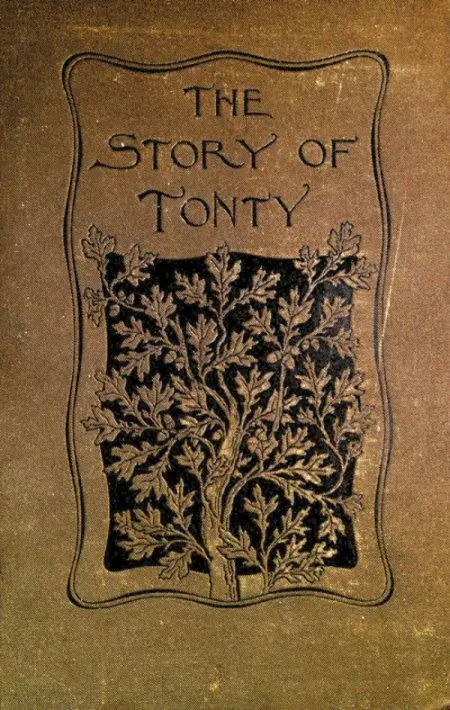
THE CLASSIC COLLECTION · 1889
"The Story of Tonty" by Mary Hartwell Catherwood is a historical fiction novel written in the late 19th century. The narrative explores the life of Henri de Tonty, a little-known but significant figure in the era of French exploration in North America, particularly in relation to the famous explorer La Salle. The book delves into themes of friendship, loyalty, and the complexities of colonial interactions between French settlers and Indigenous tribes, revealing Tonty's devotion to La Salle amidst the challenges they face. The opening of the book sets the stage against the backdrop of a bustling Montreal, where the annual beaver fair is underway. As the sun rises, a rich tableau of characters, including the governor-general and various Indigenous tribes, begins to unfold, filled with vibrant descriptions of the setting and attire. The introduction of Tonty, who is affectionately known as "Iron-hand," occurs amidst the festivities, highlighting his charismatic nature and the bond he shares with La Salle. The narrative also features the spirited interaction between Tonty and young Barbe Cavelier, the niece of La Salle, which establishes personal relationships that intertwine with the historical context. Throughout the opening, the interplay of colonial ambition and personal loyalty is hinted at, drawing readers into the complex emotional and cultural landscape of the time.
Introduction adapted from the source catalogue; source summaries may be automatically generated.
Free to read · English · 33,906 words · No account needed
MAKE TIME FOR A GOOD BOOK
On by default. Untick to stop anonymous reading totals. Each page counts after 10 seconds in view. How this works.
Anonymous counting is on unless you have switched it off.
The fare was passed in to her without apology, and she received it with sincere gratitude, afterward drawing a bench near the fire and sitting down in great privacy and comfort.
The moccasins of a frontiersman could make no sound above flap of wind and pat of water. Tonty paced from window to chapel front, believing that he kept out of Barbe's sight. But after an interval he was amused to see, rising over the sill within, a topknot of curls, and eyes filled with the alert, shy spirit of the deer whose flesh she had just eaten.
For some reason this scrutiny of Barbe's made him regret that he had lain aside the gold and white uniform of France, and the extreme uses to which his gauntlets had been put. Entrenched behind logs she unconsciously poured the fires of her youth upon Tonty.
Not only was one pane in the sash gone, but all were shattered, giving easy access to his voice as he stood still and explained.
"Frontenac is a lonely post, mademoiselle. It is necessary for you to
have a sentinel."
"Yes, monsieur; you are very good." Barbe accepted the fact with lowered eyelids. "Has my brother yet gone to call my uncle La Salle?"
"Yes, mademoiselle. As soon as we could give him some breakfast he set
out."
"Colin is a gourmand. All very young people gormandize more or less,"
remarked Barbe, with a sense of emancipation from the class she
condemned.
"I hope you could eat what I brought you?"
"It was quite delicious, monsieur. I ate every bit of it."
The boom of the lake intruded between their voices. Barbe's black eyelashes flickered sensitively upon her cheeks, and Tonty, feeling that he looked too steadily at her, dropped his eyes to his folded arms.
"Monsieur de Tonty," inquired Barbe, appealing to experience, "do you think sixteen years very young?"
"It is the most charming age in the world, mademoiselle."
"Monsieur, I mean young for maturing one's plan of life."
"That depends upon the person," replied Tonty. "At sixteen I was revolting against the tyranny which choked Italy. And I was an exile from my country before the age of twenty, mademoiselle."
Barbe gazed straight at Tonty, her gray eyes firing like opals with
enthusiasm.
"And my uncle La Salle at sixteen was already planning his discoveries. Monsieur, I also have my plans. Many missionaries must be needed among the Indians."
"You do not propose going as a missionary among the Indians,
mademoiselle?"
Barbe critically examined his smile. She evaded his query.
"Are the Indian women beautiful, Monsieur de Tonty?"
Your reading position is saved on this browser. Take it to another device with a library code. Reading pages adapt to text, rather than matching a printed edition.
Mary Hartwell Catherwood
Mary Hartwell Catherwood
Mary Hartwell Catherwood
Mary Hartwell Catherwood
BEHIND THE BOOK
This eBook is for the use of anyone anywhere in the United States and most other parts of the world at no cost and with almost no restrictions whatsoever. You may copy it, give it away or re-use it under the terms of the Project Gutenberg License included with this eBook or online at www.gutenberg.org. If you are not located in the United States, you will have to check the laws of the country where you are located before using this eBook. Read the source licence.
The original source file, including credits and licence, is retained by this library. Request an original-format copy at no charge. Please include the book title and Project Gutenberg identifier #41273.
KEEP YOUR CURIOSITY GOING
Cécile Tormay

Moritz Busch
Coulson Kernahan
John L. Ransom

Maurice Baring
Frances Wright