THE CLASSIC COLLECTION✦Myths of northern landsCLASSIC FREE BOOKS
Myths of northern lands
H. A. (Hélène Adeline) Guerber
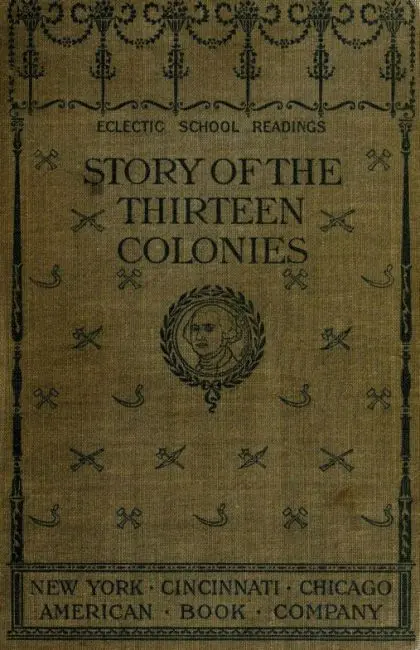
THE CLASSIC COLLECTION · 1898
"The Story of the Thirteen Colonies" by H. A. Guerber is a historical account written in the late 19th century. This text serves as an educational introduction to American history, particularly focusing on the early settlements of the Thirteen Colonies and the events leading up to the Revolutionary War. The book aims to instill a sense of patriotism and knowledge of historical figures among children, sharing stories that illuminate the virtues and challenges faced during this formative period of American history. The opening of the book sets the stage by discussing the long and ancient history of the American continent, emphasizing its beauty and richness prior to the arrival of Europeans. It introduces readers to the native peoples, particularly focusing on the different tribes categorized as savage, barbarous, and half-civilized, describing their lifestyles, dwellings, and tools. The text illustrates how these tribes interacted with the land and with one another, highlighting their unique cultural aspects. The narrative then leads to the arrival of European explorers, setting the foundation for the subsequent chapters that will explore the colonization and development of the Thirteen Colonies.
Introduction adapted from the source catalogue; source summaries may be automatically generated.
Free to read · English · 84,057 words · No account needed
MAKE TIME FOR A GOOD BOOK
On by default. Untick to stop anonymous reading totals. Each page counts after 10 seconds in view. How this works.
Anonymous counting is on unless you have switched it off.
Brănt, Indian chief routed at Oriskany, 267,
leave Boston, 247
leave Philadelphia, 277
plan new campaign, 297
quartered in Boston, 224, 225
quartered in Philadelphia, 275
retreat at Concord, 235
settlements. See under English.
shut up in Boston, 244, 245
surrender at Saratoga, 270, 271
surrender at Yorktown, 318
surrender Ticonderoga, 237
take Savannah, 297
under Clinton, bombard Fort Moultrie, 247
under Cornwallis pursue Washington, 257
victorious at Brandywine, 264
victorious at Camden, 299
victorious at Guilford Courthouse, 314
Brook, land granted to, 130
Brook´lўn Heīghts, Americans intrenched in, 254
Brṳ´tus, 221
Bŭṉ´ker Hill, battle of, 239-241
Bur´ges-ses, House of, 101, 154, 156, 211
Bur-goyne´, British general, 239
cut off from Canada, 267
defeated at Stillwater, 269
surrender of, 270, 271
takes Forts Ticonderoga and Edward, 265
Burke, opposes Stamp Act, 223
speech of, 286
Bur´ling-ton, settlement near, 146
Bŭt´ler, in Wyoming Valley murders, 286
Cabeza de= Vä´cä (cah-bā´sah), explorations of, 67
Căb´ot, John, explorations of, 60
Çaē´şar, 221, 231
Căl´ĭ-cŭt, Vasco da Gama reaches, 61
Căl-ĭ-fôr´nĭ-a, Gulf of, explored, 67
Căl´u-mět, pipe of peace, 114
Cām´bridge, college at, 125
Committee of Safety at, 232
Washington´s headquarters at, 242, 246
Cambridge Elm, Washington takes command under, 242
Căm´den, Gates defeated at, 299
Cămpe, plans to capture Arnold, 308, 309
Căn´-a-da, Americans driven out of, 246
ceded to Great Britain, 213
explored by Cartier, 70-73
French driven into, 211
Frontenac governor of, 184
named by Cartier, 174
smuggling by way of, 216
Că-nā´dĭ-ans, under Carleton march southward, 246
Ca-nā´ry Islands, Columbus at, 44, 45
discovered, 36
Ca-nŏn´ĭ-cus, Narragansett chief, 118
Cape Brět´on Island, French fort on, 189
named, 71, 174
Cape Charles, named, 87
Cape Cod, Cabot explores, 60
named by Gosnold, 86
Northmen at, 28
Pilgrims at, 109, 111
Cape Hăt´ter-as, explored by Cabot, 60
Cape Henry named, 87
Cape Horn, Indians at, 14
Cape of Good Hope, discovered, 42
Cape of Storms, discovered, 42
Cape St, Vĭn´çěnt, sea fight at, 37
Cape Vērde Islands, Columbus sails from, 56
Portuguese at, 36
Cărĭbs, inhabitants of West Indies, 54
Cärle´ton, commander of Canadians, 246
victorious at Valcour Island, 252
Căr-o-lī´nȧ, division of, 164
English settlement in, 162
French settlement in, 74
granted to lords proprietors, 162
Carolina, North, English colony at, 85
explored, 71
pirates, 164
Cär´pen-ter's Hall, First Continental Congress at, 229
Căr´rōll, Charles, signs Declaration of Independence, 251
Cär-tier´ (-tyā´), explorations of, 71-73, 174
Cär´ver, John, death of, 115
governor of Pilgrims, 110
makes treaty with Massasoit, 114, 137
Cäs-tïle´, Isabella, queen of, 59
Ca-ta:w´ba River, Morgan crosses, 313
Ca-thāy´, China called, 33
new road to, sought, 35
"Căv-ȧ-liērs´," Royalists called, 155
Cen´tral A-měr´ĭ-ca, explored by Columbus, 58
Indians in, 20
Spanish colonies in, 64
Çeū´ta, Prince Henry of Portugal visits, 35
Chăaddş Ford, Washington defeated at, 264
Çhăm-plāin´, discovers Lake Champlain, 175
settles at Quebec, 174
voyage of, 184
Champlain, Lake, discovered, 175
Your reading position is saved on this browser. Take it to another device with a library code. Reading pages adapt to text, rather than matching a printed edition.
H. A. (Hélène Adeline) Guerber
H. A. (Hélène Adeline) Guerber
H. A. (Hélène Adeline) Guerber
BEHIND THE BOOK
This eBook is for the use of anyone anywhere in the United States and most other parts of the world at no cost and with almost no restrictions whatsoever. You may copy it, give it away or re-use it under the terms of the Project Gutenberg License included with this eBook or online at www.gutenberg.org. If you are not located in the United States, you will have to check the laws of the country where you are located before using this eBook. Read the source licence.
The original source file, including credits and licence, is retained by this library. Request an original-format copy at no charge. Please include the book title and Project Gutenberg identifier #48051.
KEEP YOUR CURIOSITY GOING
Cécile Tormay

Moritz Busch
John L. Ransom
Frances Wright
Cécile Tormay

Mabel Potter Daggett