THE CLASSIC COLLECTION✦An outlaw’s diary: the CommuneCLASSIC FREE BOOKS
An outlaw’s diary: the Commune
Cécile Tormay
THE CLASSIC COLLECTION · 1916
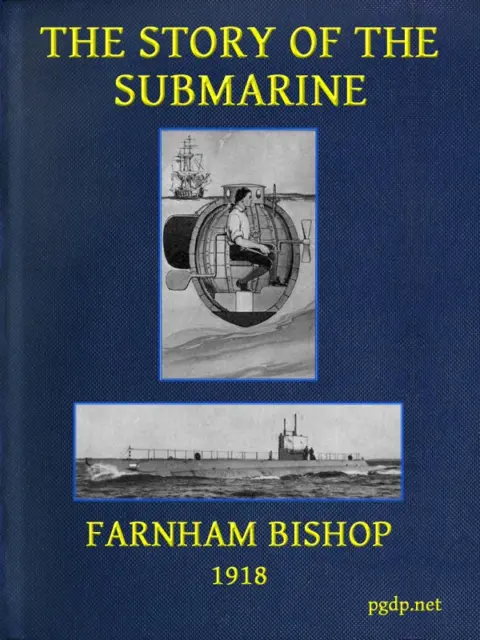
"The Story of the Submarine" by Farnham Bishop is a historical account written in the early 20th century. This work aims to educate non-technical readers about the evolution of submarines, prominently featuring notable inventors like David Bushnell and Robert Fulton. The book explores various stages of submarine development, invoking a sense of both wonder and historical significance around these remarkable inventions. The opening of the book provides a fascinating introduction to the concept of submarines, tracing the history back to early ideas and experiments from the 14th century onwards. It details the first attempts at underwater navigation, including Cornelius Van Drebel's ingenious wooden rowboats that ventured beneath the Thames in the early 17th century. Additionally, the text sets the stage for more advanced designs and concepts that would evolve over the centuries, highlighting the ingenuity and challenges faced by these pioneers in submarine technology. The author mixes historical anecdotes with an engaging narrative that promises to delve into the role of submarines in warfare and their impact on naval strategy.
Introduction adapted from the source catalogue; source summaries may be automatically generated.
Free to read · English · 46,472 words · No account needed
MAKE TIME FOR A GOOD BOOK
On by default. Untick to stop anonymous reading totals. Each page counts after 10 seconds in view. How this works.
Anonymous counting is on unless you have switched it off.
Riou, Olivier, 59.
Rogers, Commodore, 34.
Rotterdam Boat, 9, 14, 69.
Royal Edward, 166.
Rudders, bow, 96, 111.
horizontal (see diving-planes).
San Francisco, 149.
Safety-buoy, 132.
catch, 47.
helmets, 130.
jackets, 130.
Sails, 29, 31.
Salvage docks, 134.
Sampson, Admiral, 89, 146.
Schneider, Commander, 201.
Scope, Lieutenant Perry, 100.
Searchlight, 86, 186.
Selfridge, Rear-admiral, 115.
Servo-motor, 49, 53.
Sirius, Captain John, 177, 187, 189, 206.
Skerrett, Mr. R. G., 135.
Spuyten Duyvil, 42.
Stahl, Gustav, 196.
“Staple of News, the,” 3.
Steam submarine, 61.
Steamboat, 32, 34.
Storage-batteries, 59, 126, 184.
“Striker,” the, 46.
Stromboli, 42.
Submarine fighting submarine, 174.
Submarine railroad, 64.
Submersible, 91.
Superstructure, 90, 102.
Symons’s submarine, 9.
Taylor, D. W., Chief Constructor, U. S. N., 96.
Telephoning from submarines, 88, 132.
Tecumseh, 142.
Templo, Alvary, 71.
Texas, 146.
Thrasher, Leon C., 190.
Tinkling Cloud, 195.
Tissot, Professor, 171.
Torpedo, automobile, 44 to 55.
boats, 45, 103.
Brennan, 59.
Chandler, 53.
controllable, 43, 54, 55.
cost of, 47, 103.
Davis gun-, 52.
Fulton’s anchored, 139.
Hammond wireless, 55.
Torpedo-nets, 34, 170.
origin of name, 29.
practice, 116.
recovering, 47, 123.
Schwartzkopf, 52, 160.
Sims-Edison, 54.
spar, 37, 43.
tubes, 45, 46, 63, 117, 118, 133, 138.
wake of, 49, 206.
“Torpedo War and Submarine Explosions,” 35, 139.
Torpedo, Whitehead, 44 to 52, 117.
Transports, 166, 171, 178.
Trim, 96.
Trimming-tanks, 117.
Trinitrotuluol, 52.
Triumph, 166.
Trumbull, Governor, 14.
Turner, Captain, 193.
Turtle, 12, 14 to 22.
U-39, 187, note.
Vanderbilt, Alfred, 194.
Vand der Wonde, Cornelius, 6.
Van Drebel, Cornelius, 4 to 9, 41.
Vendémiaire, 124.
Vereshchagin, 147.
Vickers Sons & Maxim, 80.
Ville de la Ciotat, 205.
Von Weddigen, Lieutenant-commander, 18, 160, 191.
Von Bernstorff, Ambassador, 199.
Von Tirpitz, Admiral, 69, 177, 187, 189.
Vulcan, 132.
Waddington, Mr. J. F., 83, note.
War-head, 47, 52.
War Zone, 30, 179.
Washington, George, 13, 17, 25.
Wheeled submarines, 84.
White mice, 13, 110.
Whitehead, Mr., 44.
Whitney, Secretary, 74.
Wilson, President, 180, 197, 198.
Wright brothers, 71.
X-4, 102 to 123.
Yasaka Maru, 205.
Yenisei, 146.
Zeppelins, 172.
[1] Also spelled Van Drebbel, Drebell, Dreble, and Trebel. He is the man Ben Jonson calls “Cornelius’ son.”
[2] Harsdoffer.
[3] “New Experiments touching the Spring of the Air and its Effects,” by Robert Boyle, Oxford, 1662, p. 188.
[4] The only submarine built before this for military purposes, the Rotterdam Boat, remained private property, and King James’s “eel-boats” were merely pleasure craft.
[5] Sergeant Ezra Lee’s letter to Gen. David Humphreys, written in 1815. Published in the “Magazine of American History,” Vol. 29, p. 261.
[6] “General Washington and his associates in the secret took their stations upon a house in Broadway, anxiously awaiting the result.” From Ezra Lee’s obituary, New York “Commercial Advertiser,” November 15, 1821.
[7] According to Bushnell, the screw struck an iron bar securing the
rudder.
[8] This survivor was examined by the captain of the Cerberus, who reported that the schooner’s crew had drawn the machine on board and by rashly tampering with its mechanism caused it to explode.
[9] See the “Scientific American,” August 7, 1915.
[10] Herbert C. Fyfe, “Submarine Warfare,” p. 269.
[11] But Fulton’s Nautilus could not possibly have made the dives with which she is credited except by the use of the horizontal rudders which she possessed in conjunction with the push of her man-power propellor. Holland had carefully studied the plans and letters of Bushnell and Fulton.
Your reading position is saved on this browser. Take it to another device with a library code. Reading pages adapt to text, rather than matching a printed edition.
BEHIND THE BOOK
This eBook is for the use of anyone anywhere in the United States and most other parts of the world at no cost and with almost no restrictions whatsoever. You may copy it, give it away or re-use it under the terms of the Project Gutenberg License included with this eBook or online at www.gutenberg.org. If you are not located in the United States, you will have to check the laws of the country where you are located before using this eBook. Read the source licence.
The original source file, including credits and licence, is retained by this library. Request an original-format copy at no charge. Please include the book title and Project Gutenberg identifier #50582.
KEEP YOUR CURIOSITY GOING
Cécile Tormay

Moritz Busch
John L. Ransom
Frances Wright
Cécile Tormay

Mabel Potter Daggett