THE CLASSIC COLLECTION✦Greenwich VillageCLASSIC FREE BOOKS
Greenwich Village
Anna Alice Chapin
THE CLASSIC COLLECTION · 1897
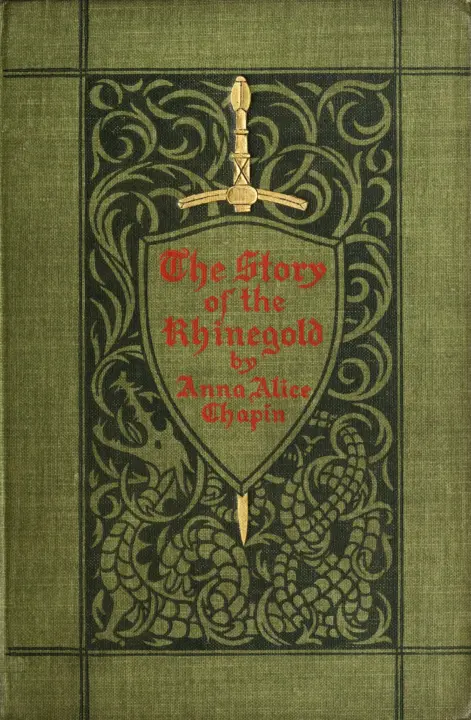
"The Story of the Rhinegold (Der Ring des Nibelungen) Told for Young People" by Anna Alice Chapin is a retelling of Richard Wagner's operatic cycle written in the late 19th century. This work seeks to present the epic narratives of Teutonic mythology in a form accessible to children, emphasizing themes of love, power, and the consequences of greed. The story introduces various legendary characters, including Wotan, the king of the gods, and Alberich, the greedy dwarf, as they interact with magical treasures and face the repercussions of their actions. The opening of the tale sets the stage for an enchanting but foreboding world, focusing on the Rhine maidens who guard a precious gold that grants immense power. As the narrative unfolds, the character of Alberich emerges, driven by his lust for the Rhinegold, which he steals after renouncing love. This act triggers a curse that shadows the subsequent characters and events, leading to conflicts involving gods and other mythical beings. The prelude establishes a rich atmosphere of myth, highlighting the intertwined fates of the characters and hinting at the tragic consequences that will follow their quests for power.
Introduction adapted from the source catalogue; source summaries may be automatically generated.
Free to read · English · 24,799 words · No account needed
MAKE TIME FOR A GOOD BOOK
On by default. Untick to stop anonymous reading totals. Each page counts after 10 seconds in view. How this works.
Anonymous counting is on unless you have switched it off.
“Nothung!” cried Mime, eagerly. “Nothung is the name of the sword. Siegmund once drew it from a great tree. It was broken by the spear of Wotan. Now a clever smith”—and he rubbed his hands gleefully—“understands all this, and he hoards well the splinters, knowing that with these alone can Siegfried kill the Dragon.”
The Wanderer burst out into laughter.
“But who will mend the sword?” he asked.
Mime sprang to his feet in despair, filled with terror and rage; for that was the one question he could not answer—that was his riddle, his everlasting mystery.
Quietly Wotan rose from the hearth where he had been sitting.
“I gave you three chances to ask me the question which I have now asked you. Foolishly, you let them all slip by. Listen while I answer it! Only he who has never felt fear can forge Nothung anew.”
He strode to the door of the cave, and there paused, looking back.
“Guard well your head, O Dwarf! I leave it to him who knows not fear.”
Smiling quietly, the Wanderer disappeared in the wood’s depths, and thunder and lightning followed him as he went.
Mime was left—puzzled, despairing, terror-stricken. His vivid imagination began to conjure up before him visions of Fafner, the Dragon, and he had fallen behind the anvil, so great was his fear, when Siegfried came hastily in, asking once more for the sword.
Mime, creeping out from behind the anvil, could not at once collect his scattered wits, and merely muttered:
“Only he who has never felt fear can forge Nothung anew. My wits are too wise for that job.”
Finally, as Siegfried demanded why he had not worked at the sword, he
said, slowly:
“I was fearing for your sake.”
“Fearing!” said Siegfried. “What do you mean by fearing?”
Mime described the tremblings, shudderings, and quakings aroused by fear, and Siegfried remarked, as he finished:
“All that must seem very queer. I rather think I should like to feel all that—but how shall I learn?”
Mime, delighted, told him of Fafner, and said that the Dragon would teach him, or any one else, the art of fearing, and ended by promising to lead him to Hate Hole the next day.
“Does the world lie that way?” asked the boy.
“To Hate Hole it is close at hand,” responded the wicked little Nibelung, beginning to feel rapture glow in his heart.
But, when Siegfried again demanded the sword, the smith fell once more into despair, wailing that he could not shape it, that only one who knew not fear could forge it anew.
Your reading position is saved on this browser. Take it to another device with a library code. Reading pages adapt to text, rather than matching a printed edition.
BEHIND THE BOOK
This eBook is for the use of anyone anywhere in the United States and most other parts of the world at no cost and with almost no restrictions whatsoever. You may copy it, give it away or re-use it under the terms of the Project Gutenberg License included with this eBook or online at www.gutenberg.org. If you are not located in the United States, you will have to check the laws of the country where you are located before using this eBook. Read the source licence.
The original source file, including credits and licence, is retained by this library. Request an original-format copy at no charge. Please include the book title and Project Gutenberg identifier #73548.
KEEP YOUR CURIOSITY GOING

Maurice Baring
Francis Greenleaf Allinson & Anne C. E. (Anne Crosby Emery) Allinson

Abby Morton Diaz
Helen Hunt Jackson
Mary Frances Blaisdell
Stuart Dodgson Collingwood