THE CLASSIC COLLECTION✦An outlaw’s diary: the CommuneCLASSIC FREE BOOKS
An outlaw’s diary: the Commune
Cécile Tormay
THE CLASSIC COLLECTION · 1903
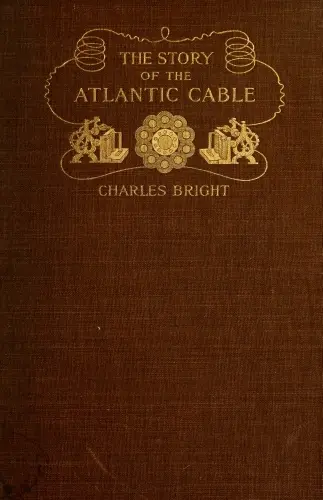
"The Story of the Atlantic Cable" by Sir Charles Bright is a historical account written in the early 20th century. The book chronicles the ambitious and groundbreaking efforts to establish telegraphic communication across the Atlantic Ocean, exploring the technological challenges and the key figures involved in this monumental undertaking. At the start of the book, the author introduces the evolution of electric telegraphy, detailing its significance in modern civilization and the enormous technical challenges these pioneers faced in spanning the vast Atlantic. The opening chapters discuss early experiments with submarine cables, breakthroughs in insulation materials like gutta-percha, and the eventual conception of the Atlantic telegraph project initiated by notable figures such as Cyrus West Field, John Watkins Brett, and Charles Bright himself. This sets the stage for an in-depth exploration of the engineering marvels and struggles that characterized the laying of the transatlantic cable, which would ultimately change global communications forever.
Introduction adapted from the source catalogue; source summaries may be automatically generated.
Free to read · English · 49,517 words · No account needed
MAKE TIME FOR A GOOD BOOK
On by default. Untick to stop anonymous reading totals. Each page counts after 10 seconds in view. How this works.
Anonymous counting is on unless you have switched it off.
When we consider the extraordinary undertaking that has been accomplished within the last few weeks; when we consider that a cable of about 2,000 miles has been extended beneath the ocean--a length which, if multiplied ten times, would reach our farthest colonies and nearly surround the earth; when we consider it is stretched along the bed of shingles and shells, which appeared destined for it as a foundation by Providence, and stretching from the points which human enterprise would look to; and when we consider the great results that will flow from the enterprise, we are at a loss here how sufficiently to admire the genius and energy of those who planned it, or how to be sufficiently thankful to the Almighty for having delegated such a power to the human race, for whose benefit it is to be put in force. (Cheers.) And let us look at the career which this telegraph has passed since it was first discovered. At first it was rapidly laid over the land, uniting states, communities, and countries, extending over hills and valleys, roads and railways; but the sea appeared to present an impenetrable barrier. It could not stop here, however; submarine telegraphy was but a question of time, and the first enterprise by which it was introduced was in connection with an old foe--and at present our best friend--Imperial France. (Hear, hear.) The next attempt which was successful was the junction of England and our island, and which was, I believe, carried out by the same distinguished engineer (Sir Charles Bright), whose name is now in the mouth of every man. (Hear, hear.) Other submarine attempts followed: the telegraph paused before the great Atlantic, like another Alexander, weeping as if it had no more worlds to conquer; but it has found another world, and it has gained it--not bringing strife or conquest, but carrying with it peace and good-will. (Applause.) I feel I should be wanting if I did not allude in terms of admiration to the genius and skill of the engineer, Sir Charles Bright, who has carried out this enterprise, and to the zeal and courage of those who brought it to a successful termination. (Applause.) It is not necessary, I am certain, to call attention to the diligence and attention shown by the crew of the Agamemnon--(cheers)--because I am sure there is no one here who has not read the description of the voyage in the newspapers. The zeal and enterprise were only to be equaled by the skill with which it was carried out. I believe there was only a difference of twelve miles between the two ends of the cable when it came to the shore. There are some questions with regard to the date at which the work was carried out to which I wish to call attention. It was on the 5th August, 1857, that this enterprise was first commenced under the auspices of my distinguished predecessor, who I wish was here now to rejoice in its success--I mean only in a private capacity. (Cheers and laughter.) It was on the 5th August, 1858, it was completed, and it was on the 5th August, more than three hundred years ago, that Columbus left the shores of Spain to proceed on his ever-memorable voyage to America. It was on the 5th of August, 1583, that Sir Hugh Gilbert, a worthy countryman of Raleigh and Drake, steered his good ship the Squirrel to the shores of Newfoundland and first unfurled the flag of England in the very bay where this triumph has now taken place--(applause)--and it was on the same 5th of August that your sovereign was received by her imperial friend amid the fortifications of Cherbourg, and thereby put an end to the ridiculous nonsense about strife and dissension. (Applause.) Let the 5th August be a day ever memorable among nations. Let it be, if I may so term it, the birthday of England. (Applause.) Among the many points which must have given every one satisfaction was the manner in which this great success was received in America. (Hear.) There appears to have been but one feeling of rejoicing predominant among them; and I can not but think that that was not only owing to their commercial enterprise--which they shared along with us--but also, I trust, more to the feelings of consanguinity and affection which I am sure we share, though occasionally disturbed by international disputes, and by differences caused by misrepresentations or hastiness. It must still burn as brightly in their breasts as in ours. (Applause.) I trust that, not only with our friends across the Atlantic, but with every civilized nation, this great triumph of science will prove the harbinger of peace, good-will, and friendship; and that England and America will not verify the first line of the stanza,
Your reading position is saved on this browser. Take it to another device with a library code. Reading pages adapt to text, rather than matching a printed edition.
BEHIND THE BOOK
This eBook is for the use of anyone anywhere in the United States and most other parts of the world at no cost and with almost no restrictions whatsoever. You may copy it, give it away or re-use it under the terms of the Project Gutenberg License included with this eBook or online at www.gutenberg.org. If you are not located in the United States, you will have to check the laws of the country where you are located before using this eBook. Read the source licence.
The original source file, including credits and licence, is retained by this library. Request an original-format copy at no charge. Please include the book title and Project Gutenberg identifier #46105.
KEEP YOUR CURIOSITY GOING
Cécile Tormay

Moritz Busch
John L. Ransom
Frances Wright
Cécile Tormay

Mabel Potter Daggett