THE CLASSIC COLLECTION✦DanteCLASSIC FREE BOOKS
Dante
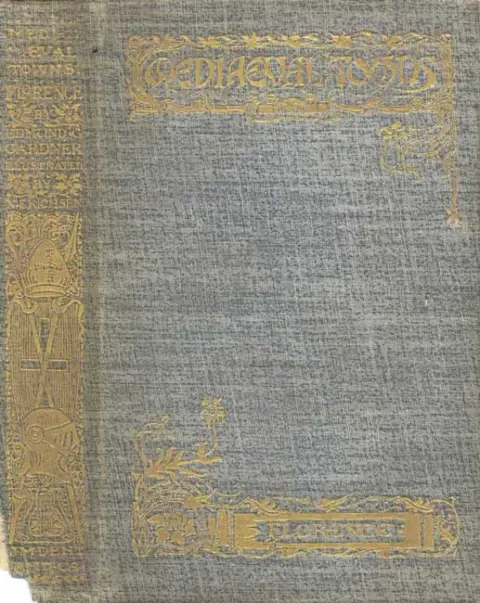
Edmund G. Gardner

THE CLASSIC COLLECTION · 1904
"The Story of Siena and San Gimignano" by Edmund G. Gardner is a historical account written in the early 20th century. This work aims to provide readers with a popular history of the Republic of Siena while also serving as a guidebook for those visiting this captivating Tuscan city and the nearby town of San Gimignano. The book delves into the origins, cultural significance, and historical events surrounding Siena and its relationship with San Gimignano, shedding light on its notable figures and developments throughout the ages. At the start of the book, the author sets the scene by describing Siena as the most quintessentially medieval city in Tuscany, characterized by its narrow streets, Gothic architecture, and rich history. Gardner discusses the legendary founding of Siena, its socio-political evolution during the medieval period, and the emergence of distinct noble families that played pivotal roles in its governance. The opening portion outlines the early political structures and rivalries among the factions of Siena, particularly the tensions with Florence, establishing a foundational understanding of the Republic's complex history and the significance of its cultural heritage, which would be explored further in subsequent chapters.
Introduction adapted from the source catalogue; source summaries may be automatically generated.
Free to read · English · 112,538 words · No account needed
MAKE TIME FOR A GOOD BOOK
On by default. Untick to stop anonymous reading totals. Each page counts after 10 seconds in view. How this works.
Anonymous counting is on unless you have switched it off.
Pius II., Pope, (Enea Silvio Piccolomini), his early life, 71, 72;
Bishop of Siena, 72;
elected Pope, 72;
attempts to force the Sienese to admit nobles into the administration, 73;
his benefits to Siena, 73;
creates Pienza, 74;
his letter to the Balìa about Calixtus III., 112, 113;
gives relics to the Duomo, 160;
statue of, 162;
Bishop of Siena and raises the See to an Archbishopric, 168;
his nephew's devotion to, 168, 170;
ten scenes from his life frescoed by Pinturicchio, 171-175;
his account of the meeting of Frederick and Leonora, 173;
his enthusiasm for the Eastern Question and canonisation of
St Catherine, 174;
his death, 174, 175;
his episcopal ring, 180;
referred to, 197;
statue of, 265;
Tavolette of Biccherna and Gabella concerning him, 271;
raises a monument to his parents in the church, and stays in
the convent of San Francesco, 284;
his reception at the Porta Camollia, 294;
visits Lecceto, 312;
his visit to Monte Oliveto, 323.
Pius III., Pope (Francesco Todeschini Piccolomini), received
into the Monte del Popolo, 73;
mediates between the People and the Noveschi, 75;
his pacific influence, 77;
accepts the new regime of the Noveschi, 78;
presides at a solemn reconciliation in the Duomo, 78, 79;
his short papacy, 90;
referred to as Cardinal, 129, 130;
statue of in the Duomo, 162;
Archbishop, 168;
orders the altar of the Piccolomini and his own tomb, 168;
his character, 168;
his elevation to the papacy, attempt to reform the Church
and untimely death, 169;
builds the library of the Duomo, 170;
fresco representing his coronation, 170, 171;
his contract with Pinturicchio, 171, 175;
a Tavoletta di Gabella concerning him, 271.
Placidi, family of the, Noveschi, 216.
Placidi, Aldello, 213.
---- Neri, 76, 83.
Poccetti, Bernardo, painter (1542-1612), 124, 343, 356.
Pochintesta da Bagnacavallo, condottiere, 90, 94, 97.
Podestà, institution of the office in
Siena, 5, 6, 9, 10;
institution of the office in San Gimignano, 326, 327;
method of his election in latter town, 332, 333.
Poggibonsi, destruction of the Castello of, 331.
Poggio Imperiale, battle of, 74, 138.
Pomarelli, architect, 177.
Ponsi, Girolamo di Domenico, architect, 188.
Pollaiuolo, Pietro, painter (1443-1496), his altarpiece at San Gimignano, 350.
Popolani (in the special sense of members of the Monte del Popolo), 67, 73, 75, 78, 79, and passim.
Popolo, Monte del, institution of, 67;
supports the Milanese suzerainty, 68;
has a third of the Signoria, 69;
the Todeschini received into, 73;
supports the Duke of Calabria, 74;
gets control of the State, 75, 76;
ousted by the Noveschi, 78;
has still nominally a third part of the government, 79;
annulled with the other Monti, 210;
restored, 211.
Possa, El (Domenico di Michele), 138.
Provenzano Salvani. See Salvani.
---- Madonna di, 283, 284.
Provveditori. See Biccherna.
Pugna, Giuoco delle. See Giuoco.
Quercia, Giacomo della, sculptor (1371 or 1374-1438), his
life and work, 100, 101;
his Fonte Gaia, 127;
sculptures of his school, 143, 161;
remains of his reliefs from the Fonte Gaia, 176;
his work on the Font of the Baptistery, 181, 182.
---- Priamo della, painter (brother of Giacomo), his fresco
in the Spedale, 186.
Raimondo, Beato. See Vigne.
Ramo di Paganello, sculptor (working during the last twenty
years of the Trecento), 99;
his St Francis, 284.
Raphael, 171, 174, 175.
Your reading position is saved on this browser. Take it to another device with a library code. Reading pages adapt to text, rather than matching a printed edition.
Edmund G. Gardner
Edmund G. Gardner
BEHIND THE BOOK
This eBook is for the use of anyone anywhere in the United States and most other parts of the world at no cost and with almost no restrictions whatsoever. You may copy it, give it away or re-use it under the terms of the Project Gutenberg License included with this eBook or online at www.gutenberg.org. If you are not located in the United States, you will have to check the laws of the country where you are located before using this eBook. Read the source licence.
The original source file, including credits and licence, is retained by this library. Request an original-format copy at no charge. Please include the book title and Project Gutenberg identifier #46954.
KEEP YOUR CURIOSITY GOING
Wilfrid Scawen Blunt
Wilfrid Scawen Blunt

E. W. (Edgar Watson) Howe
Cécile Tormay

Moritz Busch
John L. Ransom