The story of my struggles: the memoirs of Arminius Vambéry, Volume 1
Ármin Vámbéry
THE CLASSIC COLLECTION · 1904
"The Story of My Struggles: The Memoirs of Arminius Vambéry, Volume 2" by Vámbéry is a historical memoir written in the early 20th century. This volume continues the life narrative of the author, who was an influential scholar and traveler known for his extensive work in Oriental studies. The book specifically explores Vambéry's experiences during and after his travels in Central Asia, reflecting on his political engagements and the cultural contrasts he faced when he returned to Hungary. The opening of this memoir describes Vambéry's return to Hungary after a successful reception in England. He reflects on his decision to prioritize a quieter academic life despite his potential for a more dynamic career in political diplomacy, as well as the challenges he faced in gaining acceptance in his homeland after years abroad. He discusses the stark contrast between his reception in England and the skepticism he received from various circles in Hungary, revealing the complexities of identity, ambition, and cultural appreciation. His recounting of these experiences introduces themes of belonging, societal expectations, and the struggle for recognition in a post-imperial context.
Introduction adapted from the source catalogue; source summaries may be automatically generated.
Free to read · English · 61,379 words · No account needed
MAKE TIME FOR A GOOD BOOK
On by default. Untick to stop anonymous reading totals. Each page counts after 10 seconds in view. How this works.
Anonymous counting is on unless you have switched it off.
Why deny it? In my many years' intercourse with the people of both these worlds, religion has not had a beneficial influence upon me. I have found in it nothing to ennoble man, not a mainspring of lofty ideals, and certainly no grounds for classifying and incorporating people according to their profession of faith or rather according to their interpretation and understanding of the great vital question as to the exact manner in which one should grope about in the prevailing darkness. If the division into many nationalities of people belonging to the same race and living under the same sky is an absurdity, how much more foolish is it to be divided on the point of a fanciful interpretation of the inscrutable mystery, and a fruitless groping into the unfathomable problem? The question of nationality will be further discussed presently, and as regards religion I will only add here that the ethical standard of faith, although much higher in Asia than in Europe, can after all have but a problematic influence, and only on intellects whose culture enables them to form high ideals, and to whom, being of a poetic or sentimental or indolent temperament, a roaming in loftier spheres seems a necessity. Beyond this, religion in Asia as in Europe reveals itself in outward show, miracles and mysteries, and where these are absent there is no true religion. Many of the ceremonies, usages, and superstitions which as an Orthodox Jew I practised in my youth I have discovered again one by one in faithful counterfeit amongst Catholic and Orthodox Christians, Moslems, Fire-worshippers, and Hindus, and nothing to my mind is more ridiculous than the revilings of one religion against another about these childish external things. So, for instance, as a pious Jew, I was always careful on Saturdays not to pass the Ereb, i.e., the line which marks the closer limit of the town, with my wallet full. Overstepping this cordon might be looked upon as a business transaction and a violation of the Sabbath; with a handkerchief on my loins and my eyes fixed on a bit of twine hanging between two sticks, I ventured, however, to take my walks abroad on the Sabbath day. Many years later I travelled from Samarkand to Herat in company with some Hindustani, who, having transacted some financial business in Bokhara, now with full pouches were returning to their sunny home on the Ganges. These Vishnu-worshippers, with the yellow caste-sign on their brow, used at night at the halting-place to separate themselves from the rest of the caravan. Small sticks about a finger in length were stuck in the ground to form a circle round them with a thin twine stretched from point to point, (for, like the Ereb, this line represented the cordon between them and the world of unbelievers), and behind this imaginary wall they prepared and ate their food without any fear of its being defiled by the glances of the heathen. As a child I was taught to look with disgust upon swine's flesh, and later, as Mohammedan, I had to feign horror and aversion at the very mention of the word Khinzir (swine). In my youth the wine prepared by a Christian was Nesekh (forbidden), as a Shiite, notwithstanding my ravenous hunger, I could not touch the food which the hand of a Christian had handled. Not only among Jews and Asiatic religionists, however, but even Christianity, whether in Europe or in Asia, is full of such flagrant superstitions and absurdities which are thrown in the teeth of those of another persuasion. The Abbé Huc tells us in his Book of Travels, that once on the borders of Tibet he sought a night's quarter and was directed to the house of a Buddha-maker. This led the French missionary to make some scoffing remark about the manufacturing of gods in Buddhism. I had a similar experience at St. Ulrich's in the Grödnerthal, in strictly Catholic Tyrol, for in my search for a house to put up at in that charmingly situated Alpine place I was directed successively to a Mary-maker, a God-maker, and a Christ-maker, for in this district live the best-known manufacturers of crosses and saints. In the Mohammedan world, knowing that I was acquainted with Europe, I have often been asked whether it was really true that the Franks worshipped a god with a dog's head, practised communism of wives, and such like things. In Tyrol, on the Achensee, where I lived among the peasants, I was asked if on my many travels I had ever visited the land of the Liberals, where the goat does duty as god, as the anti-Liberal minister had given the simple peasants to understand.
Your reading position is saved on this browser. Take it to another device with a library code. Reading pages adapt to text, rather than matching a printed edition.
Ármin Vámbéry
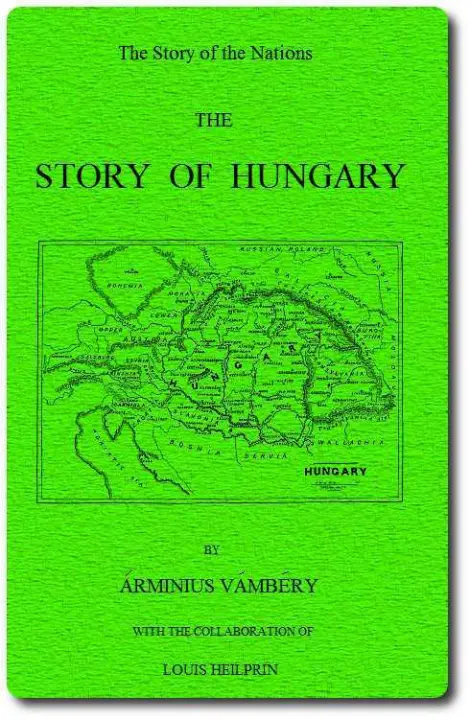
Ármin Vámbéry
Ármin Vámbéry
Ármin Vámbéry
BEHIND THE BOOK
This eBook is for the use of anyone anywhere in the United States and most other parts of the world at no cost and with almost no restrictions whatsoever. You may copy it, give it away or re-use it under the terms of the Project Gutenberg License included with this eBook or online at www.gutenberg.org. If you are not located in the United States, you will have to check the laws of the country where you are located before using this eBook. Read the source licence.
The original source file, including credits and licence, is retained by this library. Request an original-format copy at no charge. Please include the book title and Project Gutenberg identifier #50837.
KEEP YOUR CURIOSITY GOING
Cécile Tormay

Moritz Busch
John L. Ransom
Frances Wright
Cécile Tormay

Mabel Potter Daggett