Letters to a Friend, Written to Mrs. Ezra S. Carr, 1866-1879
John Muir
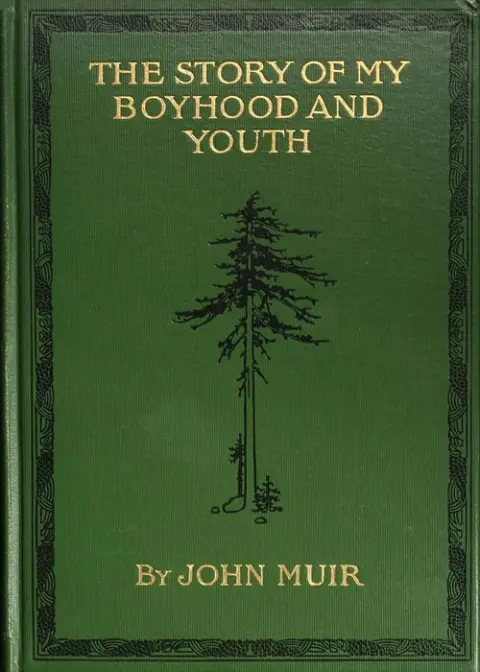
THE CLASSIC COLLECTION · 1912
"The Story of My Boyhood and Youth" by John Muir is an autobiographical memoir written in the early 20th century. The narrative recounts Muir's early experiences growing up in Scotland, focusing on his deep affinity with nature and adventure. It offers a vivid exploration of his childhood, emphasizing his wild pursuits, education, and the formative moments that shaped his love for the natural world. The opening of the memoir delves into Muir's early life in Dunbar, Scotland, where he shares vivid recollections of his explorations with friends and the thrill of discovering the wild surroundings. Muir reminisces about his school days filled with frightful legends, such as the "Dandy Doctor," and the joys of simple childhood games and adventures in nature. Through charming anecdotes and reflective observations, he sketches a portrait of a spirited boy whose experiences in the fields and by the sea began to cultivate a lasting passion for the environment that would characterize his later life as a naturalist and conservationist.
Introduction adapted from the source catalogue; source summaries may be automatically generated.
Free to read · English · 53,670 words · No account needed
MAKE TIME FOR A GOOD BOOK
On by default. Untick to stop anonymous reading totals. Each page counts after 10 seconds in view. How this works.
Anonymous counting is on unless you have switched it off.
Melons, 200.
Minister, the blacksmith, 108;
his cruelty to his brother, 214-217.
Moccasins, Indian, 121, 122.
Mosquitoes, 113, 114.
Mouse, European field, with young, 3.
Mouse,
meadow, or field, 106, 107;
eaten by a horse, 107.
Muir, Anna, 56.
Muir, Anne (Gilrye) (mother), 11, 15, 16, 20, 22, 23, 28, 49, 256, 259,
260, 263.
Muir, Daniel (brother), 56, 115, 146, 223.
Muir, Daniel (father), 10, 11, 24, 31, 43, 44, 49, 53-56, 58-61, 83,
90, 94-96, 100-102, 115, 148, 191, 195, 203, 205, 218, 222, 224, 226,
231-234;
admonitions, 76, 77;
Scotch correction, 84-87;
as a church-goer, 107, 108;
his advice as to swimming, 124;
his ideas about books and the Bible, 241-244;
rules as to going to bed and getting up, 245-251;
his religious view of meals, 249, 250;
and his son’s inventions, 253-258;
his parting advice to his son, 262;
theories on bringing up children, 263.
Muir, David, 11, 20-22, 43, 53, 54, 56, 62, 78, 85-87, 97, 110, 115,
125, 126, 223, 231, 263, 264;
kills a deer, 172-174.
Muir, John,
fondness for the wild, 1, 49, 50;
earliest recollections, 1-3;
first school, 3-10, 28-30;
favorite stories in reading-book, 4-6;
favorite hymns and songs, 9, 10;
early fondness for flowers, 12-14;
an early accident, 15, 16;
bathing, 16, 17;
boyish sports, 17-26, 40, 41;
grammar school, 30-39;
birds’-nesting, 44-48;
early interest in America, 51-53;
emigration to America, 53-59;
settling in Wisconsin, 58-62;
life on the Fountain Lake farm, 62-226;
escaping a whipping, 84-87;
learning to ride, 95-100;
learning to swim, 124-129;
ambition in mowing and cradling, 202, 223;
put to the plough, 220, 221;
hard work, 221-224;
running the breaking plough, 227-229;
life at Hickory Hill, 230-263;
adventure in digging a well, 231-234;
educating himself, 240-247;
early rising proves a way out of difficulties, 245-251;
inventions, 248-261;
deciding on an occupation, 259-261;
determines to take his inventions to the State Fair, 260-262;
starting out into the world, 262-269;
at the State Fair, 269-272;
enters a machine-shop at Prairie du Chien, 272, 273;
odd jobs at Madison, 273, 274;
enters the University, 274-276;
life at the University, 276-287;
teaching school, 277-279;
vacation work at Hickory Hill, 279;
first lessons in botany, 280-283;
more inventions, 283-286;
enters the University of the Wilderness, 286, 287.
Muir, Margaret, 56, 253.
Muir, Mary, 56.
Muir, Sarah, 15, 56, 127.
Muir’s Lake. See Fountain Lake.
Muskrats,
an Indian hunting, 81, 82;
habits, 177-181.
Nighthawk, 69-71.
Nob and Nell, the horses, 103-105, 107-109.
Nuthatches, 144, 145.
Nuts, 123, 124.
Oriole, Baltimore, 143.
Owls, 145.
Oxen, humanity in, 90-94.
Pardeeville, Wis., 263-266.
Partridge, or ruffed grouse, drumming, 72.
Pasque-flower, 119-121.
Phrenology, 266.
Pickerel, 116, 117.
Pigeon, passenger,
Audubon’s account, 52, 53, 162-166;
extermination, 83;
in Wisconsin, 158-162;
Pokagon’s account, 166, 167.
Ploughing, 201, 202, 220, 221;
the breaking plough, 227-229.
Plutarch’s Lives, 241, 242.
Pokagon, his account of the passenger pigeon, 166, 167.
Portage, Wis., 93, 94, 108.
Prairie chickens, 145, 146.
Prairie du Chien, 272, 273.
Pucaway Lake, 147.
Quail. See Bob-white.
Rabbits, 181, 189.
Raccoon, 170, 184, 185.
Rails, splitting, 221, 222.
Rattlesnakes, 110.
Reid, Mr., 213, 214.
Ridgway, Robert, 64.
Road-making, 209.
Robin, American, 139.
Robin, European, 27, 28.
Your reading position is saved on this browser. Take it to another device with a library code. Reading pages adapt to text, rather than matching a printed edition.
BEHIND THE BOOK
This eBook is for the use of anyone anywhere in the United States and most other parts of the world at no cost and with almost no restrictions whatsoever. You may copy it, give it away or re-use it under the terms of the Project Gutenberg License included with this eBook or online at www.gutenberg.org. If you are not located in the United States, you will have to check the laws of the country where you are located before using this eBook. Read the source licence.
The original source file, including credits and licence, is retained by this library. Request an original-format copy at no charge. Please include the book title and Project Gutenberg identifier #18359.
KEEP YOUR CURIOSITY GOING
John L. Ransom

Herman W. Mudgett

Harriet Monroe
Daniel Dulany Addison
Charles Lanman

Harold Rosher