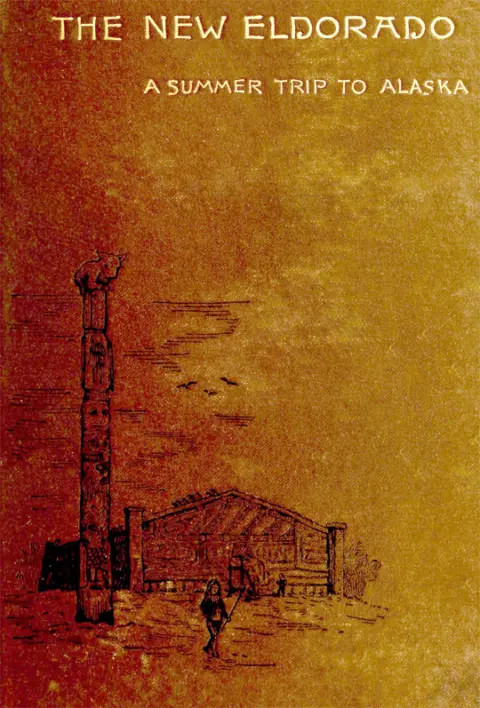
The New Eldorado: A Summer Journey to Alaska
Maturin M. (Maturin Murray) Ballou
THE CLASSIC COLLECTION · 1893
"The Story of Malta" by Maturin M. Ballou is a historical account written in the late 19th century. The book provides a detailed exploration of Malta, highlighting its pivotal geographical position, rich history, and the various cultures that have influenced this Mediterranean island over time. It aims to unveil the captivating story of Malta, from ancient times through the centuries of foreign rule, notably under the Knights Hospitaller. At the start of the book, the author sets context by discussing the geographical importance of Malta as a strategic maritime location. He details how its size and position have led to a tumultuous history marked by conquests and cultural exchanges among various civilizations, including the Phoenicians, Arabs, and the Knights of St. John. The opening portion introduces the reader to key themes such as the island’s historical significance, the influence of the Suez Canal on its commercial status, and the unique blend of languages and cultures that characterize the Maltese people. Through vivid descriptions, Ballou invites readers to appreciate Malta's multifaceted past as both a historical crossroads and a vibrant modern entity.
Introduction adapted from the source catalogue; source summaries may be automatically generated.
Free to read · English · 82,102 words · No account needed
MAKE TIME FOR A GOOD BOOK
On by default. Untick to stop anonymous reading totals. Each page counts after 10 seconds in view. How this works.
Anonymous counting is on unless you have switched it off.
It is natural that there should be a certain exclusiveness observed between the Maltese families and those of the official English residents. Caste, so to express it, though not under the arbitrary conditions in which it exists in India, is not unknown here. Where is it not to be found under various forms throughout Christendom? It exists to a certain degree among the English themselves. The separation caused by the dissimilarity of language, religion, and education is also wide. There are, as already stated, a certain number of "nobles" who transmit their distinction to their sons. These are a bigoted, useless, and extremely ignorant class, generally possessing just enough inheritance to keep them from beggary, yet who are too proud of their empty titles to adopt any occupation. These individuals, together with the numerous native priests, as illiterate as their humblest parishioners, form the black sheep of Malta, equally useless and unornamental, illustrating the proverb that "Satan finds some mischief still for idle hands to do."
The quays bordering the harbor of the capital present a busy and picturesque scene well worthy of study. Next to the Strada Reale, they afford the strongest local color. They are dotted with fruit stands, refreshment booths, out-of-door cafes, piles of ship-chandlery, jack tars in white canvas clothes and beribboned hats, and native boatmen in scarlet caps and sashes of the same texture. One feels inclined to laugh at the queer little go-carts intended to carry three or four persons, and drawn by a dwarfed donkey. These vehicles are not unlike an Irish-jaunting-car, the passengers sitting sideways in the same fashion.
The former Grand Palace of the Knights of St. John is quite a plain structure externally, much less pretentious than the edifices devoted to the several divisions of the order. The Auberge de Castile, for instance, is a far more striking and ornamental palace, built at the headquarters of the Spanish language. The Grand Palace has an unbroken frontage of three hundred feet on St. George's Square,--Piazza St. Giorgio,--forming an immense quadrangle bounded on each side by large thoroughfares. Two centuries ago this was called the Piazza dei Cavalieri, or the "Square of the Knights," and was held as almost sacred ground. No Maltese could resort to it without a permit in the early days of the new city. The French called it the Square of Liberty. On the opposite side of this esplanade is the main guard house of the garrison, also an establishment known as the Casino, a popular resort of the merchants and the public generally. Over the entrance of the building devoted to the guard is the following inscription in Latin: "The love of the Maltese and the voice of Europe confirm these islands to great and invincible Britain." In the Strada Vescovo, on the left of the square, is the house occupied by Byron while he resided here, a fact which your guide will be sure to mention, as though it were of some real importance. The old palace has two principal entrances in the front, each of which leads into an inner area or open court. There are two other entrances, one from the Strada Vescovo, and one at the back facing the public market. Centuries ago these spaces within the palace were improved, one for the storage of the sedan chairs belonging to the leaders of the several divisions of the Knights, and the other as a stable for the horses of the Grand Master. During the Carnival these dignitaries made a gallant show, drawn in the state carriage, to which six gayly decorated mules were attached, and preceded by a trumpeter. To-day these deliciously cool areas which lie within the palace are planted with orange-trees, tall scarlet verbenas, pink oleanders, hibiscus, rosebushes, and honeysuckles. A large and thrifty creeping vine, whose name we cannot recall, covered one whole side of a wing of the building, from foundation to roof, with a wilderness of green, together with a wealth of scarlet bloom, imparting an agreeable sense of beauty and fragrance. The liquid notes of a musical fountain also delighted the ear. In the right-hand court is a large Norfolk Island pine, planted by the Duke of Edinburgh, and this is called Prince Alfred's Court. The left-hand area is named for the Prince of Wales, and contains a statue of Neptune by Giovanni of Bologna.
Your reading position is saved on this browser. Take it to another device with a library code. Reading pages adapt to text, rather than matching a printed edition.
Maturin M. (Maturin Murray) Ballou
Maturin M. (Maturin Murray) Ballou
Maturin M. (Maturin Murray) Ballou
Maturin M. (Maturin Murray) Ballou
BEHIND THE BOOK
This eBook is for the use of anyone anywhere in the United States and most other parts of the world at no cost and with almost no restrictions whatsoever. You may copy it, give it away or re-use it under the terms of the Project Gutenberg License included with this eBook or online at www.gutenberg.org. If you are not located in the United States, you will have to check the laws of the country where you are located before using this eBook. Read the source licence.
The original source file, including credits and licence, is retained by this library. Request an original-format copy at no charge. Please include the book title and Project Gutenberg identifier #34036.
KEEP YOUR CURIOSITY GOING
Cécile Tormay

Moritz Busch
John L. Ransom
Frances Wright
Cécile Tormay

Mabel Potter Daggett