THE CLASSIC COLLECTION✦A journey to Central AfricaCLASSIC FREE BOOKS
A journey to Central Africa
Bayard Taylor
THE CLASSIC COLLECTION · 1866
"The Story of Kennett" by Bayard Taylor is a novel written during the late 19th century. The narrative unfolds in a rural community in Pennsylvania, capturing the everyday life and characters within this close-knit village. The plot centers on Gilbert Potter, a young man navigating the complexities of rural society, as well as his relationships with other residents, including the spirited Martha Deane and the enigmatic stranger named Fortune. At the start of the novel, the scene is set on a March day in 1796, where a gathering of local hunters is underway at the Barton farmhouse, signaling an upcoming fox hunt. Characters like Mr. Alfred Barton, the host with mixed intentions, and Gilbert Potter, eager for participation, introduce the social dynamics of the community. The atmosphere is lively, filled with camaraderie and competition as the potential for adventure amalgamates with local traditions. As the hunters prepare for the chase, the foundational tones of class, rivalry, and the nuances of personality emerge, establishing the complex interplay of relationships that will unfold as the story progresses.
Introduction adapted from the source catalogue; source summaries may be automatically generated.
Free to read · English · 131,091 words · No account needed
MAKE TIME FOR A GOOD BOOK
On by default. Untick to stop anonymous reading totals. Each page counts after 10 seconds in view. How this works.
Anonymous counting is on unless you have switched it off.
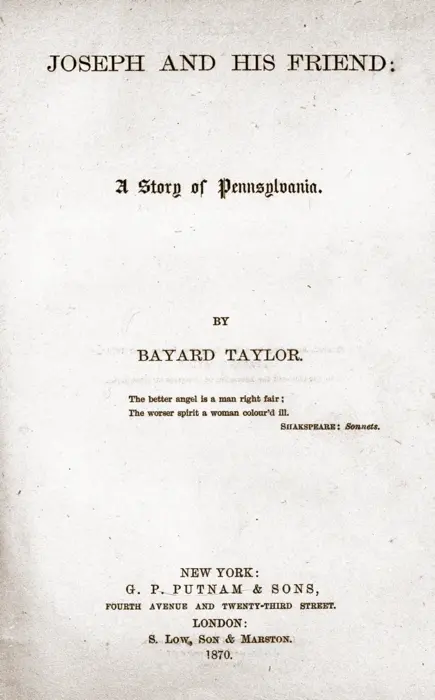
“There's no need o' broken sixpences, or true-lovers' knots, I guess,” said Mark, giving her another kiss. “I'm a plain-spoken fellow, and when I say I want you for my wife, Sally, I mean it. But we mustn't be settin' here, with the row unhusked; that'll never do. See if I don't make the ears spin! And I guess you can help me a little now, can't you?”
With a jolly laugh, Mark picked up the corn-cutter and swung it above the next shock. In another instant it would have fallen, but a loud shriek burst out from the bundled stalks, and Joe Fairthorn crept forth on his hands and knees.
The lovers stood petrified. “Why, you young devil!” exclaimed Mark, while the single word “JOE!” which came from Sally's lips, contained the concentrated essence of a thousand slaps.
“Don't--don't!” whimpered Joe. “I'll not tell anybody, indeed I wont!”
“If you do,” threatened Mark, brandishing the corn-cutter, “it isn't your legs I shall cut off, but your head, even with the shoulders. What were you doin' in that shock?”
“I wanted to hear what you and Sally were savin' to each other. Folks said you two was a-courtin',” Joe answered.
The comical aspect of the matter suddenly struck Mark, and he burst into
a roar of laughter.
“Mark, how can you?” said Sally, bridling a little.
“Well,--it's all in the fam'ly, after all. Joe, tarnation scamp as he is, is long-headed enough to keep his mouth shut, rather than have people laugh at his relations--eh, Joe?”
“I said I'd never say a word,” Joe affirmed, “and I won't. You see if I even tell Jake. But I say, Mark, when you and Sally get married, will you be my uncle?”
“It depends on your behavior,” Mark gravely answered, seating himself to husk. Joe magnanimously left the lovers, and pitched over the third shock ahead, upon which he began to husk with might and main, in order to help them out with their task.
By the time the outside row was squared, the line had reached the bottom of the slope, where the air was chill, although the shadows of the forest had shifted from the field. Then there was a race among the huskers for the fence, the girls promising that he whose row was first husked out, should sit at the head of the table, and be called King of the Corn-field. The stalks rustled, the cobs snapped, the ears fell like a shower of golden cones, and amid much noise and merriment, not only the victor's row but all the others were finished, and Farmer Fairthorn's field stood husked from end to end.
Your reading position is saved on this browser. Take it to another device with a library code. Reading pages adapt to text, rather than matching a printed edition.
Bayard Taylor
Bayard Taylor
Bayard Taylor
Bayard Taylor
BEHIND THE BOOK
This eBook is for the use of anyone anywhere in the United States and most other parts of the world at no cost and with almost no restrictions whatsoever. You may copy it, give it away or re-use it under the terms of the Project Gutenberg License included with this eBook or online at www.gutenberg.org. If you are not located in the United States, you will have to check the laws of the country where you are located before using this eBook. Read the source licence.
The original source file, including credits and licence, is retained by this library. Request an original-format copy at no charge. Please include the book title and Project Gutenberg identifier #8680.
KEEP YOUR CURIOSITY GOING
Coulson Kernahan

Maurice Baring
Frances Wright
Cécile Tormay

Frederic Jesup Stimson

W. H. P. (William Henry Pope) Jarvis