THE CLASSIC COLLECTION✦DanteCLASSIC FREE BOOKS
Dante
Edmund G. Gardner
THE CLASSIC COLLECTION · 1900
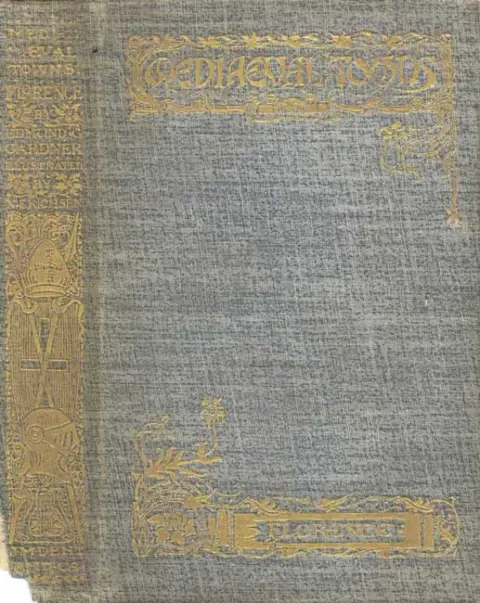
"The Story of Florence" by Edmund G. Gardner is a historical account written in the early 20th century. This work aims to provide a popular history of the Florentine Republic, combining a narrative of its rich past with guide-like insights into its streets, buildings, and artistic treasures. It explores the fascinating complexities of Florence's history, from its legendary origins to its significant cultural developments during the Renaissance. The opening of the book sets the stage for a detailed exploration of Florence's past by describing its geographical beauty and historical significance. Gardner begins with reflections on the city’s origins, emphasizing the influence of both the Etruscans and Romans in its establishment. He elaborates on various legends surrounding Florence while grounding the narrative in historical events that shaped its identity. The text introduces key figures and moments that highlight Florence's cultural vibrancy and civic struggles, establishing a backdrop for the tumultuous yet glorious history that unfolds in later chapters. This introduction primes the reader for an engaging journey through the evolution of Florence as a pivotal city in medieval and Renaissance Italy.
Introduction adapted from the source catalogue; source summaries may be automatically generated.
Free to read · English · 116,861 words · No account needed
MAKE TIME FOR A GOOD BOOK
On by default. Untick to stop anonymous reading totals. Each page counts after 10 seconds in view. How this works.
Anonymous counting is on unless you have switched it off.
The first thirty-four years of this epoch are among the brightest in Florentine history, the years that ran from the triumph of the Guelfs to the sequel to the Jubilee of 1300, from the establishment of the Secondo Popolo to its split into Neri and Bianchi, into Black Guelfs and White Guelfs. Externally Florence became the chief power of Tuscany, and all the neighbouring towns gradually, to a greater or less extent, acknowledged her sway; internally, in spite of growing friction between the burghers and the new Guelf nobility, between popolani and grandi or magnates, she was daily advancing in wealth and prosperity, in beauty and artistic power. The exquisite poetry of the dolce stil novo was heard. Guido Cavalcanti, a noble Guelf who had married the daughter of Farinata degli Uberti, and, later, the notary Lapo Gianni and Dante Alighieri, showed the Italians what true lyric song was; philosophers like Brunetto Latini served the state; modern history was born with Giovanni Villani. Great palaces were built for the officers of the Republic; vast Gothic churches arose. Women of rare beauty, eternalised as Beatrice, Giovanna, Lagia and the like, passed through the streets and adorned the social gatherings in the open loggias of the palaces. Splendid pageants and processions hailed the Calends of May and the Nativity of the Baptist, and marked the civil and ecclesiastical festivities and state solemnities. The people advanced more and more in power and patriotism; while the magnates, in their towers and palace-fortresses, were partly forced to enter the life of the guilds, partly held aloof and plotted to recover their lost authority, but were always ready to officer the burgher forces in time of war, or to extend Florentine influence by serving as Podestas and Captains in other Italian cities.
Dante was born in the Sesto di San Piero Maggiore in May 1265, some eighteen months before the liberation of the city. He lost his mother in his infancy, and his father while he was still a boy. This father appears to have been a notary, and came from a noble but decadent family, who were probably connected with the Elisei, an aristocratic house of supposed Roman descent, who had by this time almost entirely disappeared. The Alighieri, who were Guelfs, do not seem to have ranked officially as grandi or magnates; one of Dante's uncles had fought heroically at Montaperti. Almost all the families connected with the story of Dante's life had their houses in the Sesto di San Piero Maggiore, and their sites may in some instances still be traced. Here were the Cerchi, with whom he was to be politically associated in after years; the Donati, from whom sprung one of his dearest friends, Forese, with one of his deadliest foes, Messer Corso, and Dante's own wife, Gemma; and the Portinari, the house according to tradition of Beatrice, the "giver of blessing" of Dante's Vita Nuova, the mystical lady of the Paradiso. Guido Cavalcanti, the first and best of all his friends, lived a little apart from this Sesto di Scandali--as St Peter's section of the town came to be called--between the Mercato Nuovo and San Michele in Orto. Unlike the Alighieri, though not of such ancient birth as theirs, the Cavalcanti were exceedingly rich and powerful, and ranked officially among the grandi, the Guelf magnates. At this epoch, as Signor Carocci observes in his Firenze scomparsa, Florence must have presented the aspect of a vast forest of towers. These towers rose over the houses of powerful and wealthy families, to be used for offence or defence, when the faction fights raged, or to be dismantled and cut down when the people gained the upper hand. The best idea of such a mediaeval city, on a smaller scale, can still be got at San Gemignano, "the fair town called of the Fair Towers," where dozens of these torri still stand; and also, though to a less extent, at Gubbio. A few have been preserved here in Florence, and there are a number of narrow streets, on both sides of the Arno, which still retain some of their mediaeval characteristics. In the Borgo Santissimi Apostoli, for instance, and in the Via Lambertesca, there are several striking towers of this kind, with remnants of palaces of the grandi; and, on the other side of the river, especially in the Via dei Bardi and the Borgo San Jacopo. When one family, or several associated families, had palaces on either side of a narrow street defended by such towers, and could throw chains and barricades across at a moment's notice, it will readily be understood that in times of popular tumult Florence bristled with fortresses in every direction.
Your reading position is saved on this browser. Take it to another device with a library code. Reading pages adapt to text, rather than matching a printed edition.
Edmund G. Gardner

Edmund G. Gardner
BEHIND THE BOOK
This eBook is for the use of anyone anywhere in the United States and most other parts of the world at no cost and with almost no restrictions whatsoever. You may copy it, give it away or re-use it under the terms of the Project Gutenberg License included with this eBook or online at www.gutenberg.org. If you are not located in the United States, you will have to check the laws of the country where you are located before using this eBook. Read the source licence.
The original source file, including credits and licence, is retained by this library. Request an original-format copy at no charge. Please include the book title and Project Gutenberg identifier #37793.
KEEP YOUR CURIOSITY GOING
Cécile Tormay

Moritz Busch
John L. Ransom
Frances Wright
Cécile Tormay

Mabel Potter Daggett