How to Study Architecture
Charles H. (Charles Henry) Caffin
THE CLASSIC COLLECTION · 1909
"The Story of Dutch Painting" by Charles H. Caffin is a historical account written in the early 20th century. The book delves into the origins, development, and significance of Dutch painting, particularly during the 17th century, as it emerged from the cultural and political backdrop of a newly independent Holland. Caffin examines how the art reflects the societal shifts and collective needs of the Dutch people during this transformative period. The opening of the book sets the stage with the abdication of Charles V in 1555, marking the beginning of significant changes within the Dutch realm. Caffin introduces the idea that the pivotal moments of the 16th and 17th centuries led to the flourishing of a unique Dutch artistic identity grounded in realism, individuality, and a departure from the grandiosity of prior European art. The narrative emphasizes the connection between Dutch art and its environment, indicating that the social fabric and historical events greatly influenced the themes and styles adopted by artists like Rembrandt and Frans Hals, foreshadowing a rich exploration of individual talents and collective artistic movements in the chapters to come.
Introduction adapted from the source catalogue; source summaries may be automatically generated.
Free to read · English · 57,958 words · No account needed
MAKE TIME FOR A GOOD BOOK
On by default. Untick to stop anonymous reading totals. Each page counts after 10 seconds in view. How this works.
Anonymous counting is on unless you have switched it off.
The examples quoted above are fairly representative of an artist who handled the prose of nature with so large a sense of its significance that he lifts it up to poetry, of epic and occasionally tragic grandeur. For Ruisdael, like Rembrandt, saw into the soul of facts. That in a period of fifty years or thereabouts a school of artists could be formed, wherein there are so many excellent craftsmen, not a few masters of technique and expression, and two great masters of the soul, is a marvelous record. Such was Holland’s legacy of the seventeenth century to the civilization of the modern world.
Abraham Receiving the Angels [Bol], 154
Actor’s instinct in art, 75
Adoration of the Shepherds [Rembrandt], 103, 159
Aertz, Pieter, 19;
studied at Amsterdam, 43
Albert, Archduke, 45
Altman, Mr. B., owner of The Sleeping Girl [Vermeer], 136
Alva, Duke of, 22, 23, 46
Amsterdam, school of painting, 38, 43;
artists born there:
Aertz, 107;
Eeckhout, 158;
De Keyser, 165;
Koninck, 172;
Adriaen van de Velde, 184;
school of:
Scovel, 16;
Rembrandt, 73;
Maes, 115;
Metsu, 117;
Fabritius, 157;
Eeckhout, 158;
De Gelder, 160;
De Keyser, 165;
Koninck, 170;
Hobbema, 190;
residence of:
Rembrandt, 76;
Aertz, 107;
Van Ostade, 109;
Lairesse, 125;
De Keyser, 165;
Seghers, 170;
Koninck, 170;
Van der Neer, 176;
Potter, 179;
Van de Velde, Willem, Elder and Younger, 186;
Van de Velde, Adriaen, 184;
Berchem, 184;
Hobbema, 190;
Ruisdael, Jacob, 194
Angel and the Shepherds [Flinck], 152
Antwerp, glory of, 7;
“Image-Breaking” at, 22;
school of painting, 22;
birthplace of Hals, 50
Antwerp Museum, Day of Judgment [Van Orley], 15
Art:
the need of the people, 4;
French at time of Revolution, 5;
imitation death of national art, 6;
decline of Dutch in eighteenth century, 6;
affected by imperialism, influenced by Church, 11;
by Renaissance, 12;
condition at abdication of Charles V, 14;
realism of Dutch, 27;
moral and scientific character of, 28;
commencement of great period of, 29;
still-life, 31;
portraiture, 49;
beauty of inanimate things, 59;
democratic ideal of Dutch, 72;
Rembrandt’s compared to Greek, 72;
actor’s instinct shown by painters, 75;
abstract in, 94;
decorative, 94;
Barbizon, 171
Art-History Museum, Vienna. See Vienna
Artist in his Studio [Vermeer], 140
Asking a Blessing [Maes], 114
Asselyn, Jan, 44;
Enraged Swan, The, 44
Avenue of Middelharnis [Hobbema], 191
Bakhuysen, Ludolf, 44
Balckeneijnde, Adriana, wife of Paul Potter, 179
Bank of a Canal [Van Goyen], 188
Banquet of the Civic Guard [Van der Helst], 164
Banquet of the Officers of the Archers of St. Andrew [Hals], 66
Banquet of the Officers of the Archers of St. George [Hals], 64
Banquet of the Officers of the Archers of St. George [Hals], 65
Barbizon artists, 171
Bartholdi’s Statue of Liberty, 87
Beach, The [Jacob van Ruisdael], 198
Bear Hunt, The [Potter], 180
Bega, Cornelis, 110
“Beggars, The,” 21
“Beggars of the Sea,” 23
Berchem, Nicolaes, 30, 39, 43, 174, 178, 184, 195
Berlaymont, 21
Your reading position is saved on this browser. Take it to another device with a library code. Reading pages adapt to text, rather than matching a printed edition.
Charles H. (Charles Henry) Caffin
Charles H. (Charles Henry) Caffin
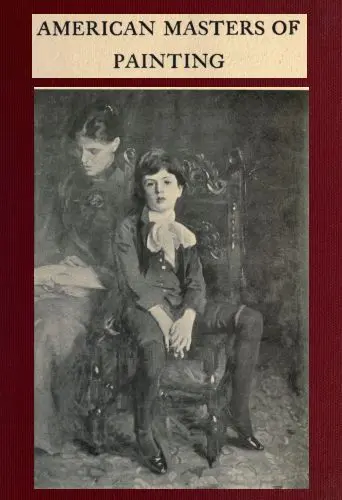
Charles H. (Charles Henry) Caffin
Charles H. (Charles Henry) Caffin
BEHIND THE BOOK
This eBook is for the use of anyone anywhere in the United States and most other parts of the world at no cost and with almost no restrictions whatsoever. You may copy it, give it away or re-use it under the terms of the Project Gutenberg License included with this eBook or online at www.gutenberg.org. If you are not located in the United States, you will have to check the laws of the country where you are located before using this eBook. Read the source licence.
The original source file, including credits and licence, is retained by this library. Request an original-format copy at no charge. Please include the book title and Project Gutenberg identifier #59473.
KEEP YOUR CURIOSITY GOING
Cécile Tormay

Moritz Busch
John L. Ransom
Frances Wright
Cécile Tormay

Mabel Potter Daggett