How to Study Architecture
Charles H. (Charles Henry) Caffin
THE CLASSIC COLLECTION · 1909
"The Story of Dutch Painting" by Charles H. Caffin is a historical account written in the early 20th century. The book delves into the origins, development, and significance of Dutch painting, particularly during the 17th century, as it emerged from the cultural and political backdrop of a newly independent Holland. Caffin examines how the art reflects the societal shifts and collective needs of the Dutch people during this transformative period. The opening of the book sets the stage with the abdication of Charles V in 1555, marking the beginning of significant changes within the Dutch realm. Caffin introduces the idea that the pivotal moments of the 16th and 17th centuries led to the flourishing of a unique Dutch artistic identity grounded in realism, individuality, and a departure from the grandiosity of prior European art. The narrative emphasizes the connection between Dutch art and its environment, indicating that the social fabric and historical events greatly influenced the themes and styles adopted by artists like Rembrandt and Frans Hals, foreshadowing a rich exploration of individual talents and collective artistic movements in the chapters to come.
Introduction adapted from the source catalogue; source summaries may be automatically generated.
Free to read · English · 57,958 words · No account needed
MAKE TIME FOR A GOOD BOOK
On by default. Untick to stop anonymous reading totals. Each page counts after 10 seconds in view. How this works.
Anonymous counting is on unless you have switched it off.
Unfortunately, Bol by no means maintained this high standard, as may be seen among the numerous examples of his portraits in the Rijks Museum. They mostly belong to his later period. The best is the earliest one, painted in 1657, representing the Six Governors of the Huiszittenhuis, seated round a table in black clothes and steeple hats. The heads are well characterized and the flesh-tones luminous; but an air of attitudinizing pervades the assemblage, which has rather the prim, set manner of a photographic group. And much the same feeling is aroused by the Four Governors of the Leper House, which is considered in Holland his masterpiece. In fact, it is not in the formal arrangement of a corporation picture, but in a single figure, that Bol is seen to best advantage. Yet some of the examples of these in the Rijks Museum, such as the Roelof Meulenaar and Maria Rey, are commonplace parodies of Rembrandt’s manner, while that of the sculptor Artus Quellinus is a parody of Van Dyck’s elegance. Bol, in fact, was an able assimilator of his master, Rembrandt, and as long as he retained the enthusiasm of his youth, painted creditable and often excellent portraits. Later, however, he drifted into the swim of social decadence, and his work is characterized by affectation, vapidity, and perfunctoriness.
FABRITIUS (about 1620-1654), after studying with Rembrandt, resided in Delft, where he became, it will be recalled, the teacher of Jan Vermeer. His life was prematurely cut short by the explosion of a powder-magazine, while he was in the act of painting the portrait of Simon Decker, sacristan of the old church at Delft. In consequence, the number of his pictures is small, and some of those which appear under his name in the catalogues are of disputed attribution. He must have had a precocious talent, for the Portrait of Abraham de Notte, in the Rijks Museum, is dated 1640, when the artist was scarcely twenty. It is a bust portrait in which the black-haired head, set against a light background, is well enveloped in atmosphere, while the features are fluently modeled in warm, luminous tones. It proves him to have been an exceptionally apt pupil of the master, and helps to justify the attribution to him of the other picture in the Rijks Museum, The Decapitation of St. John the Baptist, a powerful and attractive work. A golden luminosity, rich in quality, pervades the whole canvas. The characterization of the figures is striking. The executioner, a sturdy, brutal figure, with a rubicund, swollen face, showing above his white shirt, holds the head upon a salver, with the absolute unconcern of a butcher serving meat. A corresponding lack of emotion is apparent in the two female figures, daintily dressed and of girlish refinement, Salome’s eyes gazing into vacancy with a wistful expression, while Herodias, looking but little older, gazes at the head with a slight air of curiosity. The conception of these women is early Italian rather than what one would associate with Dutch of the seventeenth century, and recalls the expression of Mantegna’s Judith with the Head of Holofernes. They suggest a sexless abstraction, moved by no active impulse, yet hauntingly fascinating in its young passionlessness. In the Berlin Gallery a Study of a Man Praying is attributed to Fabritius, while in the Munich Pinakothek are two portraits of young men associated with his name. The bust portrait, No. 344, is definitely assigned to him, while the half-length, No. 345, once attributed to him, is now assigned to Rembrandt. It represents a young man with long hair parted in the center, who, holding a sheaf of paper and a pen, seems to have paused in his writing and is looking up and out of the picture with an expression of rapt meditation. In its different way it is akin to the expression of the Salome in the other picture. That so gravely fine a picture should have passed for a Fabritius suggests the character of the estimation which hangs about the memory of this artist, who did not live to fulfil the promise of his youth. Moreover, what is known and what is conjectured about him suggests the value of his influence upon Jan Vermeer, whose own tendency to give his figures a concentrated absorption may possibly be traced to this source.
Your reading position is saved on this browser. Take it to another device with a library code. Reading pages adapt to text, rather than matching a printed edition.
Charles H. (Charles Henry) Caffin
Charles H. (Charles Henry) Caffin
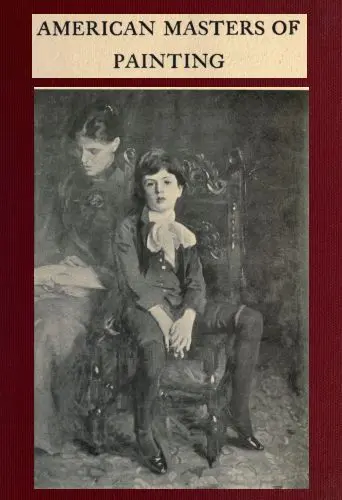
Charles H. (Charles Henry) Caffin
Charles H. (Charles Henry) Caffin
BEHIND THE BOOK
This eBook is for the use of anyone anywhere in the United States and most other parts of the world at no cost and with almost no restrictions whatsoever. You may copy it, give it away or re-use it under the terms of the Project Gutenberg License included with this eBook or online at www.gutenberg.org. If you are not located in the United States, you will have to check the laws of the country where you are located before using this eBook. Read the source licence.
The original source file, including credits and licence, is retained by this library. Request an original-format copy at no charge. Please include the book title and Project Gutenberg identifier #59473.
KEEP YOUR CURIOSITY GOING
Cécile Tormay

Moritz Busch
John L. Ransom
Frances Wright
Cécile Tormay

Mabel Potter Daggett