THE CLASSIC COLLECTION✦Porridge poetryCLASSIC FREE BOOKS
Porridge poetry
Hugh Lofting
THE CLASSIC COLLECTION · 1920
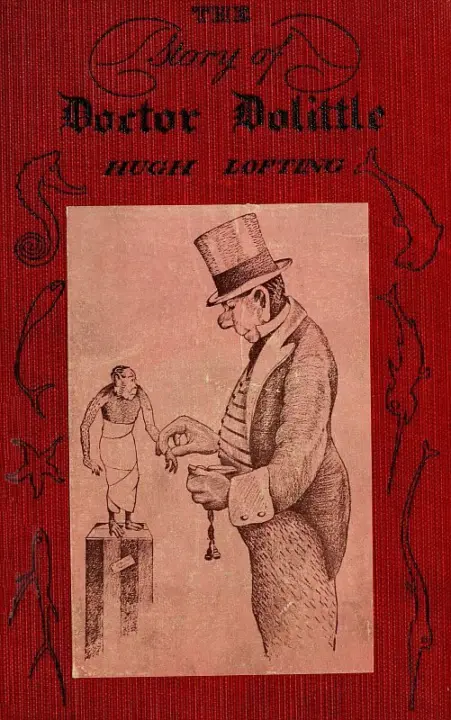
"The Story of Doctor Dolittle" by Hugh Lofting is a children's novel published in 1920. When a kindly physician learns to speak with animals, he abandons his failing medical practice to become a veterinarian. His new calling leads him on an extraordinary voyage to Africa to cure a monkey epidemic. Along the way, he faces shipwrecks, imprisonment, pirates, and exotic creatures—including the rare pushmi-pullyu. This tale of adventure and animal communication became the first in a beloved series, though it has sparked controversy for its colonial-era themes.
Introduction adapted from the source catalogue; source summaries may be automatically generated.
Free to read · English · 27,463 words · No account needed
MAKE TIME FOR A GOOD BOOK
On by default. Untick to stop anonymous reading totals. Each page counts after 10 seconds in view. How this works.
Anonymous counting is on unless you have switched it off.
When the Cat’s-meat-Man had gone the parrot flew off the window on to the Doctor’s table and said,
“That man’s got sense. That’s what you ought to do. Be an animal-doctor. Give the silly people up—if they haven’t brains enough to see you’re the best doctor in the world. Take care of animals instead—they’ll soon find it out. Be an animal-doctor.”
“Oh, there are plenty of animal-doctors,” said John Dolittle, putting the flower-pots outside on the window-sill to get the rain.
“Yes, there are plenty,” said Polynesia. “But none of them are any good at all. Now listen, Doctor, and I’ll tell you something. Did you know that animals can talk?”
“I knew that parrots can talk,” said the Doctor.
“Oh, we parrots can talk in two languages—people’s language and bird-language,” said Polynesia proudly. “If I say, ‘Polly wants a cracker,’ you understand me. But hear this: Ka-ka oi-ee, fee-fee?”
“Good Gracious!” cried the Doctor. “What does that mean?”
“That means, ‘Is the porridge hot yet?’—in bird-language.”
“My! You don’t say so!” said the Doctor. “You never talked that way to
me before.”
“What would have been the good?” said Polynesia, dusting some cracker-crumbs off her left wing. “You wouldn’t have understood me if I had.”
“Tell me some more,” said the Doctor, all excited; and he rushed over to the dresser-drawer and came back with the butcher’s book and a pencil. “Now don’t go too fast—and I’ll write it down. This is interesting—very interesting—something quite new. Give me the Birds’ A.B.C. first—slowly now.”
So that was the way the Doctor came to know that animals had a language of their own and could talk to one another. And all that afternoon, while it was raining, Polynesia sat on the kitchen table giving him bird words to put down in the book.
At tea-time, when the dog, Jip, came in, the parrot said to the Doctor, “See, he’s talking to you.”
“Looks to me as though he were scratching his ear,” said the Doctor.
“But animals don’t always speak with their mouths,” said the parrot in a high voice, raising her eyebrows. “They talk with their ears, with their feet, with their tails—with everything. Sometimes they don’t want to make a noise. Do you see now the way he’s twitching up one side of his nose?”
“What’s that mean?” asked the Doctor.
“That means, ‘Can’t you see that it has stopped raining?’” Polynesia answered. “He is asking you a question. Dogs nearly always use their noses for asking questions.”
Your reading position is saved on this browser. Take it to another device with a library code. Reading pages adapt to text, rather than matching a printed edition.
BEHIND THE BOOK
This eBook is for the use of anyone anywhere in the United States and most other parts of the world at no cost and with almost no restrictions whatsoever. You may copy it, give it away or re-use it under the terms of the Project Gutenberg License included with this eBook or online at www.gutenberg.org. If you are not located in the United States, you will have to check the laws of the country where you are located before using this eBook. Read the source licence.
The original source file, including credits and licence, is retained by this library. Request an original-format copy at no charge. Please include the book title and Project Gutenberg identifier #501.
KEEP YOUR CURIOSITY GOING
Coulson Kernahan

Maurice Baring
Frances Wright
Cécile Tormay
Francis Greenleaf Allinson & Anne C. E. (Anne Crosby Emery) Allinson

Frederic Jesup Stimson