THE CLASSIC COLLECTION✦Tattle-tales of CupidCLASSIC FREE BOOKS
Tattle-tales of Cupid
Paul Leicester Ford
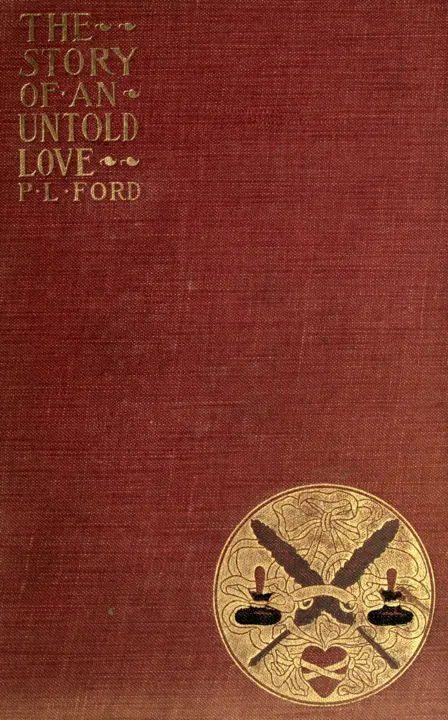
THE CLASSIC COLLECTION · 1897
"The Story of an Untold Love" by Paul Leicester Ford is a novel written in the late 19th century. The book likely explores themes of unrequited love and deep emotional attachments, centering on a character named Donald Maitland and his lifelong affection for Maizie, his father’s ward. As the narrative unfolds, it becomes apparent that their relationship is intricately woven with family dynamics and secrets that complicate their bond. The opening of the novel introduces Donald's heartfelt reflections on his feelings for Maizie, beginning on a somber note as he expresses regret over their separation. Through his poignant recollections, we learn of their childhood adventures and the profound impact Maizie had on Donald's life. The passage hints at a touching innocence that evolved into a deeper love over the years, juxtaposed against the backdrop of familial struggles and societal expectations. Donald’s nostalgia enriches the narrative, framing it with the complexities of longing and the weight of unexpressed emotions that mark their relationship.
Introduction adapted from the source catalogue; source summaries may be automatically generated.
Free to read · English · 53,314 words · No account needed
MAKE TIME FOR A GOOD BOOK
On by default. Untick to stop anonymous reading totals. Each page counts after 10 seconds in view. How this works.
Anonymous counting is on unless you have switched it off.
“That is not very far from Saadi’s thought that art is never produced
without love.”
“I have to confess that you mention an author of whom I had never even heard till I read The Debatable Lands. The extracts printed there made me think he must be one of the great philosopher poets of the world. Yet there is no copy of his works at the Lenox.”
“There are copies of all his writings here.”
“I think I shall disobey Polonius by trying to be a borrower,” you announced, and turning to Mr. Whitely, you asked, “Do you ever loan your books?”
“To lend to you would be a pleasure, and give added value to the volume,” assented Mr. Whitely, joining us. “Take anything you wish.”
“Thank you so much. Will you let me see what you have of Saadi, so that I may take my choice?”
“You were speaking of”—hemmed Mr. Whitely.
“Saadi.”
“Ah, yes. Dr. Hartzmann knows where it is.”
When I had led the way to the proper shelf, you selected the Gulistan, opened it, and then laughed. “You have the best protection against borrowers. I envy both of you the ability to read him in the original, but it is beyond me.”
“As you read Latin, you can read Gentius’ translation of the Bostan,” I suggested, taking the book down.
“How do you know that I can read Latin?” you asked.
I faltered for a moment, too much taken aback to think what to reply, and fortunately Mr. Whitely interposed quickly, “Miss Walton’s reputation for learning is so well recognized that knowledge of Latin is taken for granted.”
Taking advantage of the compliment, I surmised, “Perhaps you will care less to read the poet if I quote a stanza of his:—
‘Seek truth from life, and not from books, O fool! Look at the sky to find the stars, not in the pool.’”
“You only make me the more eager,” you said, running over the pages.
“The book is worth reading,” vouched Mr. Whitely.
“How good that is!” you appealed to him, laying your finger on lines to the effect that a dozen poor men will sleep in peace on a straw heap, while the greatest empire is too narrow for two kings.
“Very,” answered my employer, after looking at the text with a critical air. If you could only have enjoyed the joke with me!
Suddenly, as I watched you, you became pale, and glancing down to learn the cause, I saw a manuscript note in my father’s handwriting on the margin of the page. “Mr. Whitely,” you asked huskily, “how did you get this book?”
Your reading position is saved on this browser. Take it to another device with a library code. Reading pages adapt to text, rather than matching a printed edition.
Paul Leicester Ford
Paul Leicester Ford
Paul Leicester Ford
Paul Leicester Ford
BEHIND THE BOOK
This eBook is for the use of anyone anywhere in the United States and most other parts of the world at no cost and with almost no restrictions whatsoever. You may copy it, give it away or re-use it under the terms of the Project Gutenberg License included with this eBook or online at www.gutenberg.org. If you are not located in the United States, you will have to check the laws of the country where you are located before using this eBook. Read the source licence.
The original source file, including credits and licence, is retained by this library. Request an original-format copy at no charge. Please include the book title and Project Gutenberg identifier #36439.
KEEP YOUR CURIOSITY GOING
Coulson Kernahan

Maurice Baring
Frances Wright
Cécile Tormay

Frederic Jesup Stimson

W. H. P. (William Henry Pope) Jarvis