THE CLASSIC COLLECTION✦Tattle-tales of CupidCLASSIC FREE BOOKS
Tattle-tales of Cupid
Paul Leicester Ford
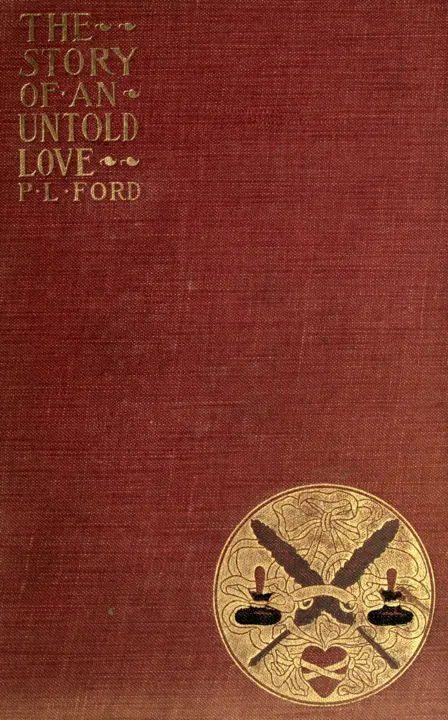
THE CLASSIC COLLECTION · 1897
"The Story of an Untold Love" by Paul Leicester Ford is a novel written in the late 19th century. The book likely explores themes of unrequited love and deep emotional attachments, centering on a character named Donald Maitland and his lifelong affection for Maizie, his father’s ward. As the narrative unfolds, it becomes apparent that their relationship is intricately woven with family dynamics and secrets that complicate their bond. The opening of the novel introduces Donald's heartfelt reflections on his feelings for Maizie, beginning on a somber note as he expresses regret over their separation. Through his poignant recollections, we learn of their childhood adventures and the profound impact Maizie had on Donald's life. The passage hints at a touching innocence that evolved into a deeper love over the years, juxtaposed against the backdrop of familial struggles and societal expectations. Donald’s nostalgia enriches the narrative, framing it with the complexities of longing and the weight of unexpressed emotions that mark their relationship.
Introduction adapted from the source catalogue; source summaries may be automatically generated.
Free to read · English · 53,314 words · No account needed
MAKE TIME FOR A GOOD BOOK
On by default. Untick to stop anonymous reading totals. Each page counts after 10 seconds in view. How this works.
Anonymous counting is on unless you have switched it off.
“That’s rough on us, Whitely,” laughed Mr. Blodgett good-naturedly; but Mr. Whitely reddened, and you, as if to divert the subject from this personal tendency, turned and surmised to me:—
“I suppose that as a German, Dr. Hartzmann, you think a woman should be nothing more than a housekeeper?”
“Why not suggest, Miss Walton,” I replied, smiling, “that as an Orientalist I must think the seraglio woman’s proper sphere?”
“But, Miss Walton,” persisted Mr. Whitely, not accepting your diversion, “a man, to be successful nowadays, must give all his attention to his business.
“I presume that is so,” you acceded; “but could he not be content with a little less success in money-making, and strive to acquire a few more amenities?”
“Maizie wants us all to be painters and poets and musicians,” asserted
Mr. Blodgett.
“Not at all,” you denied.
“Oh, Maizie!” cried Agnes. “You know you said the other day that you hoped I wouldn’t marry a business man.”
“I said ‘only a business man,’ Agnes,” you replied, without a trace of the embarrassment so many women would have shown. “Because men cannot all be clergymen is no reason for their knowing nothing of religion. There would be no painters, poets, or musicians if there were no dilettanti.”
“Yet I think,” argued Mr. Whitely, still as if he were trying to convince you of something, “that the successful business man has as much brain as most writers or artists.”
“I have no doubt that is true,” you assented. “So, too, a day laborer may have a good mind. But of what avail is a brain if it has never been trained, or has been trained to know only one thing?”
“But authors and painters are only specialists,” urged Mr. Whitely.
“They are specialists of a very different type,” you responded, “from the man whose daily thoughts are engrossed with the prices of pig-iron or cotton sheetings. I think one reason why American girls frequently marry Europeans is that the foreign man is so apt to be more broadly cultivated.”
“That’s what I mean by saying that books unfit women to marry wisely,” interjected Mrs. Blodgett. “They marry foreigners because they are more cultivated, without a thought of character.”
“Indeed, Mrs. Blodgett,” you observed, “has not the day gone by for thinking dullness a sign of honesty? And certainly a business career is far more likely to corrupt and harden men’s natures than the higher professions, for its temptations and strifes are so much greater.”
Your reading position is saved on this browser. Take it to another device with a library code. Reading pages adapt to text, rather than matching a printed edition.
Paul Leicester Ford
Paul Leicester Ford
Paul Leicester Ford
Paul Leicester Ford
BEHIND THE BOOK
This eBook is for the use of anyone anywhere in the United States and most other parts of the world at no cost and with almost no restrictions whatsoever. You may copy it, give it away or re-use it under the terms of the Project Gutenberg License included with this eBook or online at www.gutenberg.org. If you are not located in the United States, you will have to check the laws of the country where you are located before using this eBook. Read the source licence.
The original source file, including credits and licence, is retained by this library. Request an original-format copy at no charge. Please include the book title and Project Gutenberg identifier #36439.
KEEP YOUR CURIOSITY GOING
Coulson Kernahan

Maurice Baring
Frances Wright
Cécile Tormay

Frederic Jesup Stimson

W. H. P. (William Henry Pope) Jarvis