More “Short Sixes”
H. C. (Henry Cuyler) Bunner
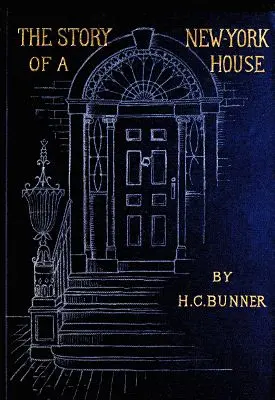
THE CLASSIC COLLECTION · 1887
"The Story of a New York House" by H. C. Bunner is a fictional narrative written in the late 19th century. The story revolves around the lives of the Dolph family amidst the backdrop of a changing New York City, addressing themes of societal status and personal ambition through the experiences of Jacob Dolph, a merchant contemplating retirement and the implications of building a new house. Central characters include Jacob Dolph, his son, and other local merchants, particularly Abram Van Riper, who embodies the city's conservative values. At the start of the tale, we observe Jacob Dolph and Abram Van Riper engaging in a conversation discussing the progress of their lives and the changing social landscape in New York. The dialogue reveals Mr. Van Riper's dissatisfaction with the emerging genteel class represented by Jacob Dolph's desire to build a country house. As they navigate their notions of identity and social standing, other characters play pivotal roles, like the women in their lives who desire recognition and social connections. The opening sets the stage for exploring personal aspirations contrasted with societal expectations in a dynamically evolving urban setting.
Introduction adapted from the source catalogue; source summaries may be automatically generated.
Free to read · English · 26,462 words · No account needed
MAKE TIME FOR A GOOD BOOK
On by default. Untick to stop anonymous reading totals. Each page counts after 10 seconds in view. How this works.
Anonymous counting is on unless you have switched it off.
"Yes," he said, "my boy. You didn't know I had a boy, did you? He's
nearly a year old."
This made Mr. Jacob Dolph kick at the rug once more, and scowl a little.
"I'm afraid I haven't been very neighborly, Van Riper--" he began; but the other interrupted him, smiling good-naturedly.
"You and I go different ways, Dolph," he said. "We're plain folks over in Greenwich Village, and you--you're a man of fashion."
Jacob Dolph smiled--not very mirthfully. Van Riper's gaze travelled around the room, quietly curious.
"It costs money to be a man of fashion, doesn't it?"
"Yes," said Dolph, "it does."
There was silence for a minute, which Van Riper broke.
"If you've got to sell, Dolph, why, it's a pity; but I'll take it. I'll see Ogden to-day, and we can finish the business whenever you wish. But in my opinion, you'd do better to borrow."
Dolph shook his head.
"I've been quite enough of a fool," he replied.
"Well," said Mr. Van Riper, rising, "I must get to the office. You'll hear from Ogden to-morrow. I'm sorry you've got in such a snarl; but--" his lips stretched into something like a smile--"I suppose you'll know better next time. Good-day."
After Mr. Dolph had bowed his guest to the door, Mrs. Dolph slipped down the stairs and into the drawing-room.
"Did he take it?" she asked.
"Of course he took it," Dolph answered, bitterly, "at that price."
"Did he say anything," she inquired again, "about its being hard for us
to--to sell it?"
"He said we had better not sell it now--that it would bring more a few
years hence."
"He doesn't understand," said Mrs. Dolph.
"He couldn't understand," said Mr. Dolph.
Then she went over to him and kissed him.
"It's only selling the garden, after all," she said; "it isn't like
selling our home."
He put his arm about her waist, and they walked into the breakfast-room, and looked out on the garden which to-morrow would be theirs no longer, and in a few months would not be a garden at all.
High walls hemmed it in--the walls of the houses which had grown up around them. A few stalks stood up out of the snow, the stalks of old-fashioned flowers--hollyhock and larkspur and Job's-tears and the like--and the lines of the beds were defined by the tiny hedges of box, with the white snow-powder sifted into their dark, shiny green. The bare rose-bushes were there, with their spikes of thorns, and little mounds of snow showed where the glories of the poppy-bed had bloomed.
Your reading position is saved on this browser. Take it to another device with a library code. Reading pages adapt to text, rather than matching a printed edition.
H. C. (Henry Cuyler) Bunner
Brander Matthews & H. C. (Henry Cuyler) Bunner
Constance Fenimore Woolson & H. C. (Henry Cuyler) Bunner & John William De Forest & Mary Hallock Foote & Nathaniel Parker Willis
H. C. (Henry Cuyler) Bunner
BEHIND THE BOOK
This eBook is for the use of anyone anywhere in the United States and most other parts of the world at no cost and with almost no restrictions whatsoever. You may copy it, give it away or re-use it under the terms of the Project Gutenberg License included with this eBook or online at www.gutenberg.org. If you are not located in the United States, you will have to check the laws of the country where you are located before using this eBook. Read the source licence.
The original source file, including credits and licence, is retained by this library. Request an original-format copy at no charge. Please include the book title and Project Gutenberg identifier #30662.
KEEP YOUR CURIOSITY GOING
Coulson Kernahan

Maurice Baring
Frances Wright
Cécile Tormay

Frederic Jesup Stimson

W. H. P. (William Henry Pope) Jarvis