THE CLASSIC COLLECTION✦The story of Keedon BluffsCLASSIC FREE BOOKS
The story of Keedon Bluffs
Charles Egbert Craddock
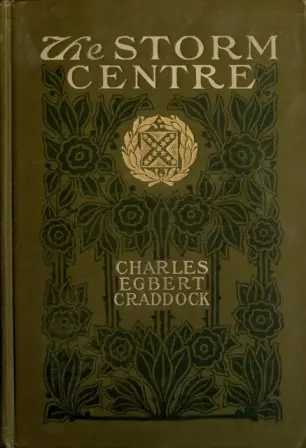
THE CLASSIC COLLECTION · 1905
"The Storm Centre: A Novel" by Charles Egbert Craddock is a work of fiction written in the early 20th century. The story is set against the backdrop of the American Civil War and explores themes of conflict, isolation, and human relationships. The main character, Captain Fluellen Baynell, finds himself navigating not only the turmoil of war but also the complexities of his social interactions with the Roscoe household, particularly Mrs. Leonora Gwynn, whose reputation and past are shrouded in both mystery and sorrow. At the start of the novel, we are introduced to Captain Baynell as he finds himself in the calm of the Roscoe home, a stark contrast to the chaotic world outside where the Civil War rages on. He is waiting to meet the household, especially Mrs. Gwynn, the widow of a man known for his tumultuous marriage. The opening scenes depict intimate interactions with the household's old servant, Uncle Ephraim, who shares both gossip and insights about the family's dynamics. As Baynell grapples with the impending introduction to the ladies of the family, a sense of expectation builds, only to be interrupted by the playful presence of the young girls, referred to as "the ladies," and culminating in a poignant and unexpected encounter with Mrs. Gwynn, who captivates him despite her seemingly indifferent demeanor.
Introduction adapted from the source catalogue; source summaries may be automatically generated.
Free to read · English · 82,450 words · No account needed
MAKE TIME FOR A GOOD BOOK
On by default. Untick to stop anonymous reading totals. Each page counts after 10 seconds in view. How this works.
Anonymous counting is on unless you have switched it off.
"This is going to be a serious matter for Baynell," said Colonel Ashley, one day. He had called at Judge Roscoe's partly because he did not wish to break off with abrupt rudeness an acquaintance which he had persisted in forming, and partly because he was not willing in the circumstances that had arisen to seem to shun the house.
Judge Roscoe was not at home, but Mrs. Gwynn was in the parlor. Ashley had asked her to sing. There was something "delightfully dreary," as he described it, in the searching, romantic, melancholy cadences of her sweet contralto voice. He had not intended to open his heart, but somehow the mood induced by her singing, the quiet of the dim, secluded, cool drawing-rooms, with the old-fashioned, high, stucco ceiling, and the shadowy green gloom of the trees without, prevailed with him, and he spoke upon impulse.
"What matter?" she asked. She had wheeled half around on the piano-stool, and sat, her slim figure in its white dress, delicate and erect, one white arm, visible through the thin fabric, outstretched to the keyboard, the hand toying with resolving chords.
He had been standing beside the piano as she sang, but now, with the air of inviting serious discussion, he seated himself in one of the stiff arm-chairs of the carved rosewood "parlor set" of that day, and replied gravely:----
"His association with Julius Roscoe."
Her eyes widened with genuine amazement.
"It seems," proceeded Ashley, slowly, "that a dozen or two of the soldiers, who claimed to have seen a Confederate officer on the balcony here, recognized him as Julius Roscoe, when he reappeared in command of the forces that captured the redoubt. And the surgeon has always insisted that Baynell's hurt was a blow, not a fall. There is a good deal of smothered talk in various quarters."
He stroked his mustache contemplatively, looked vaguely about the room, and sighed in a certain disconsolateness.
"I don't understand," said Mrs. Gwynn, sharply, fixing intent eyes upon him. "How can Captain Baynell be called in question?"
"Oh, the general theory--however well or ill grounded--is that young Roscoe was here on a reconnoitring expedition of some sort, or perhaps merely on a visit to his kindred, and that Baynell winked at his presence on account of friendship with the family, instead of arresting him, as he should have done. It's an immense pity. Baynell is a fine officer."
Mrs. Gwynn had turned pale with excitement.
"But none of us knew that Julius Roscoe was in the house!" she exclaimed. She hesitated a moment as the words passed her lips. Judge Roscoe's reticence on the subject might imply some knowledge of the harbored Rebel.
Your reading position is saved on this browser. Take it to another device with a library code. Reading pages adapt to text, rather than matching a printed edition.
Charles Egbert Craddock
Charles Egbert Craddock
Charles Egbert Craddock
Charles Egbert Craddock
BEHIND THE BOOK
This eBook is for the use of anyone anywhere in the United States and most other parts of the world at no cost and with almost no restrictions whatsoever. You may copy it, give it away or re-use it under the terms of the Project Gutenberg License included with this eBook or online at www.gutenberg.org. If you are not located in the United States, you will have to check the laws of the country where you are located before using this eBook. Read the source licence.
The original source file, including credits and licence, is retained by this library. Request an original-format copy at no charge. Please include the book title and Project Gutenberg identifier #35423.
KEEP YOUR CURIOSITY GOING
Cécile Tormay

Moritz Busch
Coulson Kernahan
John L. Ransom

Maurice Baring
Frances Wright