THE CLASSIC COLLECTION✦The story of Keedon BluffsCLASSIC FREE BOOKS
The story of Keedon Bluffs
Charles Egbert Craddock
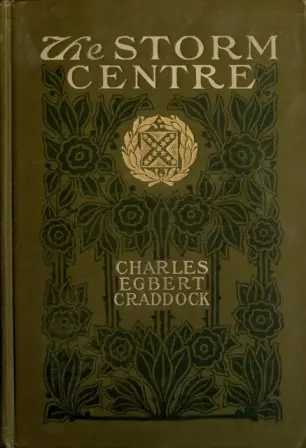
THE CLASSIC COLLECTION · 1905
"The Storm Centre: A Novel" by Charles Egbert Craddock is a work of fiction written in the early 20th century. The story is set against the backdrop of the American Civil War and explores themes of conflict, isolation, and human relationships. The main character, Captain Fluellen Baynell, finds himself navigating not only the turmoil of war but also the complexities of his social interactions with the Roscoe household, particularly Mrs. Leonora Gwynn, whose reputation and past are shrouded in both mystery and sorrow. At the start of the novel, we are introduced to Captain Baynell as he finds himself in the calm of the Roscoe home, a stark contrast to the chaotic world outside where the Civil War rages on. He is waiting to meet the household, especially Mrs. Gwynn, the widow of a man known for his tumultuous marriage. The opening scenes depict intimate interactions with the household's old servant, Uncle Ephraim, who shares both gossip and insights about the family's dynamics. As Baynell grapples with the impending introduction to the ladies of the family, a sense of expectation builds, only to be interrupted by the playful presence of the young girls, referred to as "the ladies," and culminating in a poignant and unexpected encounter with Mrs. Gwynn, who captivates him despite her seemingly indifferent demeanor.
Introduction adapted from the source catalogue; source summaries may be automatically generated.
Free to read · English · 82,450 words · No account needed
MAKE TIME FOR A GOOD BOOK
On by default. Untick to stop anonymous reading totals. Each page counts after 10 seconds in view. How this works.
Anonymous counting is on unless you have switched it off.
"Glad to see you, Mr. Wray," said the clerk, handing him the pen. "I am sorry I can't give you a room to yourself, but I can put you a bed in your son's room."
The pen was poised uncertainly--the gentleman with the side-whiskers
stared.
"Your son got in last night," explained the clerk.
The gentleman still silently stared. He had a close, compact mouth, a cautious mouth, and the lips were now compressed with an expression of waiting incommunicativeness. He evidently had not expected to be confronted with a ready-made family.
The clerk surprised in turn cast on him a glance of keen intentness. In these strenuous times every stranger in the town was liable to suspicion as a Confederate emissary. "I was not on duty, myself, but I thought I saw--ah--here it is," turning the page of the register, "John Wray, Junior, Manchester, England."
For one moment the portly gentleman gazed at the signature as if dumfounded. Then with an air of ready recognition he justified his previous manifestations of extreme surprise by explaining the mistake of the clerk as to the matter of identity.
"Oh, aw, a distant relative," he said, at last. "Ah, aw,--he is the son of a cousin of the same name as mine, 'John Wray.' The younger man is to be associated with me in business. What room? Number ninety?"
And as he was assigned to that haven he took the pen and wrote, "John Wray, Manchester, England."
Thus it was that, awakened by the brisk tap at the door, Julius, leaning out of bed, turned the key, and reached out for the pitcher of ice water for which, being warm and thirsty, he had a drowsy impression that he had rung the bell. Perceiving his mistake, and lifting himself on his elbow, Julius beheld entering this blond and robust stranger, an inexplicable apparition, too solid for a spectre, too prosaic for a fancy.
The visitor stood, when the door had closed, gazing silently down at the recumbent figure, while Julius, amazed at the form which his Nemesis had taken, gazed up silently and lugubriously at the intruder.
All the methods of Mr. John Wray were in conformity with his portly rotundity, his slow respectability, his unimaginative commercialism.
The young man found speech first. "Why this unexpected pleasure?" he asked ceremoniously, but with a satiric inflection.
"Sorry to intrude, I'm sure," said the elder. "But my name is John Wray
of Manchester, England."
The skies had fallen on Julius. He strove to recover himself.
"And do you like it?" he asked vacuously.
"You seemed to like it well enough to register it."
"With a 'Junior,' if you please."
Your reading position is saved on this browser. Take it to another device with a library code. Reading pages adapt to text, rather than matching a printed edition.
Charles Egbert Craddock
Charles Egbert Craddock
Charles Egbert Craddock
Charles Egbert Craddock
BEHIND THE BOOK
This eBook is for the use of anyone anywhere in the United States and most other parts of the world at no cost and with almost no restrictions whatsoever. You may copy it, give it away or re-use it under the terms of the Project Gutenberg License included with this eBook or online at www.gutenberg.org. If you are not located in the United States, you will have to check the laws of the country where you are located before using this eBook. Read the source licence.
The original source file, including credits and licence, is retained by this library. Request an original-format copy at no charge. Please include the book title and Project Gutenberg identifier #35423.
KEEP YOUR CURIOSITY GOING
Cécile Tormay

Moritz Busch
Coulson Kernahan
John L. Ransom

Maurice Baring
Frances Wright