THE CLASSIC COLLECTION✦The story of Keedon BluffsCLASSIC FREE BOOKS
The story of Keedon Bluffs
Charles Egbert Craddock
THE CLASSIC COLLECTION · 1905
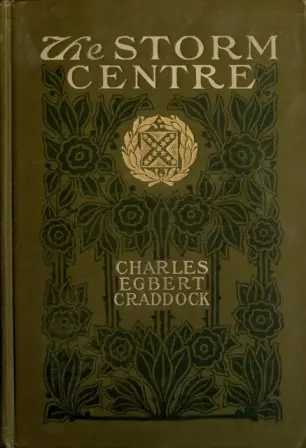
"The Storm Centre: A Novel" by Charles Egbert Craddock is a work of fiction written in the early 20th century. The story is set against the backdrop of the American Civil War and explores themes of conflict, isolation, and human relationships. The main character, Captain Fluellen Baynell, finds himself navigating not only the turmoil of war but also the complexities of his social interactions with the Roscoe household, particularly Mrs. Leonora Gwynn, whose reputation and past are shrouded in both mystery and sorrow. At the start of the novel, we are introduced to Captain Baynell as he finds himself in the calm of the Roscoe home, a stark contrast to the chaotic world outside where the Civil War rages on. He is waiting to meet the household, especially Mrs. Gwynn, the widow of a man known for his tumultuous marriage. The opening scenes depict intimate interactions with the household's old servant, Uncle Ephraim, who shares both gossip and insights about the family's dynamics. As Baynell grapples with the impending introduction to the ladies of the family, a sense of expectation builds, only to be interrupted by the playful presence of the young girls, referred to as "the ladies," and culminating in a poignant and unexpected encounter with Mrs. Gwynn, who captivates him despite her seemingly indifferent demeanor.
Introduction adapted from the source catalogue; source summaries may be automatically generated.
Free to read · English · 82,450 words · No account needed
MAKE TIME FOR A GOOD BOOK
On by default. Untick to stop anonymous reading totals. Each page counts after 10 seconds in view. How this works.
Anonymous counting is on unless you have switched it off.
Albeit the discharge of the freight would not take place till morning, the scene was one of great confusion. In accordance with the regulation which the military occupation of the country required, the passengers rendered up their passes on deck to the officer who had boarded the vessel for the purpose of receiving them, permitting the travellers to depart one by one through a guarded gate, but it was impossible to identify them after they were once on the wharf. Hence there was naught to distinguish from the other passengers a gentleman carrying a portmanteau, who entered an omnibus, save that the wharf lamps might have shown that he was handsome, taller than common, with a fine presence and gait, and clad in garments of unmistakably English cut and make. The night clerk of the hotel evidently saw nothing else unusual in the stranger as he stood under the gas-jet to register at the desk in the office, almost deserted at this hour--not even in the momentary hesitation when he had the pen in hand. He wrote "John Wray, Junior, Manchester, England," had a room assigned to him, and passed on to the late supper, for which Uncle Ephraim's negligence had prepared him to do ample justice.
Julius did not appear next morning at the usual breakfast hour. The terrors of the Chinese gong, that was wont to rouse the laggards as it howled about the hotel under the belaborings of a stalwart waiter, failed to stimulate his activity or break his slumber. The fatigues and dangers Julius had encountered had prostrated him. He was unconsciously recuperating, gathering strength for the rebound. He did not wake, indeed, till near noon. He turned once or twice luxuriously in the comfortably sheeted bed--at his home they had not dared to purloin linen from the household store to furnish his couch in the attic--and then, with his hands clasped under his head, he lay with a mind almost vacant of any conscious process, mechanically, quietly, taking in the details of the place. The sun sifted in at a crevice of the green shutters of the window that opened to the floor and gave upon a wide gallery without--now and again he heard at considerable intervals the passing of a footstep on this gallery. He noticed the wind stir and the flicker of the shadow of foliage on the blinds. The room was in the second story, and he knew that there were trees in a space at the rear of the old-fashioned little hotel. The furniture was of a highly varnished, cleanly, straw-colored aspect, of some cheap wood that refreshingly made no pretentions to be aught but what it was, for on the bureau drawers, the head and foot-boards of the bed, and on the rocking-chair was painted a gay little bouquet of flowers in natural but intense tints. A fresh Chinese matting was on the floor, and muslin curtains hung from poles supported on pins that had a great brass rosette or boss at the extremity. The building enclosed a quadrangle, bounded by the river at the lower end. On each of the other three sides the wide galleries of the three-story brick edifice overlooked the grassy space. He had learned that the hotel had gone into the hands of a new proprietor, but even were it otherwise he hardly feared recognition, although he had been born and reared in the immediate vicinity. At his time of life a few years work great changes. The boy of nineteen was hardly to be identified in the man of twenty-two, with his mustached lips, his broadened shoulders, his three inches of added height, and the composure, confidence, and capability conferred by those years of activity and emergency and responsibility working at high pressure. Some old resident might recognize the Roscoe eye, but he knew he could trust the kindly associations of "auld lang syne" to avoid the sifting of a casual recollection. Besides, this was hardly likely to befall, for the town was an ever shifting kaleidoscope of confused humanity. It was full of strangers,--Federal officers, on service and unattached, on leave of absence, wounded, and their families; special correspondents; hospital nurses; emissaries of the Sanitary Commission; enterprising promoters of all manner of jobs, and the horde of nondescript non-combatants that hangs on the rear of every army, seeking the many methods of securing a windfall from the vast expenditures of money and goods necessary to maintain a great force on a war footing. He was hardly likely to meet any one who had ever known him, or even his father, in his stay at the hotel, which he must contrive by some method to make as short as practicable. Then suddenly a great dismay fell upon him. He lifted his head and gasped as he looked about him for something that was gone! His treacherous memory!--in the prostration of his mental faculties by excitement and fatigue, in the lull of his long slumber, he had forgotten the alias he had registered as his own name on his entrance to the hotel. He thought of half a dozen of the most usual nomenclature, striving to goad his mind to a recognition of each in turn as the one he had selected. He was in desperation. True, he might have an opportunity to study the register and could recognize his own handwriting. But something--anything might occur in the interval in which it might be necessary to give the name he had assumed, and any incongruity with the registered alias would be fatal. Every casual step along the hall on one side, or the gallery on the other, threw him into a sudden tremor as he prefigured a stoppage, a knock, an inquiry--"Are you Mr. Alfred Jones?--here's a note for you. Messenger waits for an answer."
Your reading position is saved on this browser. Take it to another device with a library code. Reading pages adapt to text, rather than matching a printed edition.
Charles Egbert Craddock
Charles Egbert Craddock
Charles Egbert Craddock
Charles Egbert Craddock
BEHIND THE BOOK
This eBook is for the use of anyone anywhere in the United States and most other parts of the world at no cost and with almost no restrictions whatsoever. You may copy it, give it away or re-use it under the terms of the Project Gutenberg License included with this eBook or online at www.gutenberg.org. If you are not located in the United States, you will have to check the laws of the country where you are located before using this eBook. Read the source licence.
The original source file, including credits and licence, is retained by this library. Request an original-format copy at no charge. Please include the book title and Project Gutenberg identifier #35423.
KEEP YOUR CURIOSITY GOING
Cécile Tormay

Moritz Busch
Coulson Kernahan
John L. Ransom

Maurice Baring
Frances Wright