
The story of Betty
Carolyn Wells
THE CLASSIC COLLECTION · 1904
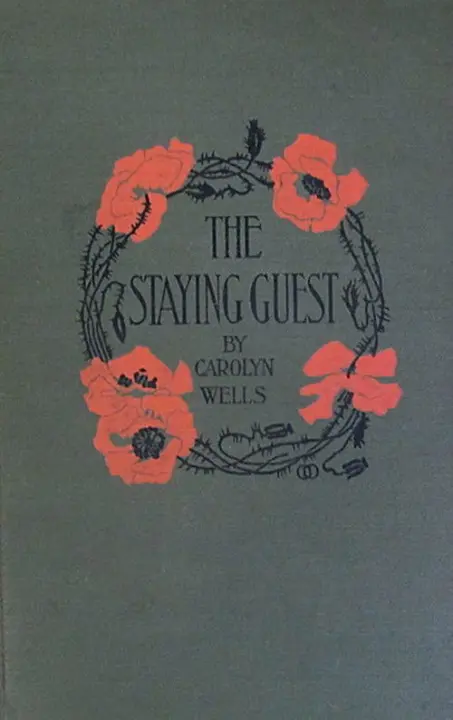
"The Staying Guest" by Carolyn Wells is a novel written in the early 20th century. The story centers on two elderly maiden sisters, Miss Priscilla and Miss Dorinda Flint, who live in the stately but grim Primrose Hall. Their ordered lives are disrupted when a cheerful girl named Ladybird Lovell, the daughter of their estranged younger sister, unexpectedly arrives and demands to stay with them, leading to a clash of personalities and a comedy of manners. At the start of the narrative, we are introduced to Primrose Hall, a quaint and meticulously organized home, underscoring the sisters’ traditional and rigid ways. Their mundane routine is interrupted by the arrival of Ladybird, who espouses a vivacious and carefree spirit that stands in stark contrast to the Flints’ prim lifestyle. The lively child arrives after an uninvited letter indicates her circumstance as an orphan, bringing with her not only a playful disposition but also the companionship of a dog named Cloppy, much to Miss Priscilla’s chagrin. Their initial attempts to send her away only spark further antics and negotiations, setting the stage for a humorous exploration of family dynamics and the themes of love, acceptance, and the challenges of coexistence in the face of contrasting personalities.
Introduction adapted from the source catalogue; source summaries may be automatically generated.
Free to read · English · 39,742 words · No account needed
MAKE TIME FOR A GOOD BOOK
On by default. Untick to stop anonymous reading totals. Each page counts after 10 seconds in view. How this works.
Anonymous counting is on unless you have switched it off.
Her favorite day-dream was of a beautiful volume, bound in blue and gold, that should contain poems like those of Mrs. Hemans. But though she had written many, many verses,--and indeed, had a little hair-trunk in the attic packed quite full of them,--yet she had never been able to summon sufficient courage to offer them to any publisher; and lately she had begun to think she never would, for poetry had changed since Mrs. Hemans's day, and she doubted if her efforts would stand the tests of modern editors or publishers.
But she said: "Yes, child, I have written poetry. It is a talent that runs in our family. Have you written any?"
"Oh, no, I don't write it. I just say it. Like this, you know:
"I have a dear aunt named Priscilla,
Who lives in a beautiful villa;
She has lovely old cups,
But she can't abide pups,
And she flavors her cake with vanilla.
"That's the kind I make. Of course you have to use words that rhyme, whether the sense is very good or not. I made this one too:
"There once was a lady named Biddy,
Who cried because she was a widdy;
When her husband fell dead,
She thoughtfully said,
'He didn't live very long, did he?'
"Now tell me some of your poetry, aunty."
"You wouldn't appreciate mine, child,--you couldn't understand it."
"No, 'm; I s'pose not. But I'd love to hear it."
"Tell her 'The Sunset Star,' sister," said Miss Dorinda.
Miss Priscilla simpered a little; then, folding her hands, she recited:
"The sunset star is shining
Across the meadow green;
The woodbine vines are twining
The trellises between;
"And every pleasant evening
I watch it from afar,
Romantic fancies weaving
About that evening star."
"Why, aunty, that's lovely," exclaimed Ladybird: "and I do understand it. I know the sunset star that comes out in the sky just as the sun goes down. Yours is more poetry than mine, but mine are funnier. Don't you think so?"
"Yes, child; but as you grow older you'll see that poetry is more
important than fun."
"Yes; and then I'll learn to make verses like yours. Can you make poetry
too, Aunt Dorinda?"
"No," said Miss Dorinda, simply; "my talent is for painting."
"Oh, is it? And do you paint pictures? And will you teach me how? I've always wanted to learn to paint, and I'm very industrious. I can play on the piano like a house afire."
"Sister Lavinia used to play the piano very prettily," said Miss Dorinda; "doubtless you have inherited her talent."
"Yes, I think I have. Shall I play for you now?"
Your reading position is saved on this browser. Take it to another device with a library code. Reading pages adapt to text, rather than matching a printed edition.
Carolyn Wells

Carolyn Wells & Harry Persons Taber

Carolyn Wells

Carolyn Wells
BEHIND THE BOOK
This eBook is for the use of anyone anywhere in the United States and most other parts of the world at no cost and with almost no restrictions whatsoever. You may copy it, give it away or re-use it under the terms of the Project Gutenberg License included with this eBook or online at www.gutenberg.org. If you are not located in the United States, you will have to check the laws of the country where you are located before using this eBook. Read the source licence.
The original source file, including credits and licence, is retained by this library. Request an original-format copy at no charge. Please include the book title and Project Gutenberg identifier #45545.
KEEP YOUR CURIOSITY GOING
Coulson Kernahan

Maurice Baring
Frances Wright
Cécile Tormay

Frederic Jesup Stimson

W. H. P. (William Henry Pope) Jarvis