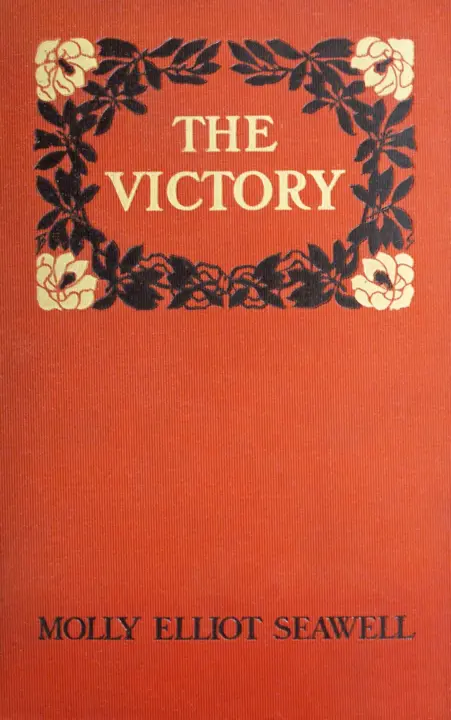
The victory
Molly Elliot Seawell
THE CLASSIC COLLECTION · 1897
"The Sprightly Romance of Marsac" by Molly Elliot Seawell is a novel written in the late 19th century. The story revolves around two young men, Marsac and Fontaine, who are struggling journalists living in Paris, and their humorous escapades as they navigate financial difficulties, romantic interests, and the whims of their surroundings. The engaging dialogue and vibrant cast of characters introduce a lighthearted exploration of friendship and the pursuit of love amidst the challenges of their artistic lives. At the start of the novel, we are introduced to Marsac and Fontaine, who are desperately trying to avoid paying their rent. In a state of comedic chaos, their landlady Madame Schmid confronts them about their unpaid bills, illustrating their financial troubles. Meanwhile, Marsac's cheerful and witty demeanor shines through even in dire circumstances. As the plot unfolds, we see the duo concocting outrageous stories and sidestepping various characters, including their alluring landlady, Madame Fleury, who hints at deeper connections and potential romances. The opening section sets the tone for a playful yet poignant narrative, as each character’s motivations and relationships begin to intertwine against the backdrop of Parisian life.
Introduction adapted from the source catalogue; source summaries may be automatically generated.
Free to read · English · 27,927 words · No account needed
MAKE TIME FOR A GOOD BOOK
On by default. Untick to stop anonymous reading totals. Each page counts after 10 seconds in view. How this works.
Anonymous counting is on unless you have switched it off.
The door was open, and the Duvals were going out after saying good-bye for the tenth time, when the two young men saw coming up the stairs the compact figure and shrewd face of Maurepas, their editor-in-chief. He met old Duval face to face on the landing.
“Delighted to see you, Monsieur Duval,” cried Maurepas. “I was going to see you to-morrow; but if you will pardon a busy man for introducing business, just let me ask you to give me the refusal of that villa you have at Melun until I can get to see you.”
“Sorry to disappoint you, but it is the day after the ball. I have just in effect sold it to Monsieur Fontaine,” replied Monsieur Duval, going on downstairs.
Maurepas entered the room with the air of a chagrined man, and throwing down his hat, said crossly,--
“So, Fontaine, that newspaper story is true, and you have come into a
great fortune?”
“Not so very great,” answered Fontaine, modestly,--“only a couple of
million francs.”
“Oh, Lord!” sniffed Maurepas, “how our ideas have expanded! Well, I am glad your old uncle cut up so handsomely.”
“Monsieur Maurepas,” said Marsac, severely, “I beg you will at least respect Fontaine’s mourning attire. It is exceedingly painful to us to have Monsieur Maurice Fontaine’s death alluded to in that flippant and heartless manner.”
Monsieur Maurepas sniffed louder than ever, but did not pursue the objectionable subject. “Well,” he said, “I suppose Fontaine will give up journalism now?”
“I don’t know,” responded Fontaine, dubiously; “I always liked my
profession.”
“In that case,” replied Maurepas, “I will make you an offer. I know
what you can do.”
Fontaine could not forbear remarking, “You used to say I couldn’t do
anything!”
“My dear fellow,” answered Maurepas, coolly, “that was before you were talked about. Now, as the most talked-about young man in Paris, your name is worth something to a newspaper, even if your ideas are not. I will make you this proposition. If you will give ‘La Lune’ three signed articles a week, of a thousand words each, I will give you five hundred francs a week. I make but one stipulation,--your name must be signed to them, but Marsac must write them.”
Fontaine hesitated for a moment, but Marsac answered for him: “Done!”
“And another thing. There is to be a great journalists’ dinner given on the 17th, and I want you, when called upon, to make a speech in the name of the younger members of the staff of ‘La Lune.’”
“I couldn’t! I wouldn’t! I never made a speech in my life.”
Your reading position is saved on this browser. Take it to another device with a library code. Reading pages adapt to text, rather than matching a printed edition.
Molly Elliot Seawell
Molly Elliot Seawell
Molly Elliot Seawell
Molly Elliot Seawell
BEHIND THE BOOK
This eBook is for the use of anyone anywhere in the United States and most other parts of the world at no cost and with almost no restrictions whatsoever. You may copy it, give it away or re-use it under the terms of the Project Gutenberg License included with this eBook or online at www.gutenberg.org. If you are not located in the United States, you will have to check the laws of the country where you are located before using this eBook. Read the source licence.
The original source file, including credits and licence, is retained by this library. Request an original-format copy at no charge. Please include the book title and Project Gutenberg identifier #75477.
KEEP YOUR CURIOSITY GOING
Coulson Kernahan

Maurice Baring
Frances Wright
Cécile Tormay

Frederic Jesup Stimson

W. H. P. (William Henry Pope) Jarvis