
The Book of Clever Beasts: Studies in Unnatural History
Myrtle Reed
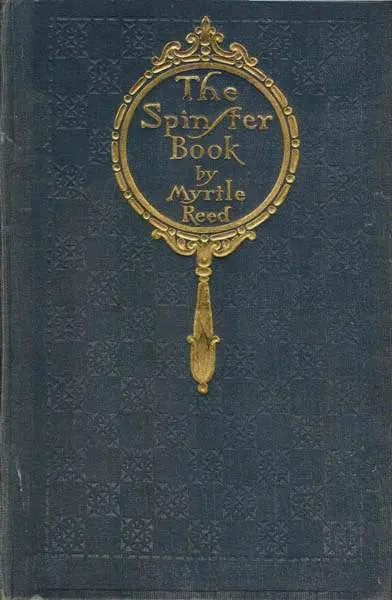
THE CLASSIC COLLECTION · 1901
"The Spinster Book" by Myrtle Reed is a collection of essays written in the early 20th century. The work explores various themes related to love, relationships, and the experiences of women, particularly those who find themselves single or choosing not to marry. Through a blend of humor and insight, the book examines societal expectations surrounding women, love, and courtship, often from the perspective of a spinster reflecting on her observations. The opening of the book introduces readers to Reed’s witty observations and critiques on the nature of men and their interaction with women. It captures the essence of the spinster's experience, discussing the dynamics between the genders and how women analyze men. The text humorously depicts the efforts of women to decipher men's behavior, suggesting that the complexities of love and courtship have been somewhat lost amid changing societal norms. This introduction sets the stage for a broader discussion on proposals, relationships, and misunderstandings in female-male interactions. Overall, the opening portion invites readers into a thoughtful, engaging examination of love and womanhood.
Introduction adapted from the source catalogue; source summaries may be automatically generated.
Free to read · English · 36,867 words · No account needed
MAKE TIME FOR A GOOD BOOK
On by default. Untick to stop anonymous reading totals. Each page counts after 10 seconds in view. How this works.
Anonymous counting is on unless you have switched it off.
For instance, there seems to be no good reason why a man's way of sharpening a pencil is any better than a woman's. It is difficult to see just why it is advisable to cover the thumb with powdered graphite, and expose that useful member to possible amputation by a knife directed uncompromisingly toward it, when the pencil might be pointed the other way, the risk of amputation avoided, and the shavings and pulverised graphite left safely to the action of gravitation and centrifugal force. Yet the entire race of men refuse to see the true value of the feminine method, and, indeed, any man would rather sharpen any woman's pencil than see her do it herself.
[Sidenote: The "Supreme Conceit"]
It pleases a man very much to be told that he "knows the world," even though his acquaintance be limited to the flesh and the devil--a gentleman, by the way, who is much misunderstood and whose faults are persistently exaggerated. But man's supreme conceit is in regard to his personal appearance. Let a single entry in a laboratory note-book suffice for proof.
Time, evening. MAN is reading a story in a current magazine to the GIRL
he is calling upon.
MAN. "Are you interested in this?"
GIRL. "Certainly, but I can think of other things too, can't I?"
MAN. "That depends on the 'other things.' What are they?"
GIRL. (Calmly.) "I was just thinking that you are an extremely handsome man, but of course you know that."
MAN. (Crimsoning to his temples.) "You flatter me!" (Resumes
reading.)
Girl. (Awaits developments.)
MAN. (After a little.) "I didn't know you thought I was good-looking."
GIRL. (Demurely.) "Didn't you?"
MAN. (Clears his throat and continues the story.)
MAN. (After a few minutes.) "Did you ever hear anybody else say that?"
GIRL. "Say what?"
MAN. "Why, that I was--that I was--well, good-looking, you know?"
GIRL. "Oh, yes! Lots of people!"
MAN. (After reading half a page.) "I don't think this is so very
interesting, do you?"
GIRL. "No, it isn't. It doesn't carry out the promise of its beginning."
MAN. (Closes magazine and wanders aimlessly toward the mirror in the
mantel.)
MAN. "Which way do you like my hair; this way, or parted in the middle?"
GIRL. "I don't know--this way, I guess. I've never seen it parted in the
middle."
MAN. (Taking out pocket comb and rapidly parting his hair in the middle.) "There! Which way do you like it?"
GIRL. (Judicially.) "I don't know. It's really a very hard question to
decide."
MAN. (Reminiscently.) "I've gone off my looks a good deal lately. I used to be a lot better looking than I am now."
Your reading position is saved on this browser. Take it to another device with a library code. Reading pages adapt to text, rather than matching a printed edition.
Myrtle Reed
Myrtle Reed
Myrtle Reed
Myrtle Reed
BEHIND THE BOOK
This eBook is for the use of anyone anywhere in the United States and most other parts of the world at no cost and with almost no restrictions whatsoever. You may copy it, give it away or re-use it under the terms of the Project Gutenberg License included with this eBook or online at www.gutenberg.org. If you are not located in the United States, you will have to check the laws of the country where you are located before using this eBook. Read the source licence.
The original source file, including credits and licence, is retained by this library. Request an original-format copy at no charge. Please include the book title and Project Gutenberg identifier #18071.
KEEP YOUR CURIOSITY GOING

David Patterson (Spirit) Hatch

David Patterson (Spirit) Hatch

David Patterson (Spirit) Hatch

Ralph Waldo Emerson

Maurice Baring

Oscar Wilde & James McNeill Whistler