THE CLASSIC COLLECTION✦In quest of the perfect bookCLASSIC FREE BOOKS
In quest of the perfect book
William Dana Orcutt
THE CLASSIC COLLECTION · 1909
"The Spell" by William Dana Orcutt is a novel written in the early 20th century. The story unfolds in an Italian setting, weaving together themes of love, intellectual pursuit, and personal growth, as seen through the lives of the main characters, Helen and Jack Armstrong, who are newlyweds exploring their relationship amid historical and cultural treasures. The narrative promises an exploration of how the past influences the present, particularly through Helen's struggle between embracing her husband's scholarly interests and her own love for modern life. At the start of the novel, we meet the Armstrongs, who are enjoying a picturesque excursion in Tuscany. Jack's deep appreciation for the classics and ancient humanism contrasts with Helen's preference for the present, setting the stage for their dynamic relationship. During their exploration, they discuss the significance of their surroundings and the weight of history, highlighting both the beauty of their Italian environment and Helen’s candid reflections about marriage and change. As they embark on their honeymoon in Florence, the contrasts between their personalities and interests become evident, foreshadowing potential conflicts and personal growth as they navigate their new life together. The chapter captures the essence of the time and place while hinting at deeper emotional and intellectual explorations yet to unfold.
Introduction adapted from the source catalogue; source summaries may be automatically generated.
Free to read · English · 91,197 words · No account needed
MAKE TIME FOR A GOOD BOOK
On by default. Untick to stop anonymous reading totals. Each page counts after 10 seconds in view. How this works.
Anonymous counting is on unless you have switched it off.
"Monsignor Cerini--" began the maid.
"Mr. Armstrong is on the veranda," Helen interrupted.
"But he asks for the madama."
"For me?" Helen was incredulous. "Show him out here, Annetta."
The librarian's face beamed genially as he greeted her and Uncle
Peabody.
"Has the maid not made a mistake?" Helen asked. "Is it not our invalid
whom you wish to see?"
"No, my daughter, it is you whom I seek. I have come to make a full though long-delayed acknowledgment."
Helen glanced over to Uncle Peabody, thoroughly mystified.
"Your husband and I were talking of you yesterday," he continued, "and we both are deeply concerned to find how erroneous have been our estimates and how slow we have been to recognize the truth."
So Jack had sent him to plead his cause, Helen told herself, and in her heart she resented the interference. It was unlike him to intrust so important a matter as this to another, yet perhaps it was a further evidence of the new conditions.
"Shall I not leave you to yourselves?" queried Uncle Peabody.
"By no means!" Cerini cried, hastily. "It is most fitting that you should hear what I am about to say. Do you remember the first day I met you at the library?" he continued, addressing his question to Helen.
She closed her eyes for a moment, and an involuntary shadow of pain passed over her face as she replied, quietly:
"Do you think I could ever forget it?"
Cerini saw it all, and it touched him deeply. "I was unkind to you that day, my daughter--even cruel. I thought I understood, but later events have shown me that my judgment led me far astray."
The old man had come to a realization at last! This, at all events, was
a comfort to her.
"Only in part," she replied, trying to speak cheerfully. "The character-building was going on just as you said."
"It was," Cerini said, forcefully--"to a greater extent, I believe, than any one of us knew. My only excuse is that I was possessed with a preconceived idea--the very thing which I so much object to in others."
"I don't think I quite understand," Helen replied. "Do you mean that, after all his efforts, my husband is right in his conviction that his work has been a failure?"
"It is not of your husband that I am thinking now," the librarian answered; "it is of myself--and you."
"Of me?" Helen was genuinely surprised. "But I have never entered into the consideration at all, where the work at the library was concerned."
"You should have done so; that is just the point."
Your reading position is saved on this browser. Take it to another device with a library code. Reading pages adapt to text, rather than matching a printed edition.
William Dana Orcutt
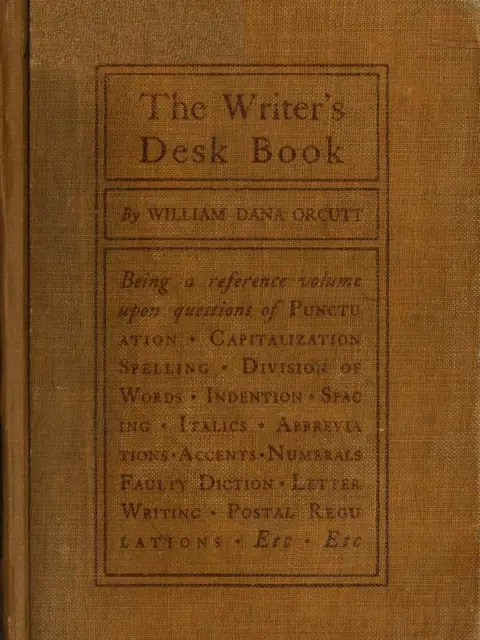
William Dana Orcutt
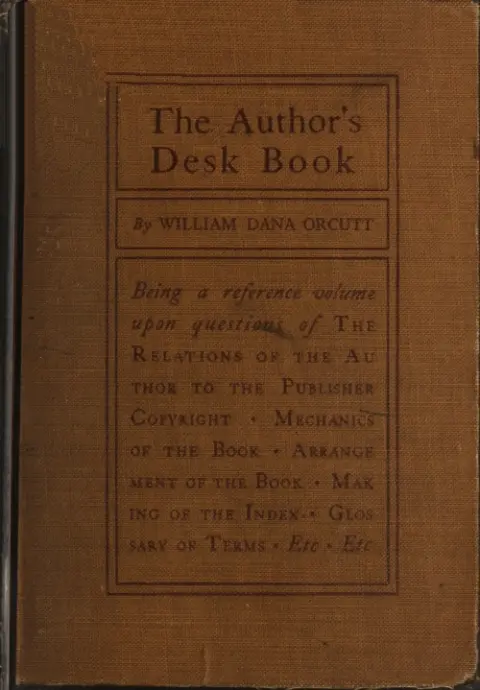
William Dana Orcutt
William Dana Orcutt
BEHIND THE BOOK
This eBook is for the use of anyone anywhere in the United States and most other parts of the world at no cost and with almost no restrictions whatsoever. You may copy it, give it away or re-use it under the terms of the Project Gutenberg License included with this eBook or online at www.gutenberg.org. If you are not located in the United States, you will have to check the laws of the country where you are located before using this eBook. Read the source licence.
The original source file, including credits and licence, is retained by this library. Request an original-format copy at no charge. Please include the book title and Project Gutenberg identifier #35607.
KEEP YOUR CURIOSITY GOING
Coulson Kernahan

Maurice Baring
Frances Wright
Cécile Tormay

Frederic Jesup Stimson

W. H. P. (William Henry Pope) Jarvis