THE CLASSIC COLLECTION✦My diaries, being a personal narrative of events 1888-1914, Part 2 (1900-1914)CLASSIC FREE BOOKS
My diaries, being a personal narrative of events 1888-1914, Part 2 (1900-1914)
Wilfrid Scawen Blunt
THE CLASSIC COLLECTION · 1913
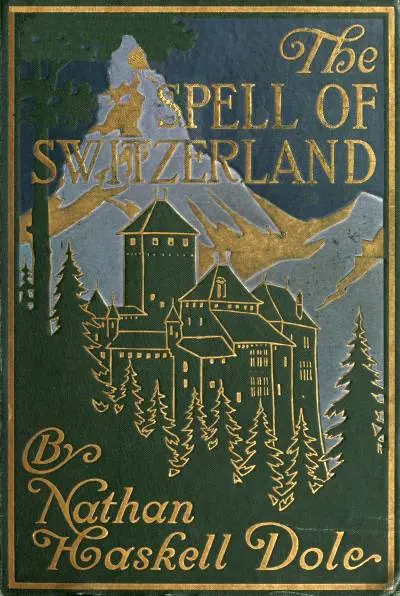
"The Spell of Switzerland" by Nathan Haskell Dole is a travelogue written in the early 20th century. This work is crafted in the guise of fiction, intermingling biographical aspects with broader themes that capture the enchanting allure of Switzerland and its landscapes. The narrative hints at a personal exploration undertaken by the narrator, who feels the pull of Switzerland’s beauty and cultural richness through the lens of his family's experiences and connections. At the start of the book, the narrator reflects on his relationship with his niece, who has opted to move her family to Switzerland for the sake of their children's education. He expresses his reservations about her choice but is undeniably intrigued by the prospect of the country. As he receives letters filled with descriptions of the breathtaking views and lifestyle in Lausanne, he begins to feel an irresistible attraction to what he calls the "Spell of Switzerland." The opening sets the stage not only for a journey through the stunning Swiss landscapes but also for deeper conversations regarding the cultural influences, history, and politics of the region, emphasizing the author's intent to share the charm and complexity of his experiences in Switzerland.
Introduction adapted from the source catalogue; source summaries may be automatically generated.
Free to read · English · 102,044 words · No account needed
MAKE TIME FOR A GOOD BOOK
On by default. Untick to stop anonymous reading totals. Each page counts after 10 seconds in view. How this works.
Anonymous counting is on unless you have switched it off.
Ermenonville, Rousseau dies at, 246.
Escalade, fountain of the, 264;
episode of, 264-266.
Escher, Alfred, autocracy of, 21.
Escheray, Comte d’, trips with Rousseau, 463.
Estavayer, Catherine de, loved by Otho de Grandson, 60.
Estavayer, Gérard de, duel with Otho de Grandson, 60.
Etruscans, perhaps settled Zürich, 433.
Eugster, Fidèle, aerial railway of, 377.
Evarts, William M., at Geneva, 248.
Everest, Mount, 33.
Evian, Byron and Shelley at, 139;
night at, 177.
Evionnaz, catastrophe at, 188.
Eynard, Charles, Life of Dr. Tissot, 13-18.
Fairy of Lake Leman, The, 114.
Falzarego, new road of the, 444.
“Fanime,” Voltaire’s play, 465.
Farel, banished by Geneva, 65.
Faucigni (Faucigny), mountains of, 263, 296.
Faucille, Col de la, 466.
Faulhorn, the, 352.
Félicité, Col de, 356.
Felix V, Pope, at Lausanne, 61, 62.
Ferney, 169, 197, 464.
Finetta, 218, 337.
Finsteraarhorn, the, 108;
seen from Bern, 413.
Fish of Lake Leman, 194.
Flegère, view from, 381.
Flims, derivation of, 192.
Flon, River, 69, 75.
Flowers of the Alps, 152, 450.
Fog, Alpine, 156, 177, 299.
Fontaine, Mme. de, Voltaire’s letter to, 464.
Forces Motrices at Geneva, 199.
Forclaz, Col de la, 310.
Forel, M., 34.
Foron, torrent of, 193.
Four Cantons, Lake of, 444, 450.
Franche-Comté, 300, 303, 361.
François I, court of, 40.
Fraumünster, the, at Zürich, 436.
Frederick the Great, 246;
treated by Dr. Tissot, 314.
Frères Mineurs, Monastery of the, 249.
Fribourg, Rousseau at, 243;
bandière of, 405;
charm of, 409, 439.
Gabelhorn, the, conquered, 353.
Galba, holds council of war, 342.
Gallatin, Albert, in America, 256.
Gallatin, Jean, buys University gardens at Geneva, 256.
Garnier, comedy by, performed at Geneva, 258.
Géant, Col de, discovered by Bourrit, 273;
sunset from, 276, 278.
“Geierstein, Anne of,” 173, 180;
tower of, described by Sir Walter Scott, 173-176.
Geneva, 30, 34, 41, 65;
harbour of, 65, 138;
centre of Calvinism, 73;
typhoid fever at, 113;
children of, 126;
lawsuit with Vaud, 161, 195, 197-267;
pride in Rousseau, 232;
streets of, 246;
Alabama claims settled at, 248;
University of, 249-260;
Constitution of, 267;
described by Addison, 292;
Château de Monnitier, 295;
fog over, 299;
trophy at, 407;
Voltaire at, 464.
Geneva, Lake of, phenomena of, 109;
described by J. F. Cooper, 110, 111;
depth of, 112;
fairy of, 114;
first steamboat on, 115;
described by Byron, 135;
his sonnet to the lake of Geneva, 137;
described by Dora d’Istria, 150;
in winter, 156;
sunset on, 158;
islands in, 160;
rise of, 161;
winds of, 162;
described by Rogers, 170;
fascinations of, 182;
birds of, 194;
origin of name, 208;
Madame de Staël on, 222;
Rousseau’s apostrophe to, 230;
Rousseau’s farewell to, 231;
made famous by Rousseau, 246;
described by Cooper, 262;
view from Aubonne, 288;
Addison on, 291;
fog on, 304;
from Madame de Crousaz’s, 321;
shores of, 340;
compared with Lake of Zürich, 441.
Genlis, Madame de, on neglected views, 224;
at Lausanne, 320;
visits Voltaire, 466.
Genthod, home of scientists, 269, 275.
Geology, 11, 12, 13, 14, 34, 35, 192, 222, 290, 348.
Gesner, Konrad von, 40.
Gex, Bonivard at, 127;
under France, 292, 303.
Your reading position is saved on this browser. Take it to another device with a library code. Reading pages adapt to text, rather than matching a printed edition.
BEHIND THE BOOK
This eBook is for the use of anyone anywhere in the United States and most other parts of the world at no cost and with almost no restrictions whatsoever. You may copy it, give it away or re-use it under the terms of the Project Gutenberg License included with this eBook or online at www.gutenberg.org. If you are not located in the United States, you will have to check the laws of the country where you are located before using this eBook. Read the source licence.
The original source file, including credits and licence, is retained by this library. Request an original-format copy at no charge. Please include the book title and Project Gutenberg identifier #41153.
KEEP YOUR CURIOSITY GOING
Wilfrid Scawen Blunt
Wilfrid Scawen Blunt

E. W. (Edgar Watson) Howe
Francis Greenleaf Allinson & Anne C. E. (Anne Crosby Emery) Allinson
Cyrenus Cole

John Martineau